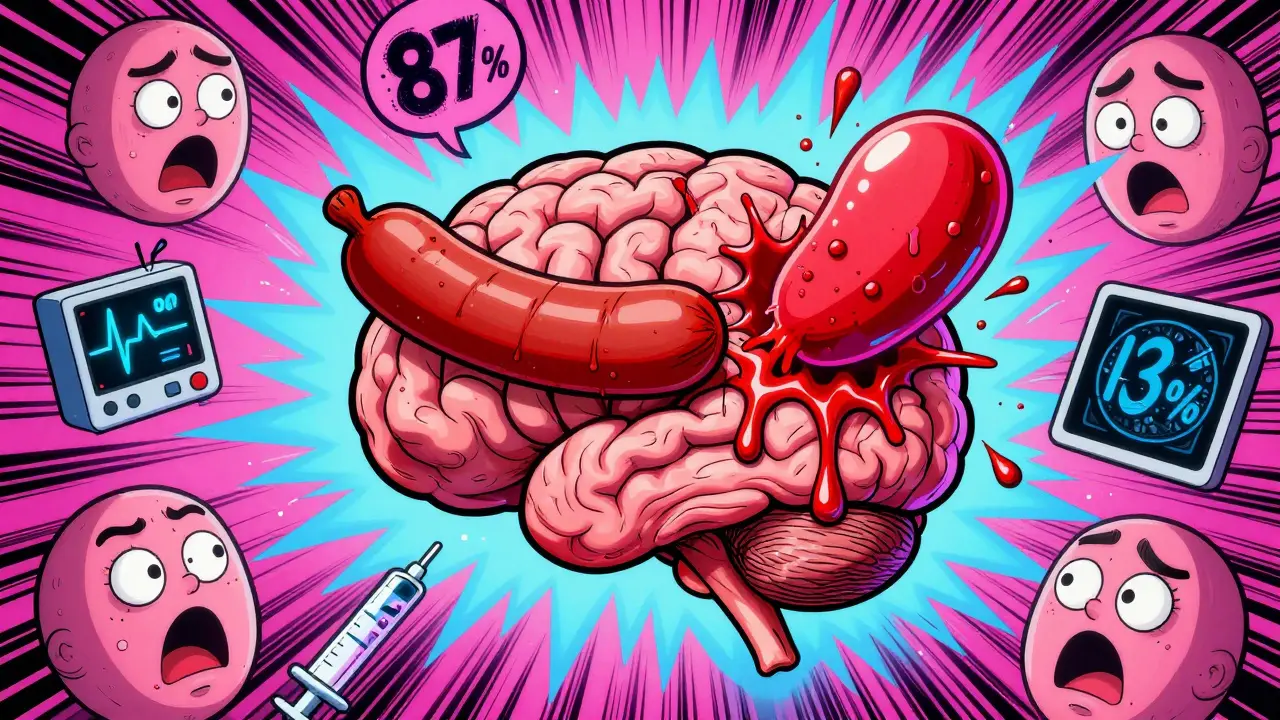
When someone has a stroke, every second counts. But not all strokes are the same. Two main types - ischemic and hemorrhagic - require completely different responses. Knowing the difference isn’t just medical jargon; it can mean the difference between life and death, or full recovery and lasting disability.
What Causes an Ischemic Stroke?
An ischemic stroke happens when a blood clot blocks blood flow to part of the brain. This is by far the most common type - about 87% of all strokes fall into this category. The clot usually forms either in the brain itself (thrombotic stroke) or travels from another part of the body, like the heart (embolic stroke). Thrombotic strokes often occur in people with long-term atherosclerosis - that’s when fatty deposits build up in the arteries. These clots form slowly, so symptoms might creep in over minutes or even hours. You might notice your arm going numb, or your speech becoming slurred, and it gets worse over time. Embolic strokes are more sudden. A clot forms in the heart, often because of atrial fibrillation (AFib), and then breaks loose. It travels through the bloodstream until it gets stuck in a smaller brain artery. People with AFib are five times more likely to have a stroke than those without it. Then there’s cryptogenic stroke - about 30% of ischemic cases. Even after full testing, doctors can’t find the exact cause. These are the trickiest to prevent because you don’t know what to target.What Causes a Hemorrhagic Stroke?
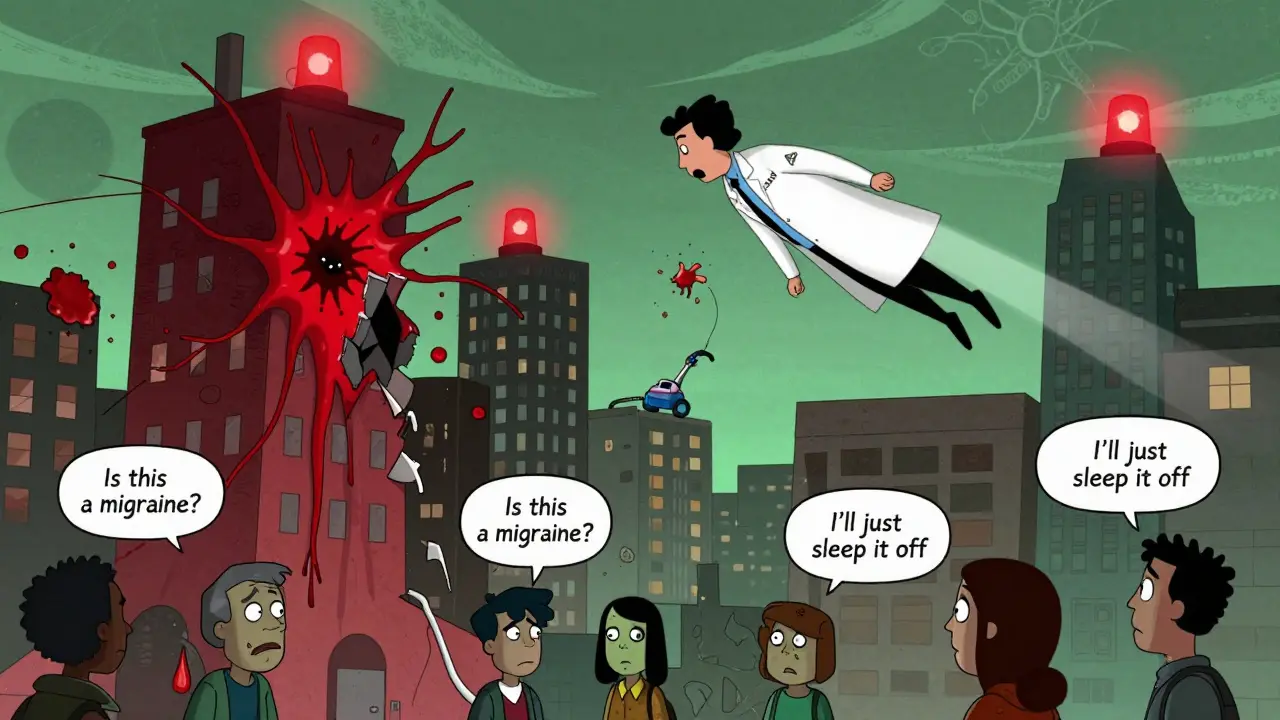
Hemorrhagic strokes are less common - only about 13-15% of cases - but they’re often more deadly. Instead of a clot blocking blood flow, a blood vessel bursts inside or around the brain. This floods brain tissue with blood, crushing cells and increasing pressure inside the skull. There are two main kinds: intracerebral hemorrhage and subarachnoid hemorrhage. The first happens when a small artery inside the brain ruptures. The second occurs when a larger vessel on the brain’s surface bursts - often because of an aneurysm, a weak, bulging spot in the artery wall. High blood pressure is the biggest culprit. About 80% of intracerebral hemorrhages happen because decades of uncontrolled hypertension have weakened the tiny arteries in the brain. Even if you’ve never had a stroke before, if your blood pressure is consistently above 140/90, you’re at risk. The symptoms of a hemorrhagic stroke hit like a thunderclap. People often describe it as “the worst headache of my life.” It comes on instantly, sometimes with vomiting, confusion, or loss of consciousness. Unlike ischemic strokes, hemorrhagic strokes rarely start slowly.How Do the Symptoms Differ?
Both types cause sudden weakness, trouble speaking, or vision problems. But hemorrhagic strokes often come with extra red flags:- Severe headache (92% of hemorrhagic cases vs. 19% of ischemic)
- Dilated or unequal pupils
- Seizures (17% of hemorrhagic, almost never in ischemic)
- Agitation or extreme confusion
- Loss of consciousness right away
How Are They Treated?
Treatment for ischemic and hemorrhagic strokes couldn’t be more different - and giving the wrong treatment can make things worse. For ischemic strokes, doctors try to dissolve or remove the clot as fast as possible. The gold standard is tPA (alteplase), a clot-busting drug given within 3 to 4.5 hours of symptom onset. A newer drug, tenecteplase, is now also approved and works just as well. For large clots in major brain arteries, a mechanical thrombectomy - a tiny device inserted through the groin to physically pull out the clot - can be done up to 24 hours after symptoms start, if imaging shows salvageable brain tissue. Hemorrhagic strokes can’t be treated with clot-busters. That would make the bleeding worse. Instead, doctors focus on stopping the bleed and reducing pressure in the brain. Surgery may be needed - either clipping the aneurysm with a metal clip or coiling it with tiny platinum wires threaded through the arteries. In some cases, a minimally invasive procedure that drains the blood with a small tube and uses clot-dissolving agents has shown better survival rates. The key? Getting to a hospital fast - and getting a CT scan immediately. That’s how doctors tell the difference. Waiting even an hour can cost you brain cells.How to Prevent Ischemic Stroke
Preventing ischemic stroke means tackling the root causes: blood clots and blocked arteries. If you have atrial fibrillation, taking anticoagulants like apixaban or rivaroxaban cuts your stroke risk by 60-70%. Don’t skip doses. These aren’t optional - they’re life-saving. For those without AFib but with high cholesterol or a history of mini-strokes, daily low-dose aspirin (81 mg) or clopidogrel can reduce the chance of another stroke by about 25%. But never start these without talking to your doctor - they can increase bleeding risk. Lifestyle matters just as much. The Mediterranean diet - rich in olive oil, nuts, fish, vegetables, and whole grains - has been shown to lower stroke risk by 30%. Regular exercise - even just 30 minutes a day, five days a week - reduces overall stroke risk by 27%. And if you smoke? Quitting cuts your stroke risk in half within one year. There’s no better investment in your brain health.How to Prevent Hemorrhagic Stroke
If you want to avoid a brain bleed, the single most important thing you can do is control your blood pressure. The SPRINT trial showed that keeping systolic blood pressure below 120 mmHg - not just under 140 - reduces hemorrhagic stroke risk by 38%. That means regular monitoring, not just annual checkups. Home blood pressure monitors are cheap and easy to use. Avoid heavy alcohol use and never use cocaine or amphetamines. These can spike blood pressure instantly and trigger a rupture. If you’ve been told you have an unruptured brain aneurysm, talk to a neurosurgeon. Not all need surgery - but some, especially if they’re large or growing, can be safely clipped or coiled before they burst.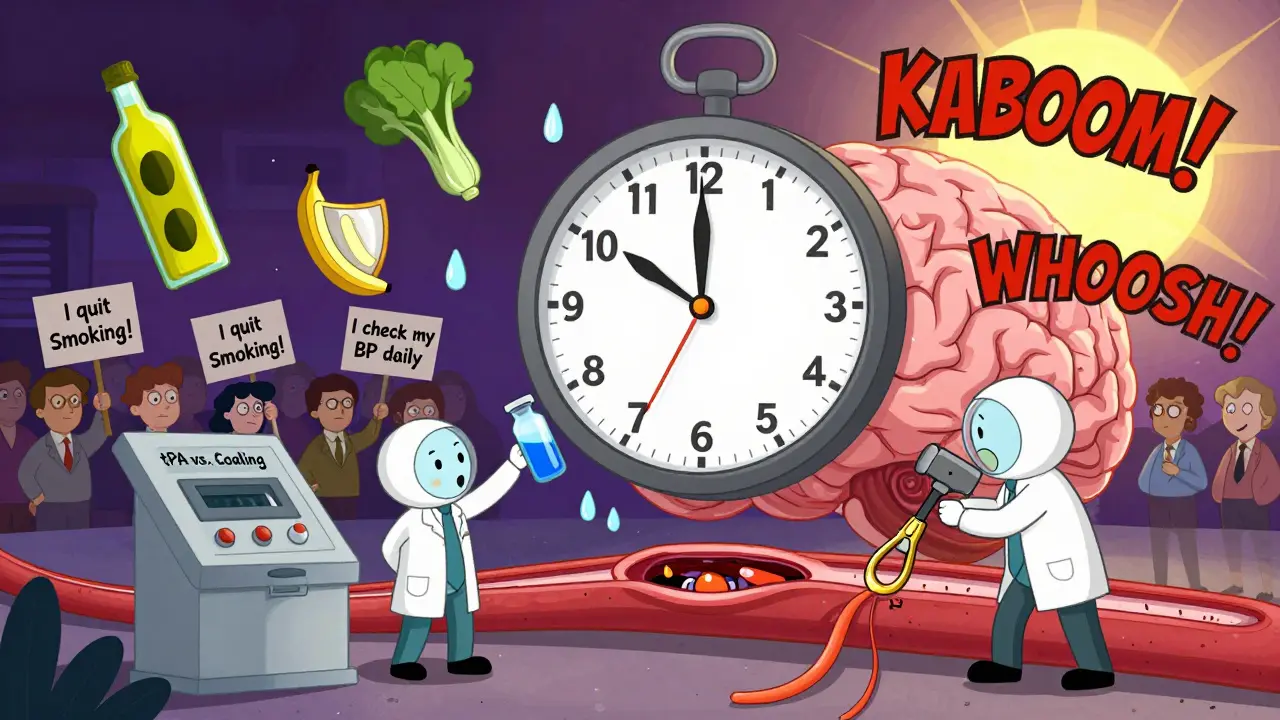
What About Prevention for Everyone?
Even if you’ve never had a stroke, you’re not immune. The World Stroke Organization predicts global stroke cases will rise 27% by 2030, mostly because people are living longer. But mortality rates are falling - thanks to better prevention. Here’s what works for everyone:- Check your blood pressure monthly - especially if you’re over 40
- Get tested for atrial fibrillation if you feel heart palpitations or dizziness
- Eat more vegetables, beans, and fish; cut back on salt and processed foods
- Move every day - walk, garden, dance, whatever keeps you active
- Quit smoking - even if you’ve smoked for 30 years, quitting now still helps
- Manage diabetes and cholesterol - both damage blood vessels over time
What’s New in Stroke Care?
The field is moving fast. In 2023, researchers found that a simple blood test measuring GFAP - a protein released when brain cells are damaged - can tell the difference between ischemic and hemorrhagic stroke in under 15 minutes. That could mean faster treatment even before you reach the hospital. AI tools like Viz.ai are now used in over 1,200 hospitals to flag stroke cases on CT scans within seconds. That’s cut the time to give tPA by more than 50 minutes. MRI scans are also being used to find brain tissue that’s still alive but at risk - even hours after symptoms start. This means more people are getting treatment than ever before. Telestroke networks now connect rural clinics with neurologists via video. In New Zealand and the U.S., this has increased specialist access by 300% since 2018. You don’t have to live in a big city to get expert care.Final Thoughts
Ischemic and hemorrhagic strokes are different diseases with different causes, symptoms, and treatments. But they share one thing: they’re preventable. And they’re treatable - if you act fast. The biggest mistake people make is waiting. They think it’s just a headache. Or they blame it on stress. Or they’re afraid of overreacting. But strokes don’t wait. And neither should you. Know your numbers. Know your risks. Know the signs. And if something feels wrong - don’t hesitate. Call for help. Your brain can’t afford to wait.What’s the difference between ischemic and hemorrhagic stroke?
Ischemic stroke happens when a blood clot blocks an artery to the brain - about 87% of strokes. Hemorrhagic stroke happens when a blood vessel bursts and bleeds into the brain - about 13-15% of strokes. One is caused by blockage; the other by bleeding. Treatments are completely different.
Can you have a stroke and not know it?
Yes. Silent strokes - often small ischemic ones - can happen without obvious symptoms. You might not notice weakness or speech trouble, but brain scans later show damage. These increase your risk of a major stroke later. That’s why controlling blood pressure and cholesterol matters even if you feel fine.
Is aspirin good for preventing stroke?
For people who’ve had an ischemic stroke or TIA, low-dose aspirin (81 mg daily) reduces the risk of another by about 25%. But it’s not for everyone. If you’re at low risk or have a history of bleeding, aspirin can do more harm than good. Always talk to your doctor before starting it.
What’s the best way to prevent stroke if I have high blood pressure?
Lower your systolic blood pressure to below 120 mmHg. Studies show this cuts hemorrhagic stroke risk by 38%. Take prescribed meds daily, reduce salt, eat more potassium-rich foods like bananas and spinach, exercise regularly, and check your pressure at home. Don’t wait for symptoms - high blood pressure often has none.
Can young people have strokes?
Yes. While stroke risk increases with age, about 10-15% of strokes happen in people under 50. Causes in younger people include heart defects, blood clotting disorders, drug use, or undiagnosed high blood pressure. Don’t assume it can’t happen to you - know the signs and act fast.
How soon after a stroke can you recover?
Recovery starts the moment treatment begins. The first 3-6 months are the most critical for brain rewiring and physical therapy. Many people regain significant function with rehab, but progress can continue for years. The sooner you start rehab, the better your chances. Delaying therapy reduces long-term outcomes.
Are there warning signs before a stroke?
Sometimes. Transient ischemic attacks (TIAs), or mini-strokes, can happen hours or days before a major stroke. Symptoms are the same - sudden numbness, speech trouble - but they last less than an hour and go away. That’s not a warning you can ignore. It’s a red flag. Up to 1 in 3 people who have a TIA will have a full stroke within a year if untreated.
Can diet really prevent stroke?
Yes. The PREDIMED study showed that a Mediterranean diet - full of olive oil, nuts, vegetables, fish, and whole grains - reduced stroke risk by 30%. Cutting processed foods, sugar, and salt matters more than any supplement. Food is medicine - especially for your brain.
Strokes don’t care if you’re busy, tired, or think it’s just a headache. I lost my uncle because we waited for ‘it to pass.’ Don’t be that person. Call 911 the second something feels off. Your brain doesn’t get do-overs.
And yes, the Mediterranean diet really works. My mom switched after her TIA and now she’s hiking in the Rockies at 78.
They’re lying about tPA. It’s not about saving brains - it’s about pharmaceutical profits. They push clot-busters because they make billions, but nobody talks about how 40% of patients end up worse off. And why is AI flagged as the hero? Because hospitals want to cut staff. Watch what happens when the algorithm fails and someone dies because a machine misread the scan.
It’s frankly irresponsible how casually people treat stroke prevention as if it’s just a matter of eating kale and taking aspirin. The reality is that systemic neglect of hypertension - particularly in marginalized communities - is the true epidemic. The fact that the SPRINT trial’s findings haven’t been universally adopted speaks to a healthcare system more invested in profit than in outcomes. You cannot reduce complex neurovascular pathology to a bullet-point list on a wellness blog. This post, while factually accurate, dangerously oversimplifies the sociopolitical dimensions of stroke care. If you’re not advocating for universal access to home BP monitors and anticoagulant subsidies, you’re part of the problem.
Why are we even talking about this? In America, if you can’t afford a hospital, you die. No magic diet or fancy AI is gonna fix that. They give you a pamphlet on olive oil while your insurance denies the CT scan. This whole thing feels like a luxury conversation for people who don’t have to choose between meds and rent.
Also, ‘call 911’ - yeah right. Try calling 911 in rural Ohio and see how long it takes. They send a cop with a defibrillator, not a neurologist.
so like… afib = bad. but like, what if you’re broke and can’t afford apixaban? they just say ‘take it daily’ like its a vitamin. what about the people who have to choose between insulin and blood thinners? this post is so privileged it hurts.
Thank you for this. 🙏 I’m a nurse and I see this every day - people waiting because they’re scared or ashamed. You’re right: FAST isn’t just a slogan, it’s a lifeline.
Also, if you’re over 40 and haven’t checked your BP at home - get a $20 monitor. It’s the cheapest insurance you’ll ever buy. 💙
Okay but let’s be real - how many of these ‘prevention tips’ are just thinly veiled ads for Whole Foods and Apple Watches? ‘Eat Mediterranean’? That’s a $120 grocery bill. ‘Exercise 30 minutes a day’? Try doing that when you work two jobs and your kid has asthma.
And don’t even get me started on ‘quit smoking’ like it’s a choice and not a trauma response. People don’t smoke because they’re lazy - they smoke because their lives are burning down and nicotine is the only thing that makes the flames feel bearable.
This post reads like it was written by someone who’s never had to choose between medicine and food. It’s not helpful. It’s guilt-tripping with footnotes.
Stroke is natural selection. If you’re dumb enough to let BP get high you deserve it. Stop wasting resources on people who won’t take care of themselves.
I appreciate the clarity here. I’ve seen both types in my father - ischemic after his AFib diagnosis, then hemorrhagic years later from uncontrolled hypertension. The difference in care was night and day. What’s missing is how hard it is to navigate the system. If you’re not a medical professional or have a family member who is, you’re lost.
Maybe we need a national stroke navigator program - someone to walk you through the steps, not just a list of facts.
Oh wow, so if I don’t eat kale and monitor my BP at home, I’m basically a walking time bomb? Thanks for the guilt trip, doctor. 🙄
Meanwhile, my neighbor had a stroke at 32 from a drug he got from a sketchy dealer. Guess he didn’t read the ‘Mediterranean diet’ section. Maybe next time he’ll just… not do drugs? Just a thought.