
Picture this: You are sitting at a dinner table with friends. The restaurant is lively, the clatter of dishes mixes with overlapping conversations, and you find yourself nodding along while actually catching only fragments of what’s being said. It happens to millions of people with hearing loss every single day. Standard hearing aids are devices that amplify sound for individuals with hearing impairment great at making sounds louder, but they struggle when that sound is buried under background noise. This is where remote microphone systems are wireless assistive technologies that transmit speech directly from a speaker's mouth to a listener's hearing device change the game entirely.
These aren't just accessories; they are powerful tools designed to solve the specific problem of understanding speech in challenging environments. If you have ever felt frustrated by missing out on conversations in noisy places like classrooms, restaurants, or busy offices, understanding how these systems work might be the key to reclaiming your social life and professional confidence.
How Remote Microphones Actually Work
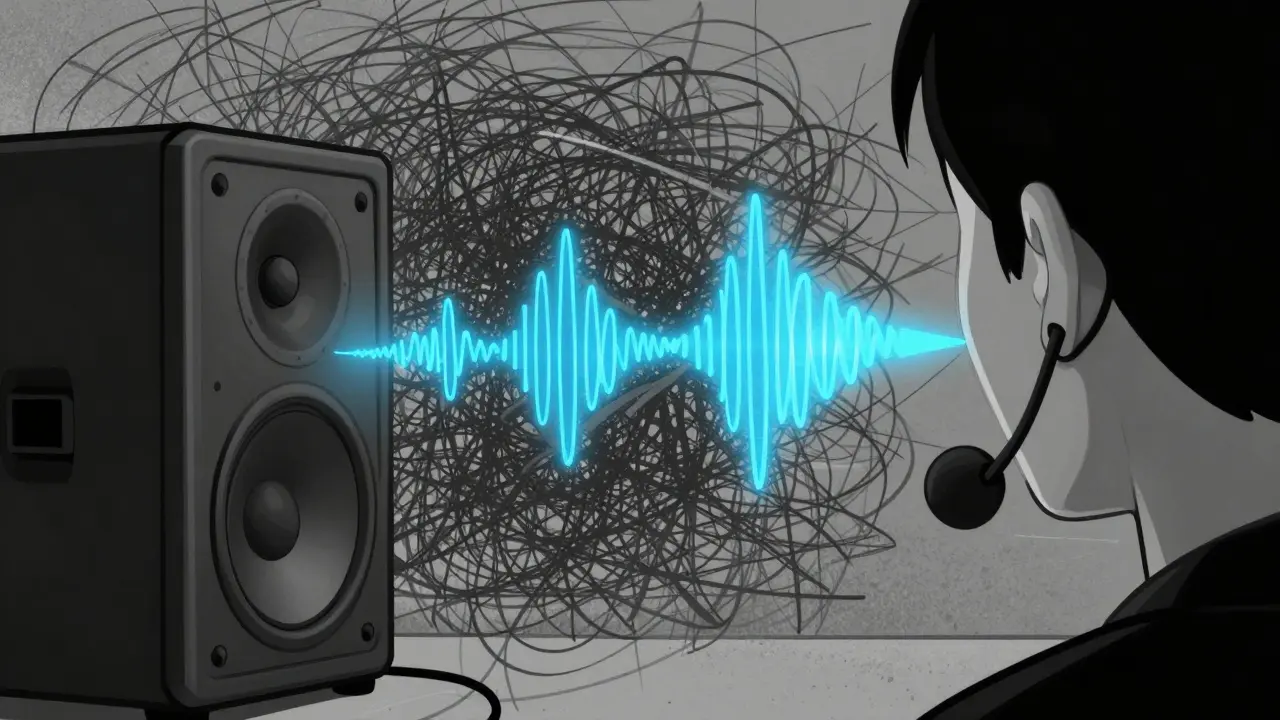
To understand why remote microphones are so effective, we first need to look at basic acoustics. There is a rule in physics called the "6 dB per doubling rule." Essentially, for every time you double the distance between you and the speaker, the clarity of their voice drops significantly by 6 decibels. If you are sitting three feet away from someone, their voice is already much quieter relative to the room noise than if you were right next to them.
A standard hearing aid picks up everything around it-the speaker’s voice, the air conditioner, the person talking at the next table-and amplifies it all. A remote microphone system bypasses this problem completely. Here is the simple process:
- Capture: The speaker wears a small microphone (often clipped to their collar or worn as a lanyard) positioned just 6 to 8 inches from their mouth.
- Transmit: The microphone sends the audio signal wirelessly via radio frequency (usually 2.4 GHz) to a receiver.
- Receive: The receiver, which connects to your hearing aids or cochlear implants, delivers that clear speech signal directly into your ears.
Because the microphone is so close to the source, the signal-to-noise ratio is incredibly high before it even reaches your ear. You hear the speaker clearly, while the background noise remains distant and muffled. Modern systems use digitally modulated (DM) technology rather than older FM systems, allowing for adaptive frequency hopping. This means the system automatically switches channels if it detects interference, ensuring a crystal-clear connection without static or dropouts.
The Real-World Impact: What the Data Shows
You might wonder if the difference is noticeable enough to justify the extra step of handing someone a microphone. The research says yes, emphatically. In a pivotal 2019 study published in the Journal of the American Academy of Audiology, Dr. Linda M. Thibodeau and her team tested participants in environments with noise levels of 75 dBA-roughly equivalent to a loud restaurant or a busy classroom.
The results were striking. Participants performed an average of 61% better with modern remote microphone systems compared to using their hearing implants alone. Another metric often used is the speech-to-noise ratio threshold. Studies show improvements of 11 to 19.5 decibels for adults. To put that in perspective, a 3-decibel change is generally considered the smallest difference the human ear can detect. An improvement of nearly 20 decibels is transformative.
Dr. Harvey Dillon, former Director of the National Acoustic Laboratories in Australia, noted that remote microphone technology provides the single most significant improvement in speech understanding in noise for hearing aid users. He stated that these benefits exceed those of directional microphones and noise reduction algorithms built into hearing aids by 300%. This isn't a marginal gain; it is a fundamental shift in accessibility.
Types of Systems and Key Features
Not all remote microphone systems are created equal. As technology has advanced, manufacturers have introduced different form factors and features to suit various lifestyles. Understanding the differences helps you choose the right tool for your needs.
| System Type | Key Feature | Best For | Battery Life |
|---|---|---|---|
| Adaptive Directional (e.g., Phonak Roger Select) | Automatically adjusts to changing noise environments | Dynamic settings like moving from quiet hallways to noisy cafeterias | 8-12 hours |
| Fixed Omnidirectional (e.g., Phonak Roger Pen) | Picks up sound equally from all directions around the mic | One-on-one conversations where the speaker moves slightly | Up to 12 hours |
| Multi-Mic Arrays (e.g., ReSound Multi Mic) | Uses multiple microphones to triangulate the speaker | Lectures, meetings, or situations where the speaker paces | Varies by model |
| Group Focus Systems (e.g., Roger Focus II) | Connects to multiple speakers simultaneously | Roundtable discussions, family dinners, group therapy | 8-10 hours |
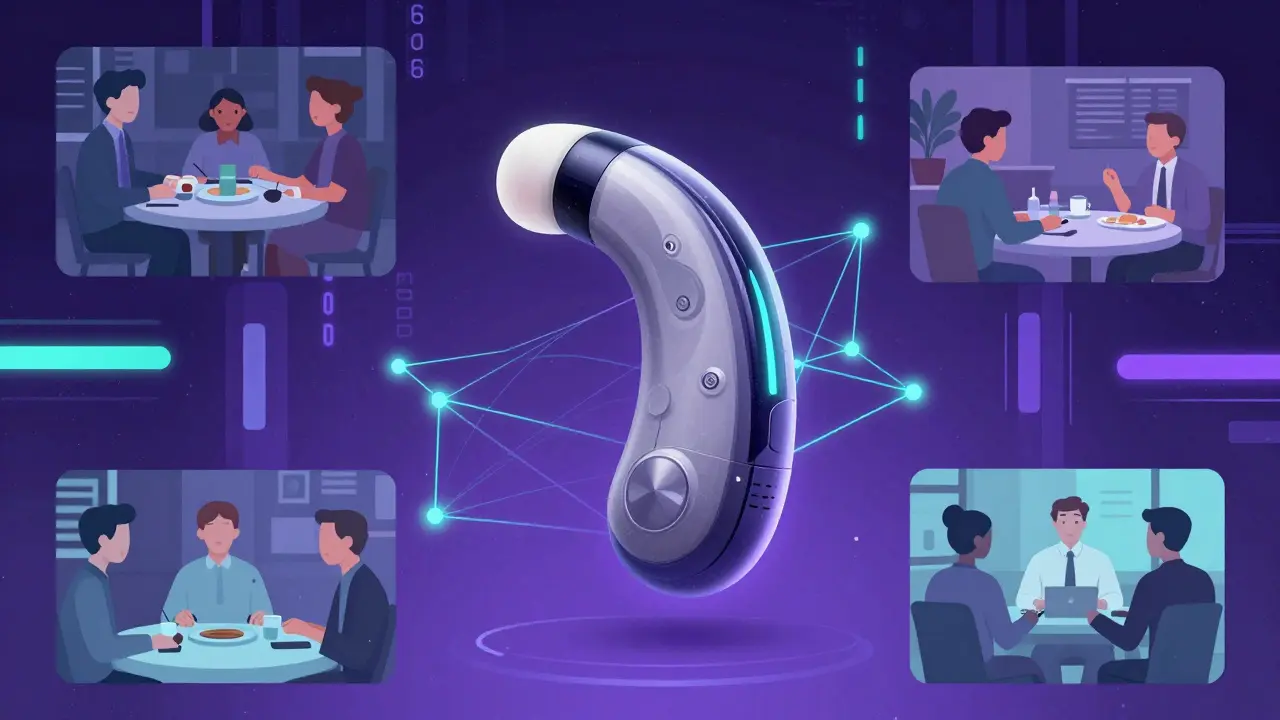
The latest iteration, such as the Roger Focus II released in 2023, addresses a major limitation of earlier models: multi-talker scenarios. Previously, you had to pass the microphone around. Now, systems can connect to several microphones at once, providing up to 45% better speech recognition in group settings compared to hearing aids alone. Additionally, newer models are compact, weighing less than an ounce and measuring roughly the size of a USB drive, making them less conspicuous.
Social Dynamics and User Experience
Technology is only half the equation; the other half is human behavior. One of the biggest hurdles for new users is not technical-it is social. Asking a colleague, a date, or a stranger to wear a microphone can feel awkward. Some users report feeling self-conscious, worrying that others think they are being recorded.
However, user feedback suggests that this initial discomfort fades quickly as the benefits become apparent. In a 2023 survey by AudiologyOnline involving over 1,200 users, 87% reported significantly easier listening in restaurants. On forums like Reddit’s r/HearingLoss community, users share stories of regained independence. One nurse mentioned that her remote microphone added five years to her working life, allowing her to hear patients clearly in chaotic hospital wards.
To ease the social friction, many audiologists recommend keeping the microphone charged and ready in your pocket or bag. Framing it positively helps too. Instead of saying, "I can't hear you," try, "This helps me focus on exactly what you're saying." Most people are happy to help once they understand it improves the quality of the interaction for both parties.
Cost, Insurance, and Accessibility
Let’s talk about the elephant in the room: price. Remote microphone systems are not cheap. Basic models start around $499, while advanced adaptive systems can cost up to $799 or more. This is often separate from the cost of the hearing aids themselves.
In the United States, Medicare coverage is limited. According to 2024 CMS guidelines, Medicare typically covers only about 15% of the cost for qualifying individuals, leaving the vast majority of the expense to the patient. Private insurance plans vary widely, and many do not cover assistive listening devices at all. This financial barrier is cited as the primary reason 42% of negative reviews mention cost as a deterrent.
Despite the upfront cost, consider the long-term value. For professionals, the ability to communicate clearly can impact career longevity and performance. For students, it can mean the difference between passing and failing a class. Many users view it as an investment in their quality of life rather than just a medical expense. Additionally, market trends suggest that as integration improves-with companies like Oticon releasing hearing aids with built-in remote mic capabilities-prices may drop by 25-30% in the coming years due to economies of scale.
Getting Started: Fitting and Training
Buying the device is just the beginning. Proper fitting and training are critical. Dr. Ruth Bentler from the University of Iowa warns that suboptimal outcomes occur in 35% of cases where audiologists fail to properly configure the systems for individual needs. This highlights the importance of choosing an experienced provider.
A typical setup involves 2-3 office visits. Your audiologist will program the receiver to match your hearing aid’s settings and teach you how to pair the devices. The learning curve is moderate; most users achieve proficiency within 2-4 weeks of consistent use. Key skills include:
- Microphone Placement: Ensuring the mic is 6-8 inches from the speaker’s mouth, usually clipped to the center of the chest or neck.
- Battery Management: Charging the unit nightly and carrying spare batteries if necessary.
- Mode Selection: Knowing when to switch between one-on-one mode and group mode.
Don’t rush this process. Ask your audiologist for practice scenarios. Simulate a noisy environment in the clinic to see immediate results. This builds confidence and helps you troubleshoot issues before you face them in real life.
The Future of Assistive Listening
We are standing on the brink of a new era in hearing technology. Artificial intelligence is beginning to play a major role. Phonak’s 2024 release of Roger X uses AI-powered noise separation to improve speech recognition by an additional 9% in complex, multi-talker environments. Starkey’s upcoming Evolv AI platform aims to integrate remote microphone functionality with automatic speech enhancement, reducing the need for manual adjustments.
The goal is seamless integration. The Hearing Industries Association projects that by 2027, 60% of new hearing aids will include integrated remote microphone capabilities. This means the technology will become standard rather than supplemental, potentially eliminating the need for separate receivers and reducing stigma further. Until then, standalone remote microphone systems remain the gold standard for overcoming the challenges of noisy worlds.
Do I need special hearing aids to use a remote microphone?
Most modern remote microphone systems require hearing aids with wireless connectivity, such as Bluetooth Low Energy or proprietary 2.4 GHz protocols. Major brands like Phonak, ReSound, Oticon, and Starkey offer compatible receivers. If you have older hearing aids, you may need to upgrade or use a separate receiver that streams to headphones or a neckloop.
Is it awkward to ask people to wear the microphone?
It can feel awkward at first, but most people are accommodating once they understand the benefit. Keep the microphone discreetly stored and explain that it helps you focus on their words. Over time, regular contacts will expect it, and strangers in professional settings usually appreciate the effort to ensure clear communication.
How long does the battery last on a remote microphone?
Battery life varies by model and usage but typically ranges from 8 to 12 hours on a single charge. This is usually sufficient for a full day of work or social activities. It is recommended to charge the device overnight and carry a portable charger if you have particularly long days.
Will Medicare or insurance cover the cost?
Coverage is limited. In the US, Medicare typically covers only about 15% of the cost for qualifying individuals. Private insurance plans vary significantly, and many exclude assistive listening devices. Check with your specific provider and consider asking your audiologist about financing options or manufacturer assistance programs.
Can I use a remote microphone for TV or phone calls?
Yes, many remote microphone systems include adapters or apps that allow you to stream audio from televisions, smartphones, and computers directly to your hearing aids. This eliminates the need to raise the volume for everyone else in the room and provides a personal, clear audio experience.
What is the difference between FM and DM systems?
FM (Frequency Modulation) systems are older technology that operates on fixed frequencies and is prone to interference. DM (Digital Modulation) systems, like Phonak Roger, operate on 2.4 GHz bands with adaptive frequency hopping, providing clearer sound, better security, and resistance to interference from Wi-Fi and other devices.