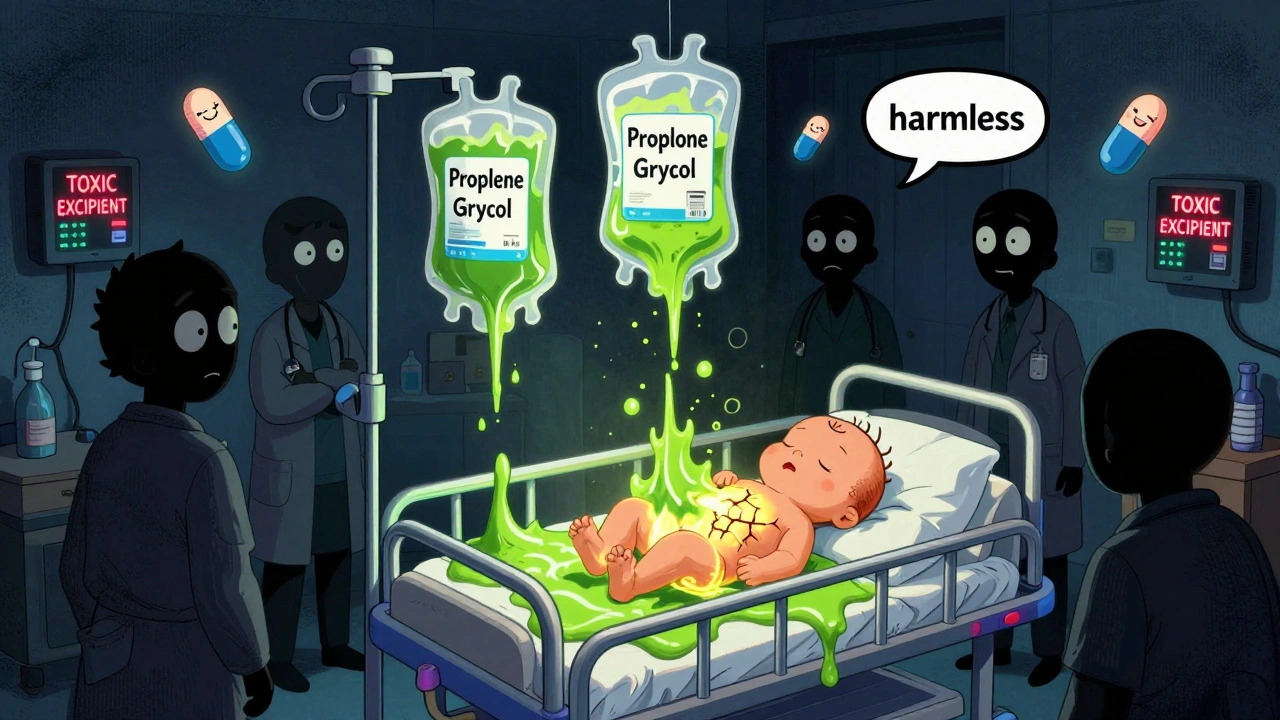
Every time a child takes medicine, parents assume the inactive ingredients are harmless. After all, they’re called excipients-fillers, sweeteners, preservatives. But in babies and young children, these so-called inert substances can trigger seizures, organ failure, and even death. The truth is, some excipients used in adult medications are not safe for kids, especially neonates. Three of the most dangerous: alcohol, sorbitol, and benzyl alcohol.
Why Children Are at Higher Risk
Children aren’t small adults. Their bodies process drugs and chemicals differently. A newborn’s liver can’t break down alcohol the way an adult’s can. Their kidneys can’t filter out toxins efficiently. Their skin is thinner, absorbing more from topical medicines. Their blood-brain barrier is still developing, making them more vulnerable to central nervous system depression. A 2020 study in PMC found that immature absorption, distribution, metabolism, and elimination pathways make pediatric patients uniquely sensitive to excipient toxicity. Even small amounts, harmless in adults, can build up to toxic levels in infants. In one study, 63% of neonates received at least one medication containing a potentially harmful excipient. Many of these were given daily, over weeks.Alcohol: More Than Just a Hangover
When you hear "alcohol" in medicine, you might think of ethanol-the kind in hand sanitizer or cough syrup. But the bigger threat in pediatric meds is propylene glycol, a sugar alcohol used as a solvent and preservative. It’s in many IV drugs, injections, and oral liquids. Lorazepam? 80% propylene glycol. Esmolol? 25%. Phenobarbital? Up to 70%. These aren’t rare formulations-they’re standard in NICUs. A 2020 review in Contemporary Pediatrics warned that continuous infusions of these drugs can cause:- CNS depression
- Seizures
- Cardiac arrhythmias
- Hypotension
- Respiratory failure
- Acute kidney injury
- Hemolysis
Sorbitol: The Sweet Danger
Sorbitol is a sugar alcohol used to sweeten liquid medicines, making them more palatable for kids. But it’s not harmless. In children, especially those under two, sorbitol can cause severe gastrointestinal distress: bloating, cramps, diarrhea, dehydration. It’s not just sorbitol. Other sugar alcohols like mannitol and xylitol behave similarly. In children with undiagnosed sugar malabsorption, even small amounts can trigger prolonged diarrhea, leading to metabolic acidosis and electrolyte imbalances. One study found that lactose-intolerant children on liquid meds containing sugar alcohols developed severe abdominal pain, muscle aches, and eczema flare-ups. Topical products aren’t safe either. A dexamethasone cream with 8% polyethylene glycol (a close chemical cousin to sorbitol) caused serum hyperosmolality in infants-leading to cardio-respiratory arrest in 5.2% of cases. That’s not theoretical. It’s documented in clinical reports. The good news? Alternatives exist. Starch, calcium hydrogen phosphate, erythritol, and cellulose powder can replace sorbitol without compromising tablet stability. But most manufacturers still use sorbitol because it’s cheap and widely available.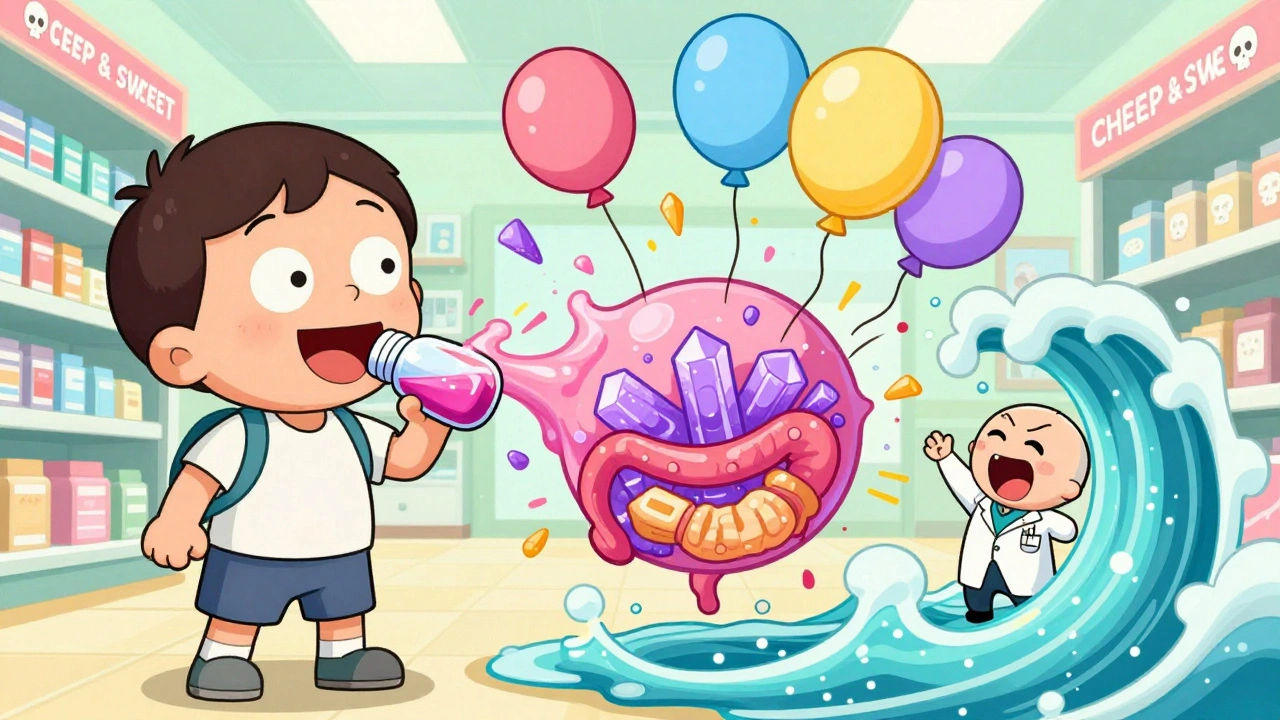
Benzyl Alcohol: The Silent Killer in Neonates
Benzyl alcohol is a preservative found in injectables, nasal sprays, and topical anesthetics. It’s not banned in children-but it should be. In neonates, even low doses can be fatal. The FDA issued a black box warning in 2006 after multiple cases of the "gasping syndrome"-a deadly condition seen in premature infants given benzyl alcohol-preserved medications. Symptoms include:- Respiratory distress
- Metabolic acidosis
- Hypotension
- Convulsions
- Death
What’s Being Done? Not Enough
Regulators know this is a problem. The European Medicines Agency created the Paediatric Committee (PDCO) in 2007. The U.S. passed the Best Pharmaceuticals for Children Act in 2002. Both aimed to push drugmakers to test medicines on kids. But the focus has been on active ingredients-not excipients. The STEP database (Safety and Toxicity of Excipients for Paediatrics) tracks risks for about 250 substances, yet data gaps remain, especially for neonates. A 2023 study found that 92% of neonates in a Danish hospital received at least one medication with propylene glycol-exceeding safe exposure thresholds. Hospital pharmacists report that 78% struggle to find age-appropriate formulations. As a result, 63% regularly compound adult drugs for infants, diluting them with water or syrups that may contain hidden excipients. A child might get a crushed tablet mixed with syrup containing sorbitol, then given an IV with propylene glycol-all in the same day. The European Commission plans to require full excipient safety dossiers by 2026. The FDA’s 2023 draft guidance acknowledges the gap. But until manufacturers are forced to reformulate, children will keep being exposed to preventable risks.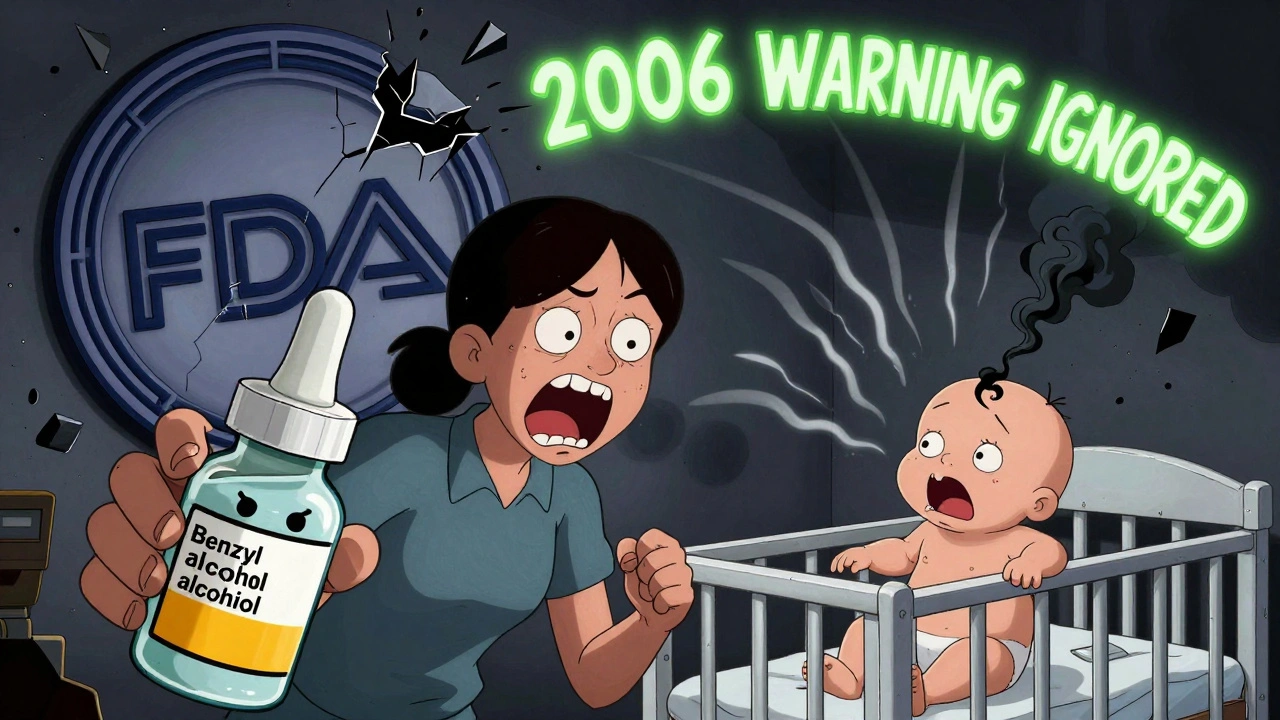
What Parents and Caregivers Can Do
You can’t control what’s in the medicine-but you can ask. Here’s how to protect your child:- Check the ingredients list-even if it’s labeled "pediatric." Look for propylene glycol, sorbitol, benzyl alcohol, ethanol, or benzocaine.
- Ask the pharmacist: "Is there a version of this without alcohol or sugar alcohols?" Many hospitals have alternatives on hand.
- Never use topical benzocaine for teething or mouth sores in children under two. Use chilled teething rings instead.
- Report adverse reactions to your doctor and to your country’s drug safety agency. Your report could help save another child’s life.
- Use only pediatric formulations when available. Avoid adult pills crushed into liquids unless absolutely necessary.
Final Thoughts
Medicines aren’t just about the active ingredient. The invisible additives-those "harmless" fillers-can be the real danger. For children, especially newborns, these substances aren’t just risky. They’re potentially lethal. The science is clear. The data is there. What’s missing is action. Until every medication for children is tested for excipient safety-not just efficacy-we’re putting lives at risk with every bottle, every injection, every drop.Can alcohol in children’s medicine cause seizures?
Yes. Propylene glycol and ethanol, both used as solvents in pediatric medications, can cause seizures in infants, especially with repeated or high-dose exposure. Premature babies and those with kidney or liver issues are at highest risk. A 2020 study in Contemporary Pediatrics documented seizures linked to propylene glycol in IV medications like lorazepam and phenobarbital.
Is sorbitol safe for babies?
No, not in large amounts. Sorbitol can cause severe diarrhea, dehydration, and metabolic imbalances in infants. Children with immature digestive systems can’t break it down efficiently. Even small doses in liquid medicines can trigger prolonged gastrointestinal distress. Alternatives like starch or cellulose powder are safer and just as effective.
Why is benzyl alcohol dangerous for newborns?
Benzyl alcohol can cause the "gasping syndrome" in neonates-characterized by respiratory failure, metabolic acidosis, hypotension, and death. It’s especially toxic in premature infants with underdeveloped livers. The FDA issued a black box warning in 2006 after multiple deaths linked to benzyl alcohol-preserved IV medications. Many pediatric formulations now avoid it, but it still appears in some injectables and nasal sprays.
Are there safer alternatives to these excipients?
Yes. For solvents, water-based formulations or polysorbate 80 are safer. For sweeteners, starch, calcium hydrogen phosphate, erythritol, and cellulose powder are effective alternatives to sorbitol. For preservatives, benzyl alcohol can be replaced with phenylethyl alcohol or parabens (though parabens have their own controversies). The challenge is getting manufacturers to switch.
How can I find out if my child’s medicine contains harmful excipients?
Check the package insert or ask your pharmacist for the full ingredient list. Look for propylene glycol, sorbitol, benzyl alcohol, ethanol, or benzocaine. The European STEP database and the U.S. Pediatric Pharmacy Association’s KIDs List provide safety ratings for excipients. If your child’s medicine isn’t labeled clearly, request an alternative formulation.
Why don’t drug companies make safer pediatric formulations?
Cost and convenience. Reformulating medicines for children requires new testing, new manufacturing processes, and new approvals. Many companies still rely on adult formulations diluted for kids. Regulatory pressure is increasing, but enforcement is slow. As of 2023, only 32% of major pharmaceutical companies use the Pediatric Excipient Risk Assessment Tool (PERAT) to evaluate safety.
So let me get this straight-we give babies medicine with enough alcohol to knock over a drunk college student, but we won’t let them have a sip of soda? 🤦♀️
And we wonder why kids are sick all the time. It’s not the germs. It’s the ‘harmless’ stuff we call medicine.
This is why the FDA is useless. They regulate aspirin dosage but let poison be called an excipient. Propylene glycol in NICUs is a crime. No more excuses. No more studies. Just ban it. Now.
You know in ancient India we had ayurveda where even the carrier substances were purified through seven stages of distillation and cosmic alignment. Today we pour benzyl alcohol into fragile neonates like it's just another flavoring. We have lost the sacred balance between science and soul. The body is not a machine to be filled with cheap chemicals. It is a temple. And we are desecrating it with every syringe.
America still leads in pediatric care. Other countries don't even test their meds. You want safer? Stop whining and move to a country that actually cares. We fix problems. You just cry about them.
I’m so glad someone finally said this. I’ve been asking pharmacists for years and they act like I’m asking for unicorn tears. But I found a brand without sorbitol for my toddler and it changed everything. No more screaming after meds. No more diarrhea. Just peace. You can do this too. Ask. Push. You’re not crazy. You’re a good mom.
❤️
The 2023 Danish study referenced is compelling but raises further questions. If 92% of neonates exceeded safe exposure thresholds for propylene glycol, why has no mandatory labeling requirement been enacted? The data exists. The risk is quantifiable. The regulatory inertia suggests either systemic complacency or a conflict of interest between pharmaceutical manufacturing efficiency and pediatric safety protocols. It is not merely negligence-it is institutionalized risk acceptance under the guise of therapeutic necessity.
I work in a hospital pharmacy and this is real. We dilute adult meds all the time because the kid versions don’t exist. One time I had to mix a 10mg tablet into 5ml of syrup that had sorbitol. The mom didn’t even know. I felt sick. We need better options. Not just for the kids. For us too. We shouldn’t have to choose between giving a kid medicine or poisoning them.
OMG YES. My cousin’s baby had a seizure after a routine IV. Turns out it was the propylene glycol. They didn’t tell the parents. Now they’re fighting for a lawsuit. 🚨 Don’t trust the label. Always ask for the full ingredient list. And if they say ‘it’s just a filler’-tell them to look into the STEP database. This isn’t hype. It’s survival. 💪❤️