
Imagine walking with your feet glued to the floor. You know you want to move, but your legs feel heavy, stuck, or magnetic. Now add a brain that feels foggy, slow, and forgetful, along with sudden urges to use the bathroom that are hard to control. This isn't just "getting old." It’s a specific neurological condition called Normal Pressure Hydrocephalus, often abbreviated as NPH. It is a condition where excess fluid builds up in the brain's cavities, causing damage without raising the pressure inside the skull to dangerous levels.
NPH is unique because it is one of the few causes of dementia that can be reversed with surgery. If you or a loved one is experiencing these symptoms, understanding what NPH is, how it differs from Alzheimer’s or Parkinson’s, and whether a shunt can help is critical. The window for effective treatment is narrow, so acting fast matters.
The Classic Triad: What Does NPH Feel Like?
Doctors have long used a mnemonic to remember the three main symptoms of NPH: "Wet, Wobbly, and Wacky." While catchy, this simplifies a complex reality. Not everyone has all three symptoms at once. In fact, studies show only about 30% of patients present with the full triad simultaneously. However, if you have two out of three, especially in someone over 60, NPH should be on the radar.
- Gait Disturbance (Wobbly): This is almost always the first symptom. It’s not just clumsiness. It’s a specific type of walking problem. Patients often shuffle their feet, take short steps, and have a wide stance. The most telling sign is the "magnetic gait"-the sensation that the feet are stuck to the floor. Turning around becomes difficult and requires multiple small pivots.
- Cognitive Impairment (Wacky): This doesn’t look like the memory loss seen in early Alzheimer’s. Instead, NPH affects executive function. People struggle with planning, multitasking, and processing speed. They might seem apathetic, indifferent, or unusually slow to respond to questions. It’s a slowing down of thought rather than a forgetting of facts.
- Urinary Incontinence (Wet): This usually appears later than the gait issues. It starts as urgency-a sudden, intense need to go that is hard to delay. Over time, it can progress to complete loss of bladder control.
If you notice these changes progressing over months, not days, don’t dismiss them as normal aging. Normal aging doesn’t cause your feet to stick to the carpet.
Why Is It Called "Normal Pressure"?
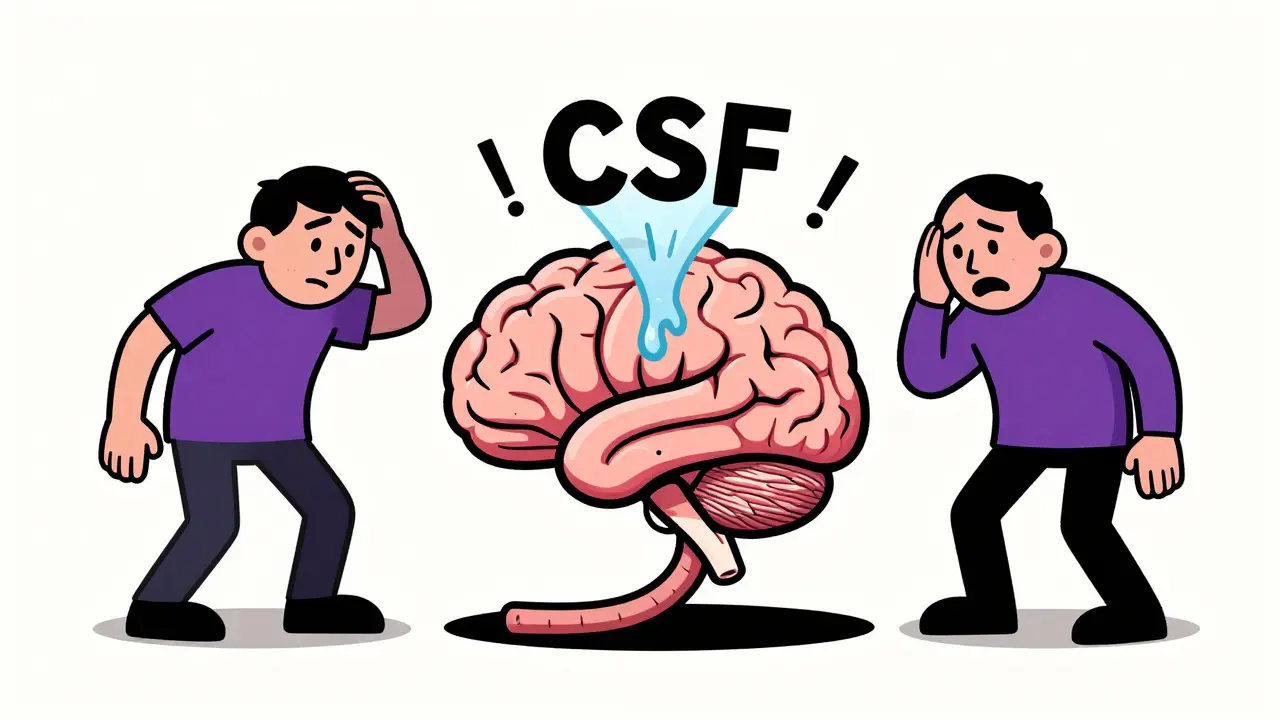
The name is misleading and confusing. When doctors measure the pressure of the cerebrospinal fluid (CSF) in the spine using a lumbar puncture, the numbers look normal. Typically, intracranial pressure ranges between 70-245 mm H₂O. In NPH, the pressure stays within this range. So why is there damage?
The issue isn't static pressure; it's flow. Think of it like a garden hose. Even if the water pressure seems low, if the nozzle is partially blocked, the water still builds up behind the blockage, stretching the hose. In NPH, the brain's ventricles (fluid-filled spaces) enlarge because CSF isn't being absorbed properly by the body. This enlargement stretches the nerve fibers responsible for walking and thinking. The term "hydrocephalus" means "water on the brain," and "normal pressure" refers only to the measurement taken during a test, not the dynamic forces affecting the brain tissue.
NPH vs. Alzheimer’s and Parkinson’s: Spotting the Difference
Misdiagnosis is the biggest enemy of NPH patients. Up to 60% of cases are initially misdiagnosed as Alzheimer’s disease, Parkinson’s disease, or vascular dementia. Why? Because the symptoms overlap. But there are key differences that experts look for.
| Feature | Normal Pressure Hydrocephalus (NPH) | Alzheimer’s Disease | Parkinson’s Disease |
|---|---|---|---|
| First Symptom | Gait disturbance (walking problems) | Memory loss (recent events) | Tremor or stiffness |
| Type of Walking Issue | Magnetic, shuffling, wide-based | Minimal until late stages | Shuffling, festinating (speeding up), resting tremor |
| Cognitive Pattern | Slowed thinking, apathy, poor executive function | Progressive memory loss, confusion | Dementia occurs later, if at all |
| Brain Imaging | Enlarged ventricles (Evan’s index > 0.3) | Brain shrinkage (atrophy), especially hippocampus | Generally normal structure early on |
| Treatability | Potentially reversible with surgery | Progressive, no cure | Manageable with medication, not curable |
If a patient presents with walking problems before significant memory loss, NPH is a strong candidate. In Alzheimer’s, memory goes first. In Parkinson’s, tremors and rigidity lead the way. Recognizing this sequence can save years of decline.
How Doctors Diagnose NPH
You can’t diagnose NPH with blood tests alone. It requires a combination of imaging and functional testing. The goal is to prove that the enlarged ventricles are causing the symptoms and that removing fluid will help.
- Neuroimaging (CT or MRI): This is the first step. Doctors look for enlarged ventricles. A key metric is the Evan’s Index, which measures the width of the ventricles compared to the width of the skull. An index of 0.3 or higher suggests NPH. MRI is preferred because it can also show signs of fluid leakage into the brain tissue (periventricular edema), which supports the diagnosis.
- The High-Volume Lumbar Puncture (Tap Test): This is the gold standard for predicting surgical success. A doctor removes 30-50 mL of CSF from the lower back. Before and after the tap, the patient’s walking speed, stride length, and cognitive abilities are measured objectively. If the patient walks significantly faster or thinks more clearly after the fluid removal, they are likely a good candidate for surgery. Improvement of at least 10% in walk time is a positive predictor.
- External Lumbar Drainage (ELD): If the tap test is inconclusive, doctors may place a temporary drain for 2-3 days. This continuously removes CSF, mimicking what a permanent shunt would do. It provides more data but carries a slightly higher risk of infection.
Diagnosis is tricky because many older adults have enlarged ventricles due to simple brain shrinkage (hydrocephalus ex vacuo). That’s why the functional improvement after fluid removal is the deciding factor, not just the picture on the scan.
The Solution: Ventriculoperitoneal Shunts
If the tap test is positive, the next step is usually surgery. There is no medication that cures NPH. The only effective treatment is a ventriculoperitoneal (VP) shunt. This is a surgically implanted device that drains excess CSF from the brain to another part of the body, usually the abdomen, where it gets absorbed.
The procedure involves placing a catheter into the brain's ventricle, connecting it to a valve that regulates flow, and threading the other end through the neck and chest into the abdominal cavity. The surgery takes about 90 minutes under general anesthesia. Most patients stay in the hospital for 2-4 days.
Does it work? Yes, for the right candidates. Studies show that 70-90% of appropriately selected patients see improvement. The good news is that gait improvement is often rapid. Many patients report feeling lighter and moving better within hours or days after surgery. Cognitive improvements and bladder control tend to take longer, sometimes weeks or months, and may not return to baseline completely.

Risks and Realistic Expectations
No surgery is without risk. It’s important to weigh the benefits against potential complications. Common risks include:
- Infection: Occurs in about 8-10% of cases. This may require removing the shunt temporarily, treating with antibiotics, and reimplanting it later.
- Shunt Malfunction: Shunts can clog or break. About 15-20% of patients will need a revision surgery within two years. Signs of malfunction include headache, nausea, vomiting, or a return of NPH symptoms.
- Over-drainage: If the valve lets out too much fluid, it can cause subdural hematomas (bleeding on the surface of the brain). This is why programmable valves are often used-they allow doctors to adjust the pressure setting non-surgically using a magnet.
- Lack of Improvement: In 20-30% of cases, even with a positive tap test, the surgery doesn't provide meaningful relief. This is why careful patient selection is vital.
One major factor influencing success is timing. Dr. George T. Chi, a leading expert in the field, notes that delaying treatment beyond 12 months from symptom onset can reduce surgical efficacy by 30%. The sooner you treat NPH, the better the chance of reversing the damage. Once nerve fibers die, they don't grow back. Surgery stops the progression and allows remaining nerves to recover, but it can't resurrect dead tissue.
Living with NPH: Post-Surgery Care
Life after a shunt isn't exactly "normal," but it can be much better. Physical therapy is crucial. Your muscles and nerves have been dormant; they need retraining. Start slowly. Focus on balance and strength exercises designed by a therapist who understands neurological conditions.
You’ll need regular follow-ups with a neurosurgeon. Initially, this might be every few weeks, then every six months. Keep a log of any headaches, changes in vision, or returns of walking difficulties. These could signal a shunt issue. Also, inform new doctors about your shunt. Certain MRI settings need adjustment if you have a programmable valve to prevent accidental pressure changes.
Emotionally, the journey can be tough. Many patients feel frustrated by the diagnostic delay. Support groups, both online and in-person, can be invaluable. Sharing experiences with others who understand the "magnetic" feeling or the anxiety of urinary urgency helps reduce isolation.
When to See a Doctor
If you are over 60 and notice yourself walking differently-shuffling, dragging your feet, or feeling unsteady-and you’re also noticing mental fogginess or bathroom accidents, don’t wait. Don’t assume it’s just arthritis or normal aging. Ask your primary care provider for a referral to a neurologist or neurosurgeon. Specifically ask, "Could this be Normal Pressure Hydrocephalus?"
Bringing a family member to the appointment helps. They can describe the changes they’ve seen over time, which is often more accurate than your own self-assessment. Bring a list of medications, as some drugs can worsen gait or cognition. Early detection leads to earlier intervention, and in NPH, time is brain health.
Is Normal Pressure Hydrocephalus hereditary?
Most cases of idiopathic NPH (where no cause is found) are not directly hereditary. However, secondary NPH can result from head trauma, meningitis, or bleeding in the brain, which are not genetic. There may be some familial predisposition to certain vascular conditions that increase risk, but it is not considered a genetic disorder in the traditional sense.
How long does a VP shunt last?
A VP shunt is a lifelong device, but it often requires maintenance. On average, a shunt lasts about 6-7 years before needing revision due to malfunction or growth (in children, though NPH is mostly an adult condition). Adults may go longer, but regular monitoring is essential. Some people never need revision, while others may need several surgeries over their lifetime.
Can NPH be cured without surgery?
Currently, there is no medication that cures NPH. Acetazolamide is sometimes prescribed to reduce CSF production, but its effects are generally modest and temporary. Surgery with a shunt remains the only proven method to significantly improve symptoms and halt progression in responsive patients.
What is the success rate of shunt surgery for NPH?
Success rates vary depending on patient selection. For patients who show improvement in a high-volume lumbar puncture (tap test), the success rate is high, often cited between 70% and 90%. Overall, including all patients who undergo surgery, about 60-70% experience meaningful improvement in at least one symptom, usually gait.
Does insurance cover NPH diagnostic tests and shunt surgery?
In many countries, including the US under Medicare, shunt surgery is covered. However, diagnostic testing like high-volume lumbar punctures or external lumbar drainage can face prior authorization hurdles. Insurance companies may require proof that the symptoms are caused by NPH and not other conditions. It’s important to work with a specialist who can document the necessity of these tests thoroughly.
my dad had this and the doctors kept saying it was just parkinsons for two years. by the time they finally did the tap test he could barely stand up. if you see someone shuffling like a zombie dont let them off the hook with "its just aging".
the irony is that we treat the brain like a machine to be fixed yet we ignore the wisdom of the body until it screams. in my culture we respect the slow decline as part of life but here everyone wants a quick surgical fix. perhaps the real issue is our fear of mortality rather than the fluid itself.
it is absolutely shameful how long people wait to get diagnosed. society treats dementia as inevitable when half the time its reversible. if your parents are acting weird and walking funny take them to a neurologist immediately do not wait for them to fall down the stairs because you were too lazy to make an appointment.
this is why american healthcare is broken. you need a specialist referral just to check if your feet are stuck to the floor. in other countries they would just look at you and know. meanwhile we spend thousands on mris and tap tests while the insurance company fights every single bill. typical bureaucratic nightmare.
let us analyze the psychological impact of being told your cognitive decline is reversible yet you still have to undergo invasive surgery. it creates a false hope that can be devastating if the shunt fails. i find it deeply troubling that we rely on a mechanical device to regulate something as delicate as cerebrospinal flow without considering the holistic emotional trauma inflicted upon the patient who has lost their independence for months or even years before diagnosis.
you think a tube fixes the soul? no. you think draining water from the brain restores the essence of man? laughable. we are playing god with plumbing and calling it medicine. my uncle got the shunt and he walks fine now but his eyes are dead. empty vessels making the most noise. the surgery saves the body but kills the spirit. consider that before you rush into the operating room.
the evans index is a crude metric at best. relying solely on a ratio greater than 0.3 ignores the nuanced topography of ventricular enlargement seen in hydrocephalus ex vacuo versus true NPH. furthermore the tap test has a high false positive rate in patients with concurrent vascular pathology. one must consult the peer-reviewed literature on external lumbar drainage protocols rather than trusting this oversimplified blog post which lacks statistical rigor and fails to address the heterogeneity of idiopathic NPH presentations in elderly populations.
stop ignoring your mom. she is wet wobbly and wacky. go to the doctor. now.
is it not fascinating! how we reduce complex neurological disorders to simple triads! wet! wobbly! wacky! such reductionism! does it not offend your sensibilities! to think that a human mind can be summarized by three symptoms! and yet! we accept it! we embrace it! because it is convenient! oh the horror! of simplification!