For millions of people living with diabetes, the most silent but dangerous complication is not vision loss or nerve damage-it is the slow, steady decline of kidney function. This condition, known as diabetic nephropathy, stands as the leading cause of end-stage kidney disease worldwide. The good news? You have powerful tools to stop it in its tracks. By combining specific blood pressure medications called ACE inhibitors and ARBs with strict dietary protein control, you can significantly reduce the strain on your kidneys and protect your heart.
If you have been told your urine tests show albumin (protein) or that your eGFR is dropping, this guide explains exactly how these treatments work, why doctors prescribe them together, and what you need to watch out for in 2026.
The Silent Threat: Understanding Diabetic Nephropathy
Diabetic nephropathy is kidney damage caused by long-term high blood sugar levels associated with type 1 or type 2 diabetes. It doesn't happen overnight. Over years, excess glucose damages the tiny filtering units in your kidneys called glomeruli. These filters become leaky, allowing protein-specifically albumin-to slip into your urine where it doesn't belong.
Doctors diagnose this condition when they find persistent albuminuria. Specifically, if your urine albumin-to-creatinine ratio (UACR) is higher than 30 mg/g creatinine on two separate tests at least three months apart, you likely have early signs of kidney stress. If that number climbs above 300 mg/g, it indicates severely increased albuminuria and more advanced disease. Often, this happens alongside a drop in your estimated glomerular filtration rate (eGFR), which measures how well your kidneys are cleaning your blood.
Why does this matter? Because kidney disease is tightly linked to cardiovascular risk. When your kidneys struggle, your blood pressure rises, and your heart works harder. Protecting your kidneys isn't just about avoiding dialysis; it's about protecting your heart from stroke and heart attack.
First-Line Defense: ACE Inhibitors and ARBs
For the past twenty years, the medical gold standard for treating diabetic nephropathy has been blocking the renin-angiotensin-aldosterone system (RAAS). You do this using two classes of drugs: ACE inhibitors and ARBs.
ACE inhibitors are medications that block the enzyme converting angiotensin I to angiotensin II, a hormone that narrows blood vessels. Common examples include lisinopril, enalapril, and captopril. By stopping this conversion, ACE inhibitors relax your blood vessels, lowering blood pressure. But their real superpower in kidney care is reducing intraglomerular pressure-the internal pressure within the kidney's filters. Lower pressure means less leakage of protein into the urine.
ARBs are Angiotensin II Receptor Blockers that prevent angiotensin II from binding to receptors on blood vessels. Examples include losartan, irbesartan, and valsartan. They achieve the same result as ACE inhibitors but through a slightly different mechanism. If an ACE inhibitor causes a dry cough-a common side effect affecting up to 20% of users-an ARB is usually the perfect alternative because it rarely triggers this reaction.
Major guidelines, including the American Diabetes Association (ADA) 2025 Standards of Care and KDIGO recommendations, agree on one thing: if you have diabetes, high blood pressure, and any sign of kidney damage (eGFR below 60 mL/min/1.73 m² or UACR above 300 mg/g), you should be on an ACE inhibitor or an ARB. These are not optional extras; they are the cornerstone of treatment.
The Critical Mistake: Under-Dosing Your Medication
Here is where many patients fall short. Studies show that while many people are prescribed these drugs, they are often given low doses. This is a critical error. Clinical trials like RENAAL and IDNT proved that high-dose ARBs significantly slowed progression to end-stage kidney disease. Low doses simply do not provide the same renal protection.
Your doctor should titrate your medication to the "maximally tolerated dose." This means increasing the dosage until you hit the highest safe level or experience side effects that cannot be managed. Do not accept a low dose if your kidney markers are still worsening. The goal is to reduce proteinuria as much as possible.
A common fear among patients and even some clinicians is seeing a slight rise in serum creatinine after starting or increasing these meds. Creatinine is a waste product filtered by the kidneys; higher levels usually mean worse kidney function. However, ACE inhibitors and ARBs cause a hemodynamic shift that can raise creatinine by up to 30%. This is actually a sign the drug is working-it is lowering the pressure inside the kidney filters. Unless the increase exceeds 30% or you are dehydrated, you should not stop the medication. Stopping here leaves your kidneys unprotected.
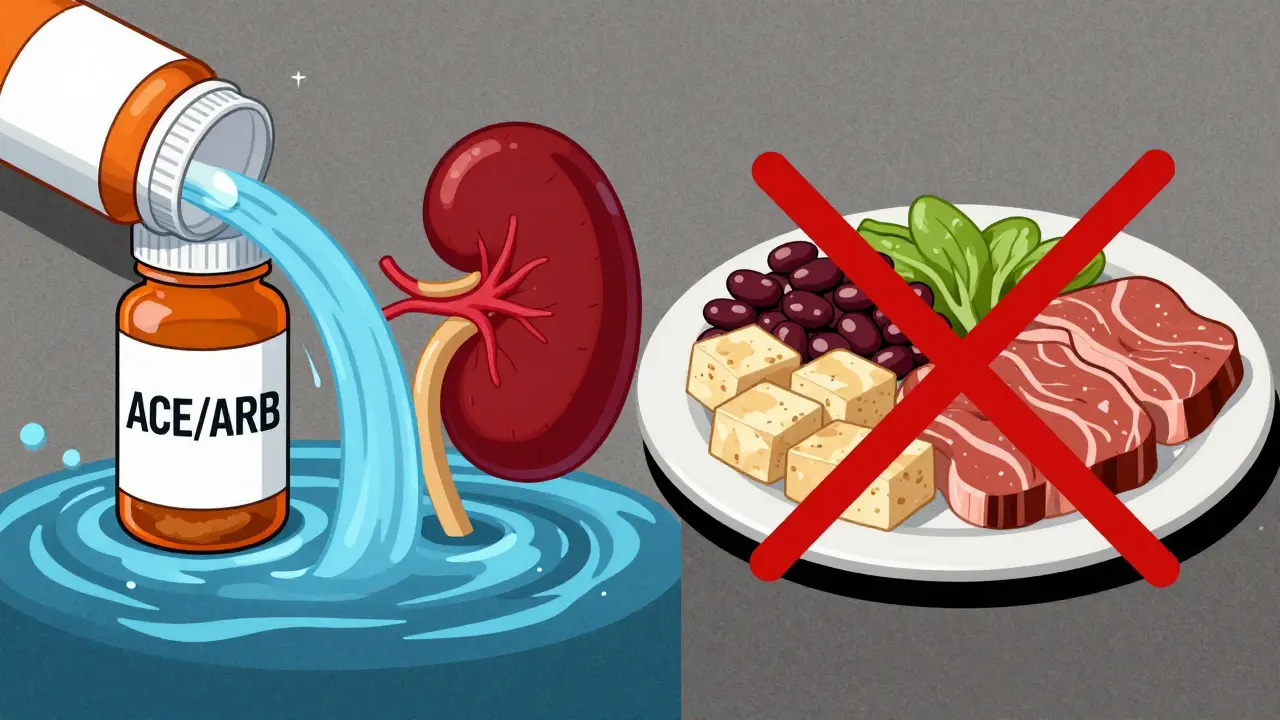
Protein Control: Diet as Medicine
Medication alone is not enough. What you eat directly impacts the workload of your kidneys. Dietary protein control is the second pillar of managing diabetic nephropathy.
When you eat protein, your body breaks it down into urea and other waste products that your kidneys must filter out. High-protein diets increase blood flow to the kidneys and raise intraglomerular pressure, essentially forcing your damaged filters to work overtime. For someone with healthy kidneys, this might be fine. For someone with diabetic nephropathy, it accelerates damage.
Current nutritional guidance suggests moderating protein intake. While exact numbers vary based on individual health status, a general rule of thumb for those with chronic kidney disease is to consume about 0.8 grams of protein per kilogram of body weight per day. This is lower than the typical Western diet, which often exceeds 1.0-1.5 grams/kg.
- Choose quality over quantity: Opt for plant-based proteins like beans, lentils, and tofu, which are easier on the kidneys than red meat.
- Limit processed meats: Bacon, sausages, and deli meats are high in sodium and protein, both of which raise blood pressure and kidney strain.
- Watch portion sizes: A palm-sized piece of lean chicken or fish is a reasonable serving, not a whole breast.
Combining moderate protein intake with ACE inhibitor or ARB therapy creates a synergistic effect, drastically slowing the loss of kidney function.
What About Newer Drugs? SGLT2 Inhibitors
In recent years, SGLT2 inhibitors like empagliflozin and dapagliflozin have emerged as game-changers in diabetes care. These drugs lower blood sugar by removing glucose through urine, but they also offer profound kidney protection independent of their blood sugar-lowering effects.
However, there is a misconception that SGLT2 inhibitors replace ACE inhibitors or ARBs. They do not. All major clinical trials testing SGLT2 inhibitors included patients who were already taking ACE inhibitors or ARBs. The ADA 2025 guidelines clarify that SGLT2 inhibitors are an *add-on* therapy, not a substitute. If you can tolerate an ACE inhibitor or ARB, you should stay on it. Adding an SGLT2 inhibitor provides an extra layer of defense, further reducing the risk of kidney failure and cardiovascular events.
| Medication Class | Primary Mechanism | Key Benefit for Kidneys | Common Side Effects |
|---|---|---|---|
| ACE Inhibitors | Blocks angiotensin II production | Reduces intraglomerular pressure and proteinuria | Dry cough, elevated potassium |
| ARBs | Blocks angiotensin II receptors | Reduces intraglomerular pressure and proteinuria | Elevated potassium, dizziness |
| SGLT2 Inhibitors | Excretes glucose in urine | Slows CKD progression, reduces heart failure risk | Genital infections, dehydration |
| Dietary Protein Restriction | Reduces metabolic waste load | Lowers kidney workload and filtration pressure | Muscle loss if too restrictive |

Dangers of Combination Therapy
You might hear about combining ACE inhibitors and ARBs to double the benefit. This is a dangerous idea. Large studies like VA NEPHRON-D and ONTARGET showed that combining these two classes does not slow kidney disease progression any better than using one alone. Instead, it dramatically increases the risk of hyperkalemia (high potassium) and acute kidney injury.
Similarly, adding direct renin inhibitors (DRIs) to ACE inhibitors or ARBs offers no extra benefit and carries similar risks. Stick to one RAAS blocker-either an ACE inhibitor OR an ARB-not both. Also, be cautious with NSAIDs (like ibuprofen or naproxen) and diuretics, as combining them with ACE inhibitors/ARBs can spike your risk of sudden kidney injury.
Action Plan for Patients
If you have diabetes and suspect kidney issues, take these steps immediately:
- Get tested: Ask for a UACR test and an eGFR calculation. Do this at least once a year, or more often if results are abnormal.
- Start or optimize RAAS blockade: If you have albuminuria, ensure you are on an ACE inhibitor or ARB. Discuss titrating to the maximum tolerated dose with your doctor.
- Monitor creatinine and potassium: Expect a small rise in creatinine initially. Watch for symptoms of high potassium like muscle weakness or irregular heartbeat.
- Adjust your diet: Reduce sodium intake to under 2,300 mg daily and moderate protein consumption. Focus on vegetables, fruits, and whole grains.
- Consider add-ons: If you are not yet on an SGLT2 inhibitor, ask your doctor if it is appropriate for you, especially if you have heart disease or heart failure.
Can ACE inhibitors cure diabetic nephropathy?
No, ACE inhibitors cannot reverse existing kidney damage. However, they are highly effective at slowing the progression of the disease, reducing proteinuria, and preventing further loss of kidney function. Early intervention is key to preserving remaining kidney health.
Should I take an ACE inhibitor or an ARB?
Both are equally effective for kidney protection. Doctors often start with an ACE inhibitor. If you develop a persistent dry cough, a common side effect of ACE inhibitors, your doctor will likely switch you to an ARB, which rarely causes this issue. Never take both simultaneously.
How much protein should I eat with diabetic nephropathy?
General guidelines suggest limiting protein to about 0.8 grams per kilogram of body weight per day. This reduces the filtration burden on your kidneys. Avoid high-protein diets and excessive red meat. Consult a registered dietitian for a personalized plan that meets your nutritional needs without stressing your kidneys.
Is it normal for creatinine to rise after starting an ACE inhibitor?
Yes, a modest increase in serum creatinine (up to 30%) is expected and indicates the medication is working by lowering pressure in the kidney filters. This is not necessarily a sign of kidney injury. However, if creatinine rises more than 30% or you experience symptoms of dehydration, contact your healthcare provider immediately.
Do SGLT2 inhibitors replace ACE inhibitors?
No, SGLT2 inhibitors are used in addition to ACE inhibitors or ARBs, not as a replacement. Clinical trials show that SGLT2 inhibitors provide additional kidney and heart benefits when added to standard RAAS blockade therapy. Always continue your ACE inhibitor or ARB unless advised otherwise by your doctor.