What Happens When Someone Overdoses on Multiple Drugs?
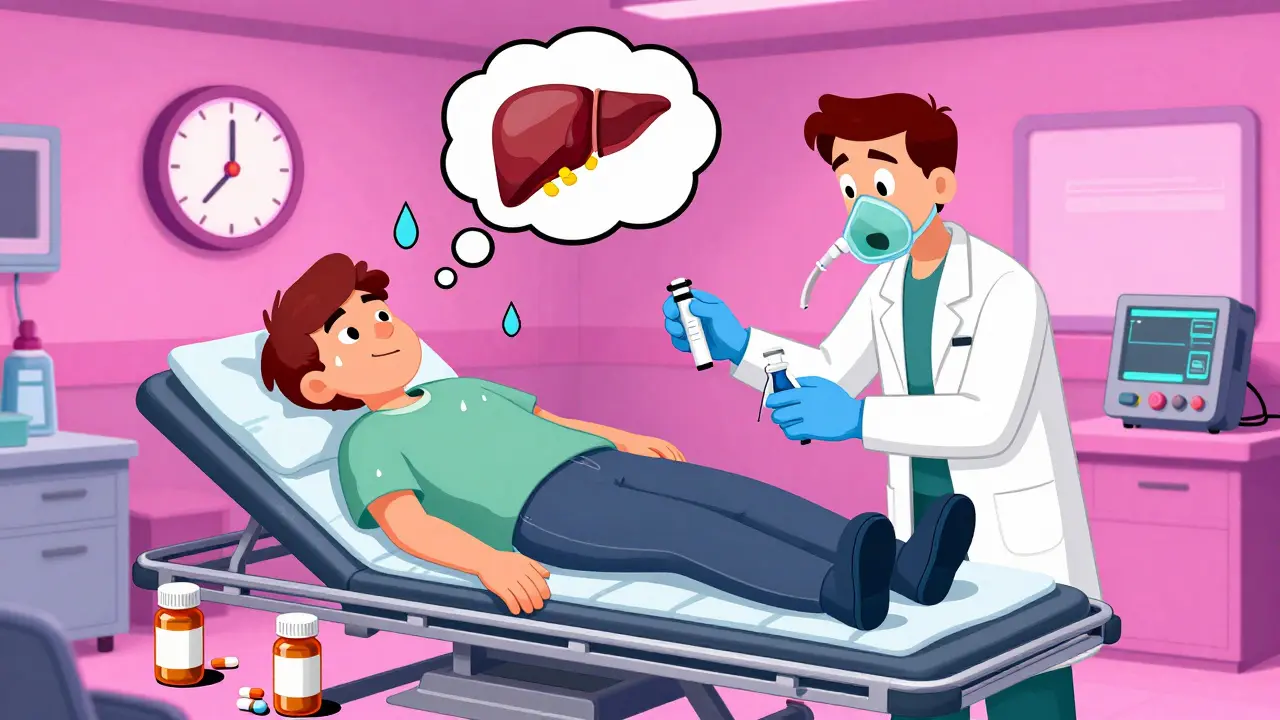
Most people think of an overdose as taking too much of one drug-like too many painkillers or a large dose of heroin. But in reality, multiple drug overdose is far more common and far more dangerous. It’s when someone takes two or more substances at once, either accidentally or intentionally. This could be mixing prescription painkillers with alcohol, snorting opioids with benzodiazepines, or swallowing a handful of pills that include acetaminophen, sleep aids, and antidepressants. The problem isn’t just the amount-it’s how these drugs interact. One drug can make another far more toxic, and treatment becomes a balancing act.
In 2019, opioids alone killed around 120,000 people worldwide. But when you add in acetaminophen, benzodiazepines, or other substances, the risk skyrockets. In the U.S. and Canada, acetaminophen (the active ingredient in Tylenol) causes over 56,000 emergency room visits every year, mostly because people didn’t realize they were taking it in multiple medications at once. The real danger? These overdoses don’t always look like typical overdoses. Someone might seem drowsy, then suddenly stop breathing. Or their liver might start failing hours after they appear to be fine.
Why Standard Overdose Protocols Often Fail
Emergency responders are trained to recognize opioid overdoses: slow breathing, pinpoint pupils, unresponsiveness. Naloxone is the go-to antidote, and it works fast. But what if the person also took acetaminophen? Or Xanax? Or both? That’s where things get messy.
Naloxone reverses opioid effects within minutes. But its effects last only 30 to 90 minutes. Many opioids-especially fentanyl or tramadol-stick around much longer. So if you give naloxone and walk away, the person can slip back into respiratory arrest once the antidote wears off. Meanwhile, acetaminophen is quietly destroying their liver. That damage doesn’t show up for 12 to 24 hours. By then, it might be too late.
Benzodiazepines like diazepam or alprazolam add another layer. Flumazenil can reverse them, but it’s risky. If someone is physically dependent on these drugs, giving flumazenil can trigger violent seizures. So doctors have to choose: treat the overdose now and risk seizures, or wait and risk death from breathing failure.
This is why treating a single-drug overdose is simple, but treating a multiple-drug overdose is like solving three puzzles at once-each with different pieces, different rules, and different timers.
The Critical Role of Naloxone and When to Use It
If you suspect opioids are involved-whether it’s heroin, oxycodone, fentanyl, or even tramadol-naloxone is your first and most important step. The SAMHSA Five Essential Steps for First Responders are clear: assess, call 911, give naloxone, support breathing, and monitor.
But here’s what most people don’t know: one dose isn’t always enough. Fentanyl is 50 to 100 times stronger than heroin. Many overdoses now require two, three, or even four doses of naloxone. The key is to give the first dose immediately. Don’t wait. Don’t worry about being wrong. If they’re overdosing on opioids, naloxone won’t hurt them if they’re not. If they’re not, it won’t do anything.
And while you’re waiting for naloxone to work-or if it doesn’t work right away-keep giving rescue breaths. Oxygen is life-saving on its own. Many people die not because naloxone failed, but because they stopped breathing for too long before help arrived.
Don’t assume recovery means they’re safe. Naloxone wears off fast. The person needs to be monitored for at least four hours, even if they seem fine. That’s why hospitals always keep people overnight after opioid overdoses. It’s not just protocol-it’s survival.
Acetaminophen Overdose: The Silent Killer
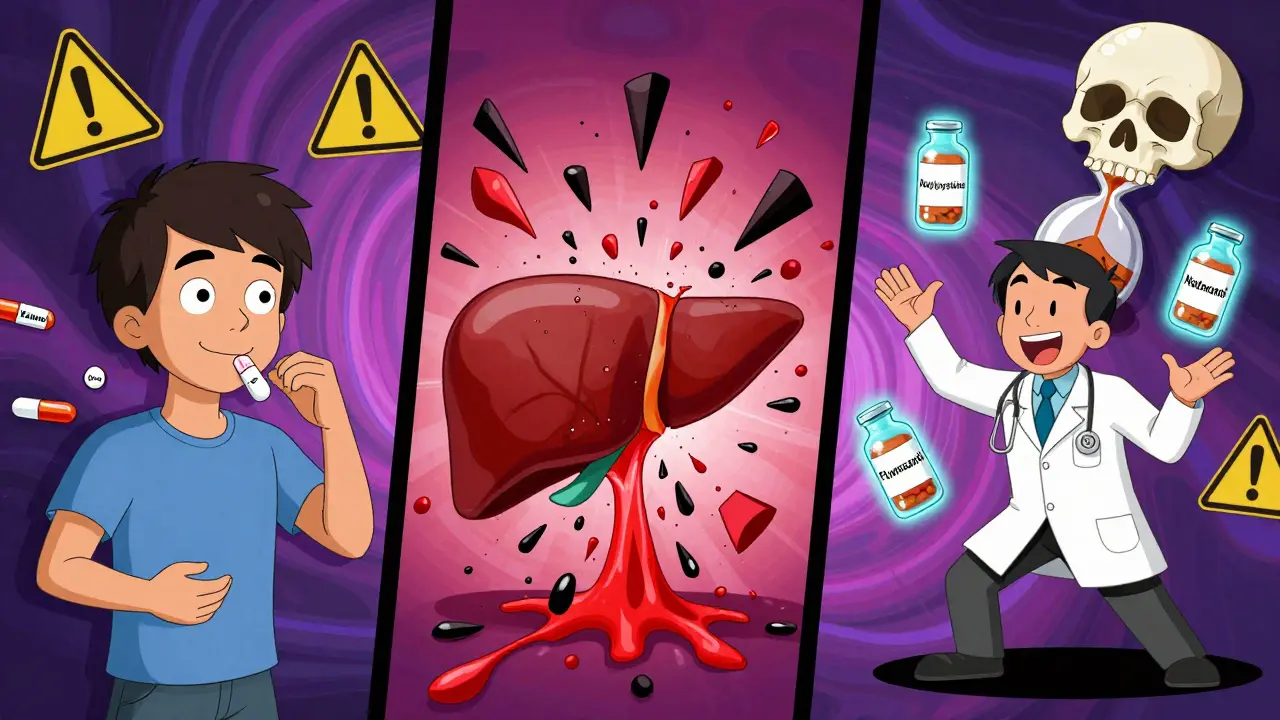
Acetaminophen is in over 600 medications-painkillers, cold medicines, sleep aids. People often don’t realize they’re taking it. They take one pill for a headache, another for a cold, and another for sleep. Add alcohol? The risk of liver failure triples.
The good news? Acetaminophen poisoning is treatable-if caught early. The antidote is acetylcysteine. But timing is everything. If the person presents within four hours of ingestion, single-dose activated charcoal can help bind the drug in the stomach. After that, acetylcysteine is the only option.
The old Rumack-Matthew nomogram used to guide treatment based on blood levels and time since ingestion. But the 2023 guidelines changed that. Now, the line that defines a “high-risk ingestion” is more precise. And for people over 100 kg, the dose of acetylcysteine is capped at 100 kg-no more, no less. Giving too much can cause dangerous side effects.
But here’s the twist: if someone took acetaminophen over several days-not all at once-treatment changes. This is called repeated supratherapeutic ingestion. It’s common in people with chronic pain or depression who keep taking pills “just a little extra.” If their liver enzymes are elevated or their acetaminophen level is above 20 μg/mL, they need acetylcysteine-even if they don’t look sick.
And if the overdose is severe-acetaminophen level over 900 μg/mL with acidosis or confusion-hemodialysis may be needed. But even then, acetylcysteine must keep running during dialysis. Stopping it could mean losing the liver.
When Drugs Interfere: Opioid-Acetaminophen and Benzodiazepine Mixes
The most common multiple drug overdoses involve combinations doctors themselves prescribe. Vicodin and Percocet contain both opioids and acetaminophen. People take them as directed-but then take more because the pain isn’t gone. Or they mix them with alcohol or sleeping pills.
In these cases, you can’t just give naloxone and call it done. You have to give acetylcysteine too. But here’s the catch: naloxone wears off in 90 minutes. Acetylcysteine takes 20 hours to complete. So while the person is breathing again, their liver is still being poisoned. That’s why hospitals monitor liver enzymes for days after the overdose.
Benzodiazepine-opioid overdoses are even trickier. These are the deadliest combinations. The CDC says over 30% of opioid deaths involve benzodiazepines. The problem? Flumazenil can reverse the benzodiazepine-but if the person is dependent on it, they can have seizures. So doctors often avoid it. Instead, they focus on breathing support and wait for the drugs to leave the system.
Tramadol is another curveball. It’s not a classic opioid, but it acts like one. It also affects serotonin. Overdosing on tramadol can cause seizures and serotonin syndrome. Naloxone helps-but often needs to be given as a continuous drip, not just a shot. And even then, it might not stop the seizures.
What Happens After the Emergency?
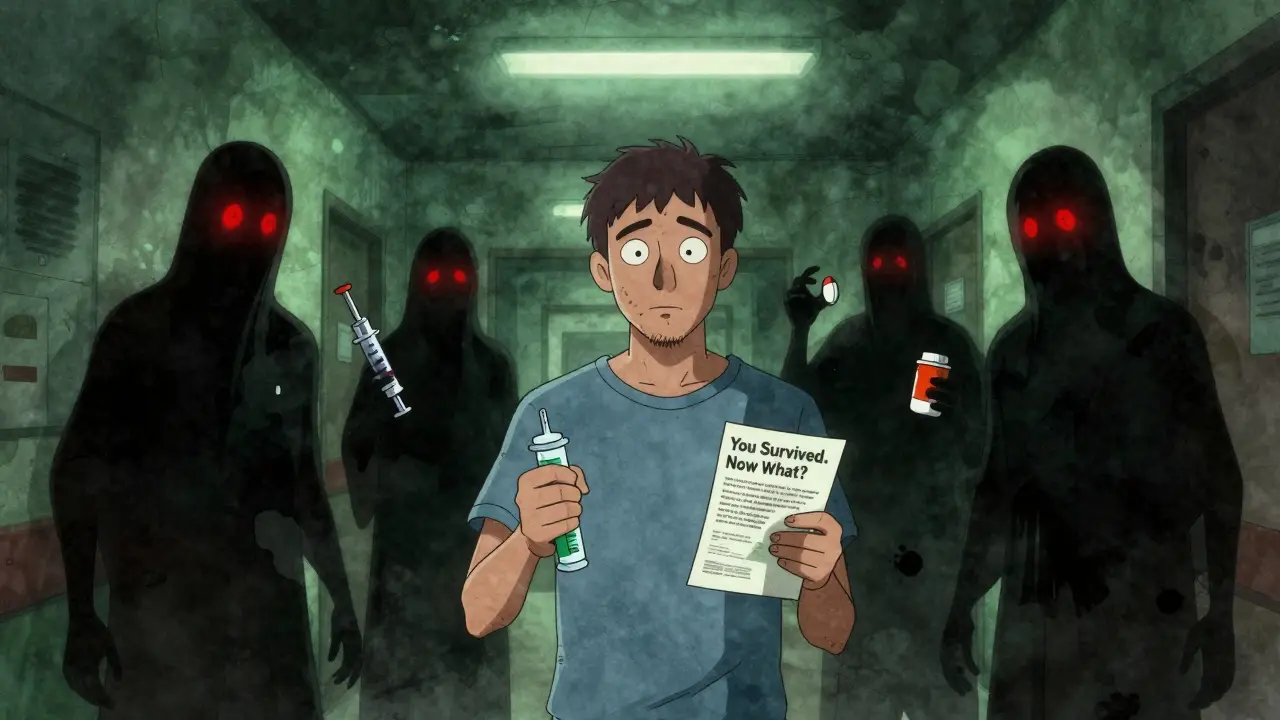
Surviving a multiple drug overdose isn’t the end-it’s just the beginning. Many people who overdose are struggling with addiction, chronic pain, or mental health issues. If you don’t address those, they’ll likely overdose again.
After stabilization, hospitals are supposed to do a full psychological review. That means asking about depression, trauma, access to drugs, and support systems. But too often, that step gets skipped because the patient is “out of danger.”
That’s a mistake. The World Health Organization says people released from prison face the highest overdose risk in the first four weeks. Their tolerance is gone. If they relapse and take the same dose they used to, they die. Programs that hand out naloxone kits and connect people to methadone or buprenorphine treatment cut those deaths by half.
Follow-up care matters. A person needs to see a primary care doctor within a week. Liver damage from acetaminophen can take months to heal. Mental health support is essential. And if they were on opioids, switching to a safer medication like buprenorphine can prevent future overdoses.
What You Can Do: Prevention and Preparedness
You don’t need to be a doctor to save a life. Here’s what works:
- Carry naloxone if you know someone who uses opioids-even if they say they’re “in control.”
- Know the signs: slow or stopped breathing, blue lips, unresponsiveness.
- Call 911 first, then give naloxone. Don’t wait for EMS to arrive.
- Stay with the person until help comes. Keep them breathing if needed.
- Don’t assume they’re safe after naloxone. Watch them for hours.
- Check all medication labels. Look for “acetaminophen” or “APAP.” Don’t double up.
- Store pills securely. Many overdoses happen because kids or teens find them.
Communities that distribute naloxone for free and train people-parents, teachers, shopkeepers-see fewer deaths. It’s not just about drugs. It’s about knowing what to do before it’s too late.
Final Thought: Overdose Isn’t Just a Medical Problem
Multiple drug overdoses aren’t caused by bad choices alone. They’re caused by systems that overprescribe, under-support, and ignore the links between pain, mental health, and addiction. Treating the overdose is urgent. But fixing the reasons people overdose in the first place? That’s the real challenge.
The tools are here: naloxone, acetylcysteine, better guidelines, community training. What’s missing is the will to use them fully-for everyone, not just the lucky ones who make it to the hospital in time.
Can you give naloxone if you’re not sure someone overdosed on opioids?
Yes. Naloxone is safe to give even if opioids aren’t involved. It won’t harm someone who hasn’t taken opioids. If they’re overdosing and you’re unsure, give it. The worst outcome is wasting a dose. The worst outcome if you don’t give it? Death.
How long after an overdose can you still treat acetaminophen poisoning?
Acetaminophen poisoning can be treated effectively up to 24 hours after ingestion, but the sooner, the better. After 8 hours, liver damage starts. After 24 hours, the risk of liver failure increases dramatically. Even if someone presents after 24 hours, acetylcysteine is still given if liver enzymes are rising or acetaminophen levels are detectable.
Is it safe to give activated charcoal at home after an overdose?
No. Activated charcoal should only be given in a medical setting. It’s not effective for all drugs, and it can cause choking or lung damage if the person is drowsy or unconscious. Emergency responders know when and how to use it safely. Don’t try to give it yourself.
Why do some people need multiple doses of naloxone?
Strong opioids like fentanyl, carfentanil, or high-dose oxycodone can overwhelm a single dose of naloxone. These drugs bind more tightly to brain receptors and stay in the system longer. One dose may wake someone up, but when it wears off, the opioid is still active. Multiple doses are often needed-sometimes every 2 to 3 minutes-until breathing stabilizes.
Can you overdose on acetaminophen by taking too many cold medicines?
Absolutely. Many cold, flu, and sleep medicines contain acetaminophen. Taking one for a headache, another for a cough, and a third for sleep can easily push you over the 4,000 mg daily limit. People often don’t realize they’re doubling up. Always check the active ingredients on the label. Look for “acetaminophen” or “APAP.”
What should you do after someone survives a multiple drug overdose?
Get them connected to care. A single overdose is often a sign of deeper problems-addiction, depression, untreated pain. They need a follow-up with a doctor within a week, a mental health evaluation, and possibly medication-assisted treatment like buprenorphine or methadone. Support groups and counseling help prevent future overdoses. Survival is just the first step.
This is wild. I never realized how many meds have acetaminophen in them. I took NyQuil last week for a cold and then a Tylenol for a headache. Didn’t even think about it. Now I’m checking every label like it’s a bomb schematic. 🤯
Naloxone is overhyped. Most people don't even know how to use it. And don't get me started on the 2023 guidelines-total bureaucratic mess.
I work in A&E in Manchester. We see this every weekend. One dose of naloxone? Ha. We give three, then call for the ICU. And yes-acetylcysteine runs for 20 hours. No shortcuts. People think it’s a quick fix. It’s not. It’s a marathon with a ticking clock.
The fact that we’re still having this conversation is a moral failure. People aren’t overdosing because they’re 'weak'-they’re overdosing because the pharmaceutical industry weaponized pain management, and the state turned a blind eye. We need structural reform, not just more naloxone kits. This isn’t harm reduction-it’s triage capitalism.
Honestly? I’m tired of people acting like overdose is some tragic accident. It’s a choice. A selfish, reckless one. You want to mix drugs? Fine. But don’t act surprised when your liver turns to mush. And don’t expect the rest of us to foot the bill for your bad decisions.
The assertion that naloxone is universally safe is empirically dubious. While it lacks intrinsic toxicity, its administration in polypharmacy contexts may precipitate acute withdrawal syndromes, thereby inducing catecholamine surges with potential for arrhythmia. Furthermore, the assumption that 'one size fits all' dosing protocols is clinically indefensible.
They’re lying about the real reason we’re seeing so many overdoses. It’s not drugs-it’s the government putting fluoride in the water to make us docile. And don’t think I don’t know they’re using acetaminophen to hide it. 🇺🇸🔥
Yo, I’m from the hood. We don’t have fancy guidelines. We got friends who know when someone’s out. We give the naloxone, we blow air into their lungs, we don’t leave until the cops show. No drama. Just life. If you’re reading this and you’re scared to help-get over it. Someone’s life is on the line.
I’ve seen it. A 17-year-old girl took 3 Advils, a Xanax, and a Vicodin because her boyfriend broke up with her. Liver failure. ICU. Mom cried for three days. This isn’t 'just drugs.' It’s a cry for help. And we’re ignoring it until it’s too late.
This is exactly why I started teaching basic overdose response at my kid’s high school. You don’t need a medical degree to save a life. You just need to care enough to act. Naloxone isn’t magic-it’s a second chance. And we owe it to each other to give it.
Great breakdown. One thing missing: the importance of documenting all substances ingested. Even if the patient is unconscious, EMS should collect pill bottles. That info saves lives. And yes-monitor for 4+ hours. Always.
Let’s be real: most of these overdoses happen because people are lazy. They don’t read labels. They don’t ask doctors. They just pop pills like candy. And now we’re supposed to fix their ignorance with free naloxone and therapy? No. Accountability comes first.