Supplement Interaction Risk Checker
You pop a multivitamin with your morning coffee and take your prescription blood pressure pill an hour later. It feels harmless enough. After all, vitamins are natural, right? But here is the hard truth: what you consider "natural" might be silently sabotaging your medication. In fact, nearly one in four adverse events reported to the FDA involving supplements stems from them clashing with prescription drugs. The problem isn't just the pills themselves; it's that the labels on those bottles rarely tell you if they will fight with the medicine you are already taking.
Unlike prescription medications, which undergo rigorous testing before hitting store shelves, dietary supplements operate under a completely different set of rules. This regulatory gap means you, the consumer, hold the responsibility for spotting potential dangers. If you do not know how to decode the fine print on a supplement bottle, you could be risking everything from reduced medication efficacy to serious health emergencies. Let’s break down exactly what these labels mean, where the hidden traps lie, and how to protect yourself without needing a pharmacy degree.
The Regulatory Gap: Why Supplements Don’t Warn You
To understand why you have to work so hard to find interaction warnings, you first need to look at who is watching the shop. The U.S. Food and Drug Administration (FDA) regulates drugs and supplements very differently. Prescription drugs and over-the-counter (OTC) medicines must prove their safety and effectiveness to the FDA before they can be sold. This process includes extensive studies on how the drug interacts with other substances. As a result, almost every prescription label includes detailed warnings about what not to mix it with.
Supplements, however, fall under the Dietary Supplement Health and Education Act (DSHEA) of 1994. Under this law, manufacturers are responsible for ensuring their products are safe, but they do not need FDA approval before selling them. More importantly, there is no legal requirement for supplement companies to test for or list drug interactions on their labels. A 2021 analysis by the FDA found that only 12.7% of popular supplement products included any drug interaction warnings at all. Compare that to 100% of prescription drugs and 94% of OTC medications, and you can see why confusion is so common. You cannot rely on the label to shout "danger" because it is often silent.
Decoding the "Supplement Facts" Panel
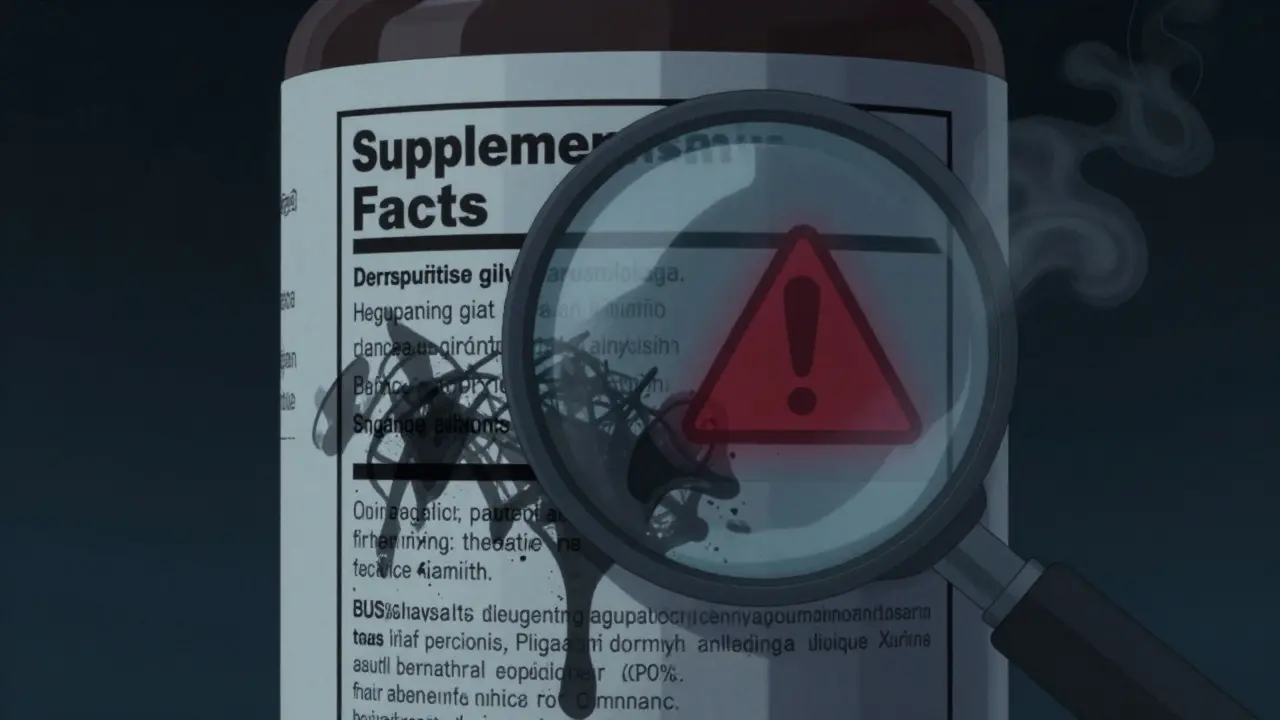
When you pick up a bottle, the most prominent feature is the Supplement Facts panel. This box looks similar to the Nutrition Facts label on food, but it serves a different purpose. It lists the serving size, the amount of each ingredient per serving, and the percent daily value (%DV). While this helps you track nutrient intake, it is also where you start hunting for red flags.
Here is what you need to scrutinize:
- Serving Size: Many people assume one capsule equals one serving. Often, the serving size is two or three capsules. If you take only one, you are getting half the dose listed. If you take two servings thinking it is one, you might double your exposure to an interacting compound.
- Ingredient List: Look beyond the vitamins. Herbal extracts, amino acids, and minerals are the usual suspects for interactions. For example, vitamin K is essential for blood clotting. If you are taking warfarin (Coumadin), extra vitamin K can reduce the drug’s effectiveness by 30-50%, putting you at risk for dangerous clots.
- Allergen Declarations: By law, major allergens like milk, eggs, fish, crustacean shellfish, tree nuts, peanuts, wheat, and soybeans must be clearly stated. While not always a drug interaction issue, allergic reactions can complicate medical conditions and interfere with treatment plans.
The typography matters too. The FDA requires black or single-color text on white or neutral backgrounds with clear borders around the Supplement Facts panel. If the text is tiny, faded, or printed on a dark background, the manufacturer may be trying to hide something. Legibility is your first line of defense.
The Danger of Proprietary Blends
One of the trickiest parts of reading a supplement label is the term "proprietary blend." You will see this on many protein powders, weight loss supplements, and energy boosters. A proprietary blend allows the manufacturer to group several ingredients together and list only the total weight of the mixture, not the individual amounts of each component.
Why does this matter for drug interactions? Because you cannot calculate the dose of the active ingredients. ConsumerLab.com found that 38% of supplements contain undisclosed ingredient quantities in these blends. Imagine a blend containing St. John’s wort, an herb known to decrease blood levels of digoxin (a heart medication) by 26%. If you don’t know how much St. John’s wort is in the blend, you cannot assess the risk. Dr. Paul Offit, Director of the Vaccine Education Center at Children’s Hospital of Philadelphia, has called the absence of mandatory interaction warnings one of the most significant patient safety gaps in modern medicine. Proprietary blends widen that gap significantly.
| Supplement Ingredient | Potential Drug Conflict | Risk Mechanism |
|---|---|---|
| Vitamin K / Green Tea Extract | Warfarin (Blood Thinners) | Reduces drug effectiveness; increases clotting risk |
| St. John’s Wort | Digoxin, Antidepressants, Birth Control | Speeds up drug metabolism; lowers blood levels |
| CoQ10 | Warfarin | Shortens prothrombin time; reduces anticoagulant effect |
| Milk Thistle | Metformin, Diabetes Meds | May lower blood sugar too much (hypoglycemia) |
| High-Dose Vitamin C (>1,000 mg/day) | Antiretroviral Drugs | Alters GI pH; decreases drug absorption by 22% |
| Red Yeast Rice | Statins | Contains monacolin K (same as lovastatin); risk of double dosing |
Hidden Ingredients and "Natural" Myths
A pervasive myth is that "natural" means "safe." This belief leads many consumers to skip checking labels entirely. However, nature is full of potent bioactive compounds. Red yeast rice, for instance, contains monacolin K, which is chemically identical to the active ingredient in the prescription drug lovastatin. Taking both together can lead to accidental overdose, causing muscle damage or liver toxicity.
Another issue is contamination or undeclared ingredients. The FDA’s 2023 enforcement report documented over 1,200 supplement products with misbranded or adulterated labeling. Independent testing by USP (United States Pharmacopeia) shows that only 92% of certified products match their label claims, compared to just 67% of non-certified ones. When you buy a supplement without third-party verification, you are gambling on whether the label even tells the truth about what is inside.
Practical Steps to Stay Safe
Since the label won’t save you, you need a system. Here is a step-by-step approach to managing supplement use safely:
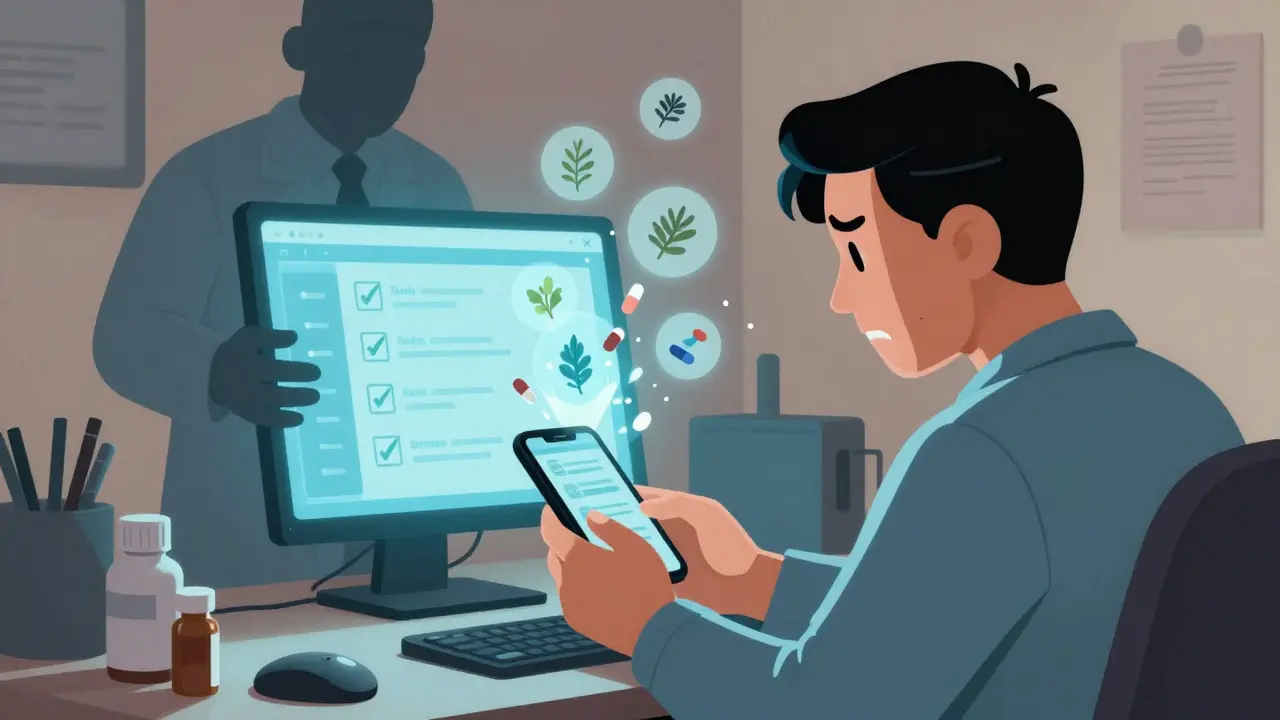
- Photograph Every Label: Take a clear photo of the front and back of every supplement bottle you own. Include the Supplement Facts panel and the ingredient list. Store these photos in a dedicated folder on your phone.
- Use Digital Checkers: Do not guess. Use free tools like the Medscape Drug Interaction Checker, which analyzes over 24,000 drug pairs. Enter your prescription medications and the supplement ingredients to see if there is a known conflict.
- Consult Your Pharmacist: Pharmacists are trained experts in drug interactions. Show them your photos or bring the bottles. A 2023 study from the University of Florida showed that patients who received just 15 minutes of label-reading training reduced their interaction risks by 63%.
- Look for Certification Marks: Seek out supplements with seals from USP, NSF, or ConsumerLab. These organizations verify that the product contains what the label says and is free from harmful contaminants.
- Time Your Doses: Even if there is no direct chemical interaction, some supplements can block absorption. For example, calcium supplements can interfere with thyroid medication (levothyroxine). Separating doses by at least four hours can mitigate this risk.
Remember, the American Medical Association now recommends that physicians spend 3-5 minutes during annual exams reviewing patients’ supplement use against their current medications. If your doctor hasn’t asked, ask them. This simple conversation could prevent thousands of emergency room visits annually.
What’s Next for Supplement Safety?
The landscape is slowly changing. In March 2024, the FDA released draft guidance proposing voluntary inclusion of standardized drug interaction warnings on supplement labels. They are also piloting QR codes that link to real-time interaction databases. However, legislative efforts like the Dietary Supplement Listing Act of 2022, which would have required pre-market notification, failed in Congress. Until laws change, the burden remains on you.
The bottom line is simple: do not trust the silence of a supplement label. Treat every new supplement like a new medication. Verify its contents, check for conflicts, and consult a professional. Your health is worth the extra five minutes of scrutiny.
Are supplements regulated by the FDA like drugs?
No. Unlike prescription and OTC drugs, dietary supplements do not require FDA approval before they are sold to the public. Manufacturers are responsible for ensuring safety, but they are not required to provide evidence of safety or efficacy to the FDA prior to marketing. This means supplement labels often lack the rigorous interaction warnings found on drug labels.
What is a "proprietary blend" on a supplement label?
A proprietary blend is a mixture of ingredients where the manufacturer discloses the total weight of the blend but not the specific amount of each individual ingredient. This makes it difficult for consumers to determine the exact dosage of potentially interacting components, increasing the risk of unintended drug interactions.
Can natural supplements interact with prescription medications?
Yes, absolutely. Many herbal and natural supplements contain bioactive compounds that can alter how your body processes drugs. For example, St. John’s wort can speed up the metabolism of certain heart medications and antidepressants, making them less effective. "Natural" does not mean "safe" when combined with pharmaceuticals.
How can I check if my supplement interacts with my medication?
You can use online resources like the Medscape Drug Interaction Checker or consult your pharmacist. Additionally, the National Center for Complementary and Integrative Health (NCCIH) provides reliable information on common interactions. Always disclose all supplements you take to your healthcare provider.
What should I look for on a supplement label to ensure quality?
Look for third-party certification seals from organizations like USP (United States Pharmacopeia), NSF International, or ConsumerLab. These marks indicate that the product has been tested for purity, potency, and accurate labeling. Also, check for clear allergen declarations and avoid products with vague "proprietary blends" if you are concerned about specific ingredient dosages.
Why don't supplement labels list drug interactions?
Current regulations under the Dietary Supplement Health and Education Act (DSHEA) of 1994 do not require manufacturers to conduct drug interaction studies or include interaction warnings on labels. While the FDA has proposed voluntary guidelines for including such warnings, it is not yet mandatory, leaving consumers to seek this information independently.