St. John's Wort Interaction Checker
Check if your prescription medication interacts dangerously with St. John's Wort. This tool is based on FDA and clinical research data.
St. John’s Wort sounds harmless - it’s a natural herb, sold in health stores, and marketed as a gentle fix for low mood. But here’s the truth: this supplement can quietly wreck the effectiveness of life-saving prescription drugs. If you’re taking anything from birth control to heart medication, antidepressants, or even painkillers, St. John’s Wort might be silently sabotaging your treatment - and you might not even know it.
How St. John’s Wort Changes Your Body’s Chemistry
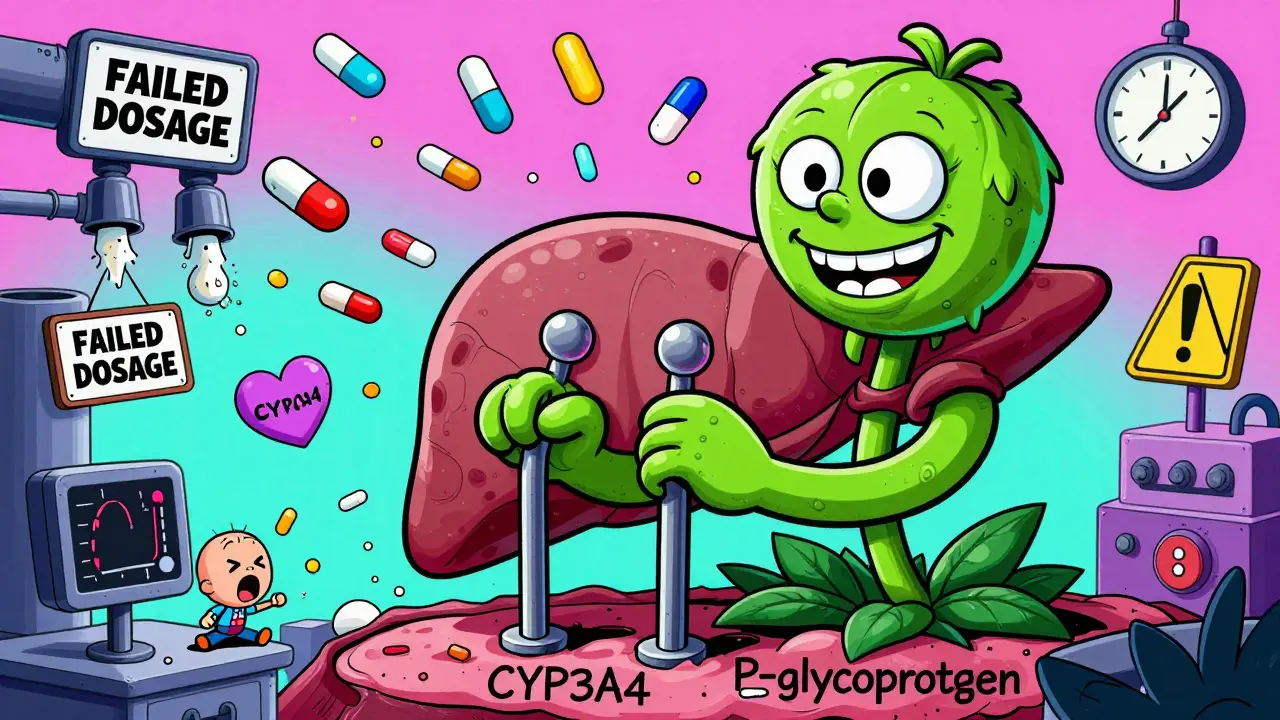
St. John’s Wort doesn’t just float through your system. It actively rewires how your body handles drugs. The main culprit? A compound called hyperforin. This one ingredient turns on a powerful enzyme system in your liver called CYP3A4. Think of this enzyme as a factory that breaks down medications so your body can flush them out. When St. John’s Wort flips this factory into overdrive, your drugs get processed too fast. They never reach the level they need to work.
This isn’t theoretical. Studies show that St. John’s Wort can cut the blood levels of drugs like warfarin (a blood thinner), tacrolimus (used after organ transplants), and phenytoin (an anti-seizure drug) by up to 50%. That’s not a minor drop - it’s a medical emergency waiting to happen.
And it doesn’t stop there. St. John’s Wort also activates a protein called P-glycoprotein, which pushes drugs out of your brain and other tissues. This means even if the drug gets into your bloodstream, it can’t reach the places it needs to act. For someone on HIV meds, transplant drugs, or even certain cancer treatments, this can mean treatment failure.
Medications That St. John’s Wort Can Ruin
Here’s the hard list - the drugs that have been proven to fail when taken with St. John’s Wort:
- Antidepressants - Especially SSRIs like fluoxetine (Prozac), sertraline (Zoloft), and escitalopram (Lexapro). Combining them with St. John’s Wort can trigger serotonin syndrome - a dangerous spike in brain serotonin that causes confusion, rapid heartbeat, high fever, and seizures. In severe cases, it’s fatal.
- Birth control pills - St. John’s Wort speeds up the breakdown of estrogen and progestin. Women have gotten pregnant while on the pill while taking this herb. It can also cause unpredictable bleeding.
- Heart medications - Warfarin (Coumadin) and phenprocoumon lose their blood-thinning effect. This raises the risk of clots, strokes, and heart attacks.
- Anti-seizure drugs - Phenytoin (Dilantin), carbamazepine (Tegretol), and phenobarbital become less effective. Breakthrough seizures are common.
- Immunosuppressants - Cyclosporine and tacrolimus are critical for transplant patients. If their levels drop, the body can reject the new organ.
- HIV medications - Protease inhibitors and non-nucleoside reverse transcriptase inhibitors (NNRTIs) like efavirenz can be rendered useless. This isn’t just about treatment failure - it’s about drug resistance and disease progression.
- Antipsychotics - Clozapine levels drop, making psychosis harder to control.
- Methadone - Used for pain or addiction treatment. St. John’s Wort can cause withdrawal symptoms or relapse.
- Triptans - Migraine drugs like sumatriptan can cause dangerous serotonin spikes when mixed.
- Statins - Some cholesterol-lowering drugs like simvastatin may become less effective.
- Omeprazole - This common acid reducer loses its effect, leaving people with untreated reflux or ulcers.
- Fexofenadine (Allegra) - Instead of lowering drug levels, St. John’s Wort can cause it to build up, worsening side effects like dizziness and headaches.
And here’s the kicker - this list isn’t complete. Researchers estimate that half of all prescription drugs are processed by the same liver enzymes that St. John’s Wort affects. That means hundreds of medications are at risk.
It’s Not Just About Taking It Together
Most people think the danger is only when you take St. John’s Wort and your prescription at the same time. But that’s not the whole story.
When you stop taking St. John’s Wort, your liver enzymes slow back down. Suddenly, your body can’t process your medication as quickly. Drug levels can spike - sometimes dangerously high.
There’s a documented case in Australia where a transplant patient stopped taking St. John’s Wort and ended up with toxic levels of cyclosporine. His kidneys started failing. He needed emergency treatment.
That’s why doctors don’t just tell you to avoid St. John’s Wort while on meds - they also warn you to wait weeks after quitting it before adjusting your prescription. You can’t just flip a switch.
Why Do People Still Take It?
It’s marketed as "natural," "safe," and "side-effect free." Some ads even say it’s "better than antidepressants." But here’s what they don’t tell you: the same studies that show it helps mild depression also show it’s just as risky as prescription SSRIs - and far more unpredictable.
One trial found that 2.4% of users had side effects - mostly mild, like dry mouth or upset stomach. But those numbers don’t include the silent, life-threatening interactions. And because supplements aren’t tightly regulated, the amount of active ingredients in each pill varies wildly. One bottle might have enough hyperforin to cause an interaction. The next might not. You can’t know.
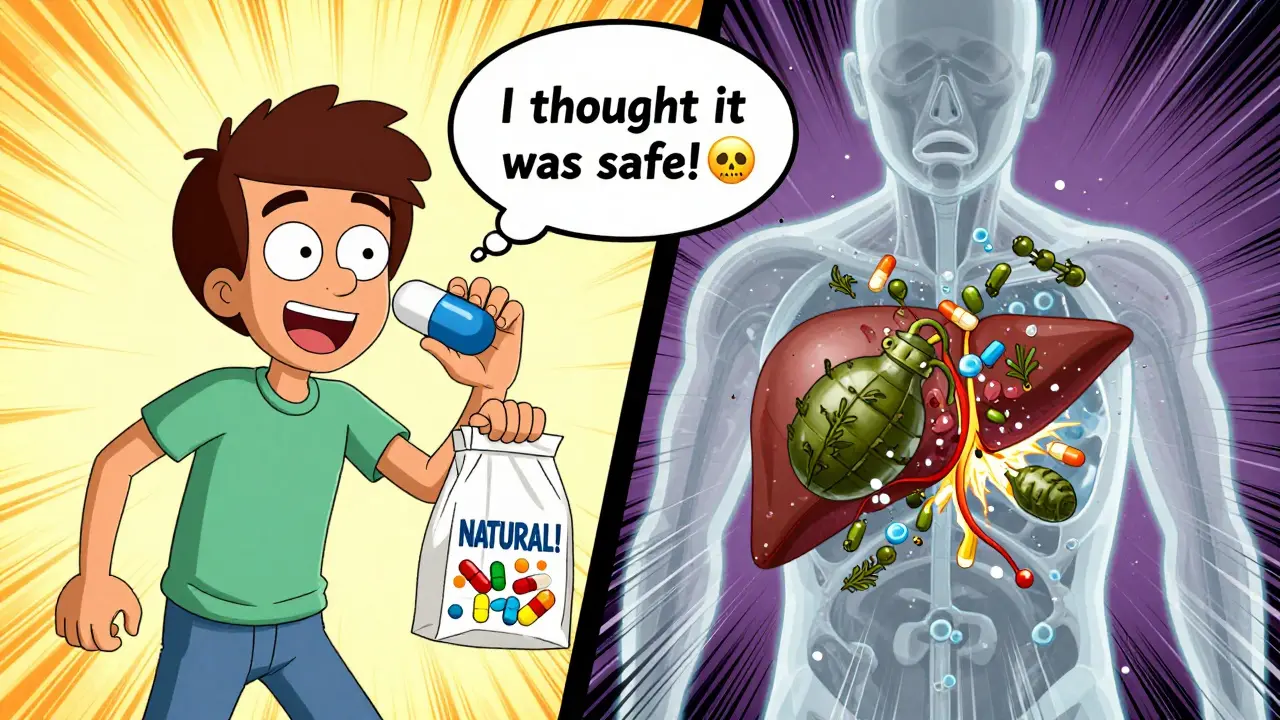
And if you have bipolar disorder? St. John’s Wort has triggered mania in multiple case reports. It’s not just a mood lifter - it’s a chemical grenade.
What Should You Do?
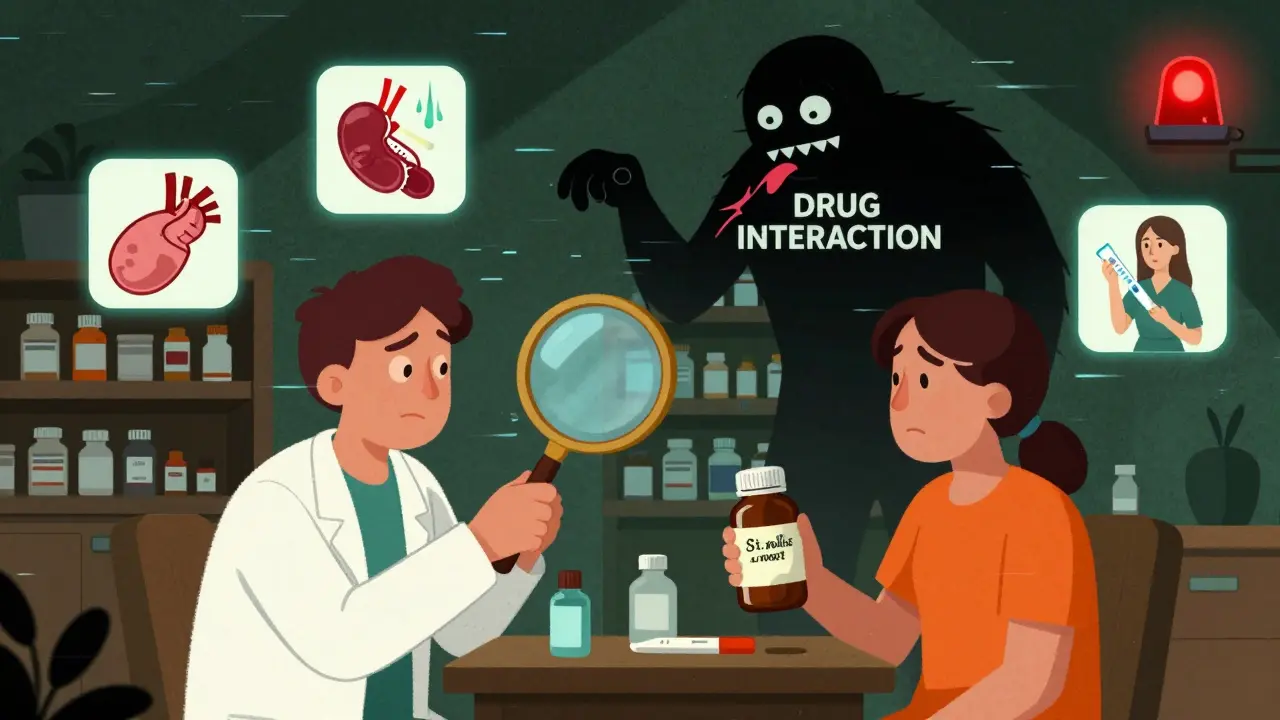
If you’re on any prescription medication - even one you’ve been taking for years - stop and think: have you told your doctor or pharmacist you’re taking St. John’s Wort?
Most haven’t. A 2020 survey found that over 60% of people using herbal supplements never mentioned it to their healthcare provider. They assume it’s "just a herb." But your doctor needs to know. Because if you’re on warfarin, and your INR drops because of St. John’s Wort, your next stroke might be preventable - if someone caught it in time.
Here’s what to do:
- If you’re taking St. John’s Wort, don’t quit cold turkey. Talk to your doctor.
- Bring every supplement, vitamin, and herbal product to your next appointment. Don’t rely on memory.
- Ask: "Could this interact with anything I’m taking?" Don’t assume they know.
- If you’re thinking of starting it - don’t. There are safer, regulated options for depression.
There’s no such thing as a "natural" drug that doesn’t affect your body. St. John’s Wort is a potent, unpredictable, and dangerous player in the world of prescription meds. It’s not a gentle alternative - it’s a hidden risk.
What About Other Herbal Supplements?
St. John’s Wort is the worst offender, but it’s not alone. Garlic, ginkgo, and grapefruit juice also interfere with medications. But none of them affect as many drugs - or as dangerously - as this one.
The lesson? Just because something is sold in a health food store doesn’t mean it’s safe with your prescriptions. Always ask.
Can I take St. John’s Wort if I’m not on any medications?
Even if you’re not on prescription drugs now, you might be in the future. St. John’s Wort can affect your body’s ability to process future medications, including antibiotics, painkillers, or heart drugs. It also increases sun sensitivity - leading to severe sunburns. There’s no safe window to use it without risk.
Is St. John’s Wort regulated like a drug?
No. In the U.S., New Zealand, and most countries, it’s sold as a supplement - meaning manufacturers don’t have to prove it’s safe or effective before selling it. The active ingredient can vary from pill to pill. One brand might have enough hyperforin to cause an interaction. Another might have none. You can’t trust the label.
How long does St. John’s Wort stay in my system?
It can take up to two weeks for your liver enzymes to return to normal after stopping St. John’s Wort. That means even if you stop today, your medications might still be affected for over a week. Don’t assume it’s gone just because you stopped taking it.
Are there safer alternatives for depression?
Yes. FDA-approved antidepressants have known dosing, predictable side effects, and documented interactions. Therapy, exercise, and light therapy are also proven options. If you’re struggling with mood, talk to a doctor - don’t self-treat with unregulated herbs.
I’ve been taking St. John’s Wort for months. Should I be worried?
If you’re on any prescription medication, yes. Even if you feel fine, your drug levels could be dangerously low. Schedule a blood test with your doctor - especially if you’re on warfarin, transplant meds, or seizure drugs. Your body might be silently failing to respond to treatment.
I took St. John’s Wort for a few months last year thinking it was harmless. Didn’t tell my doctor. Then I got put on blood pressure meds and my numbers went haywire. Turns out my levels were too low. Learned the hard way. Just say no to assumptions.
My pharmacist flagged this when I asked about it. Said it interacts with over 50% of prescriptions. I stopped immediately. Better safe than sorry.
I get why people use it. It feels like a natural fix. But yeah, it’s not a vitamin. It’s a chemical. And chems don’t care if you call them 'herbal.'
lol i just take it with my coffee 🤡
The gravity of this issue cannot be overstated. Lives are being jeopardized daily by the casual assumption that 'natural' equals 'safe.' This is not a lifestyle choice-it’s a public health blind spot. We must demand transparency from manufacturers and education from providers.
i didnt even know this was a thing tbh i thought st johns wort was just like chamomile but stronger? i started taking it after my breakup last year and i felt kinda better honestly but now im scared i messed up my thyroid med?? idk what to do
If you’re dumb enough to mix herbs with prescriptions, you deserve what you get.
Oh sweet Jesus, another 'natural remedy' martyr. Let me guess-you read about it on a blog written by a yoga instructor who also sells essential oils? The fact that this stuff isn’t regulated is a national disgrace. And yet, here we are, watching people treat their bodies like a DIY chemistry lab.
My mom took this with her heart meds and ended up in the ER. They said her INR was off the charts. She didn't even know it could do that. Now she's on a strict no-herb policy. You think you're being smart but you're just gambling with your life
Let me tell you something-this isn't about fear. It's about science. St. John’s Wort isn’t some gentle herbal tea. It’s a potent enzyme inducer that’s been studied in clinical trials for decades. You want to treat depression? Try therapy. Try exercise. Try an FDA-approved SSRI with a known half-life and documented interactions. Not a pill from a gas station with no batch number. And if you’re still skeptical? Go read the case studies from Johns Hopkins. They’re not pretty.
You’re not alone if you’ve been taking this without knowing the risks. I did too. But the good news? It’s never too late to fix it. Talk to your doc. Get your meds checked. You’re not weak for asking. You’re smart for caring. And hey-if you need help finding a therapist or figuring out alternatives, I’ve got resources. DM me. Seriously.
this is why america is falling apart 🇺🇸💊💀 herbal nonsense + no regulation = hospital bills for everyone