
High-Altitude Sedative Risk Calculator
You are standing at the base of a majestic peak, ready for the adventure of a lifetime. The air is crisp, the views are breathtaking, but there is an invisible danger lurking in your luggage: that bottle of sleeping pills or the idea of a 'relaxing' drink to help you sleep after a long day of hiking. High-altitude travel combined with sedative use presents a clinically significant risk due to reduced oxygen availability. It might seem like a harmless way to combat jet lag or anxiety, but mixing these substances with thin air can trigger dangerous respiratory side effects. This isn't just about feeling groggy; it is about how your body fights to breathe when oxygen levels drop.
The Thin Air Problem: Why Your Body Struggles Above 8,000 Feet
To understand why sedatives are risky, you first need to understand what happens to your body when you go up. As you climb, the partial pressure of oxygen decreases by approximately 6.5% for every 1,000 meters (3,280 feet) you gain. At sea level, breathing is effortless because there is plenty of oxygen available. But once you cross the threshold of 2,500 meters (about 8,200 feet), your body enters a state of physiological stress.
Your brain detects this lack of oxygen, known as hypoxia, and sends urgent signals to your lungs to breathe faster and deeper. This is called the hypoxic ventilatory response. It is your body's primary defense mechanism against altitude sickness. However, this increased breathing blows off carbon dioxide, leading to a condition called hypocapnic alkalosis. Paradoxically, this chemical change in your blood can then suppress your drive to breathe, potentially causing pauses in breathing during sleep, known as apnea. This cycle of breathing fast, then stopping, is called periodic breathing. According to polysomnographic studies cited in medical literature, nearly 75% of travelers experience some degree of periodic breathing above 2,700 meters (9,000 feet).
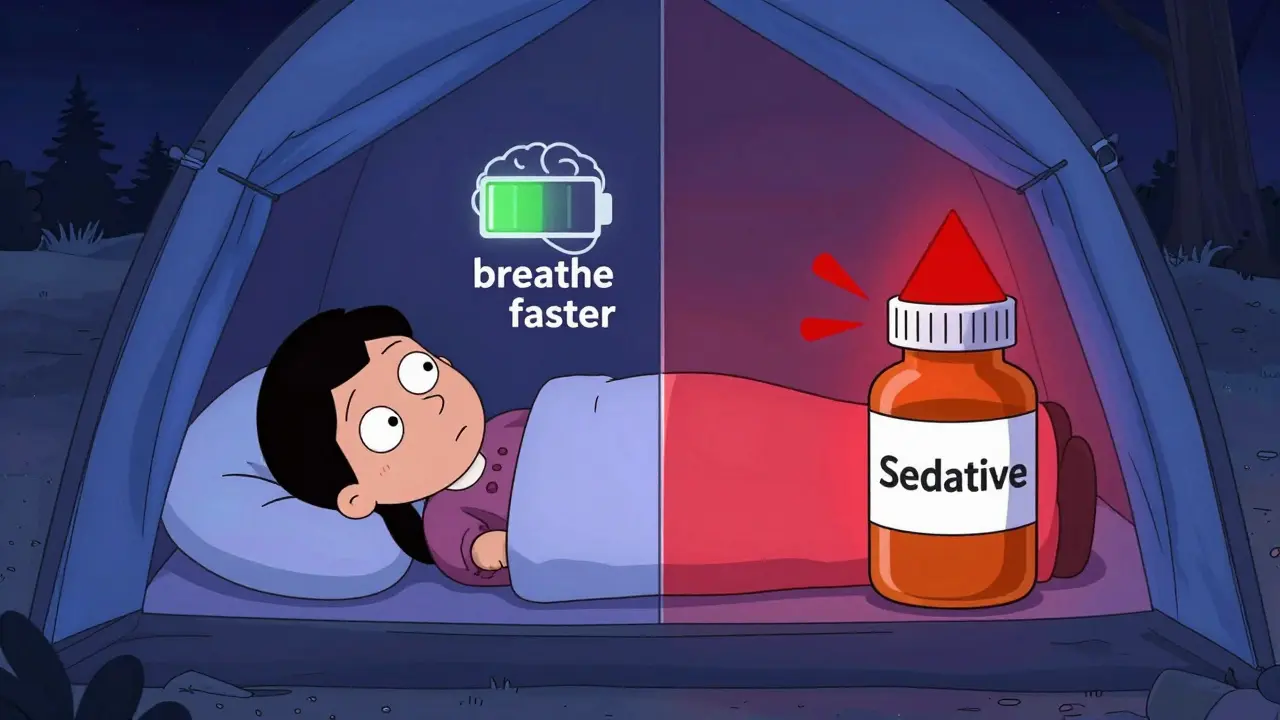
Now, imagine adding a sedative into this delicate balance. Sedatives work by depressing the central nervous system. When you take them at high altitude, they interfere with that critical hypoxic ventilatory response. Instead of waking you up to breathe when your oxygen drops, the drug keeps you asleep while your oxygen saturation plummets. This is not a minor inconvenience; it is a direct threat to your health.
Not All Sleep Aids Are Created Equal: Risk Profiles
If you must manage sleep issues at altitude, knowing which substances are most dangerous is crucial. The risk varies significantly depending on the type of sedative.
| Substance | Risk Level | Physiological Impact | Clinical Recommendation |
|---|---|---|---|
| Alcohol | High | Reduces hypoxic ventilatory response by ~25%; lowers nocturnal SpO2 by 5-10% | Avoid completely during initial acclimatization (first 24-48 hours) |
| Benzodiazepines (e.g., Diazepam, Lorazepam) |
Very High | Decreases ventilation by 15-30%; worsens periodic breathing | Contraindicated; avoid entirely above 2,500 meters |
| Opiates | Extreme | Can cause SpO2 to drop below 80% even at therapeutic doses | Strictly prohibited unless medically supervised emergency |
| Zolpidem (Short-half-life hypnotic) |
Moderate/Low* | Minimal reduction in SpO2 (~2.3%) if short-acting dose used | Use with extreme caution; allow 8+ hours for dissipation |
| Melatonin | Low | No significant respiratory depression observed in small studies | Potentially safer alternative, though not specifically studied for altitude |
*Note: Even with lower-risk options, individual responses vary. Always consult a physician.
Alcohol is perhaps the most common mistake travelers make. Many believe a beer or two will help them relax after a hard day on the trail. However, research shows that alcohol reduces the hypoxic ventilatory response by approximately 25% at blood alcohol concentrations as low as 0.05%. A study published in High Altitude Medicine & Biology found that alcohol decreases nocturnal oxygen saturation by 5-10 percentage points. This means that if your oxygen was already hovering around 85%, a drink could push it down to 75-80%, a range where tissue damage begins to occur.
Benzodiazepines, commonly prescribed for anxiety or insomnia, are equally problematic. Controlled studies have shown that diazepam can decrease ventilation by 15-30% at high altitude. This directly exacerbates periodic breathing, leading to more frequent and longer pauses in respiration during sleep. Opiates are even more dangerous, with case series documenting oxygen saturations dropping below 80% at elevations of 4,500 meters even with standard therapeutic doses.
The Consensus Among Medical Experts
You do not have to guess whether these warnings are real. The medical community is remarkably united on this issue. Dr. Peter Hackett, Director of the Institute for Altitude Medicine, states unequivocally that "any medication that depresses respiration is contraindicated above 2,500 meters." This position is supported by major health organizations worldwide.
The CDC Yellow Book (2024 edition) explicitly warns against "respiratory depressants such as alcohol and opiates" for sleep aid at high altitude. Similarly, the Cleveland Clinic advises travelers to "not take sedatives or sleeping pills" because they interfere with the body's adaptation process. Dr. Andrew Luks, co-author of the Wilderness Medical Society's clinical practice guidelines, emphasizes that sedatives can "precipitate more serious altitude illness" by suppressing the respiratory drive needed to maintain oxygen levels.
Even Dr. Paul Auerbach, editor of the authoritative text Auerbach's Wilderness Medicine, specifically warns that benzodiazepines may worsen hypoxemia and should be avoided. This consensus spans from family physicians to specialized wilderness medicine experts, leaving little room for ambiguity: if it slows your breathing, do not take it at altitude.
Real-World Consequences: Stories from the Trail
Statistics tell one story, but personal accounts bring the danger home. On travel forums like SummitPost and Lonely Planet’s Thorn Tree, countless hikers share harrowing experiences. One user, identifying as 'MountainMedic87', reported their oxygen saturation (SpO2) dropping from 88% to 76% after taking just 0.5 mg of lorazepam at 4,200 meters. They woke up gasping for air, a terrifying sensation that no amount of pre-trip planning can fully prepare you for.
Another common scenario involves alcohol. A traveler documented on Reddit described experiencing mild headache symptoms that escalated to severe nausea and vomiting after consuming two beers at 3,500 meters. What started as a manageable case of Acute Mountain Sickness (AMS) became a medical emergency requiring descent. A survey of 1,247 high-altitude trekkers conducted by the International Society for Mountain Medicine found that 68% of respondents who used alcohol during initial acclimatization reported worse AMS symptoms compared to only 32% of non-alcohol users.
These stories highlight a critical point: you cannot rely on how you feel. Hypoxia impairs judgment. You might feel relaxed after a sedative, but your body is silently starving for oxygen. This disconnect between mental state and physical reality is what makes high-altitude sedative use so deceptive and dangerous.
Safer Alternatives and Practical Strategies
If you struggle with sleep at altitude, you are not alone. Sleep disturbance is the most common complaint among travelers to high altitudes. Fortunately, there are safer ways to manage this challenge without risking your respiratory function.
- Acetazolamide (Diamox): This is the gold standard for preventing and treating altitude sickness. The CDC recommends acetazolamide (125 mg twice daily) not only for its ability to prevent AMS but also because it "raises nocturnal SpO2" and reduces periodic breathing. By helping your body acclimatize faster, it indirectly improves sleep quality.
- Melatonin: While not specifically studied for altitude-related sleep issues in large trials, melatonin (0.5-5 mg) has shown promise in small studies with no significant respiratory depression. A March 2024 study in the Journal of Applied Physiology suggested that low-dose melatonin (0.5 mg) may slightly improve oxygenation at altitude. It helps regulate your circadian rhythm, which is often disrupted by travel and changing light conditions.
- Gradual Ascent: The best prevention is proper pacing. Allow 24-48 hours for acclimatization before ascending above 2,500 meters. Avoid gaining more than 300-500 meters in sleeping elevation per day once you are above 3,000 meters.
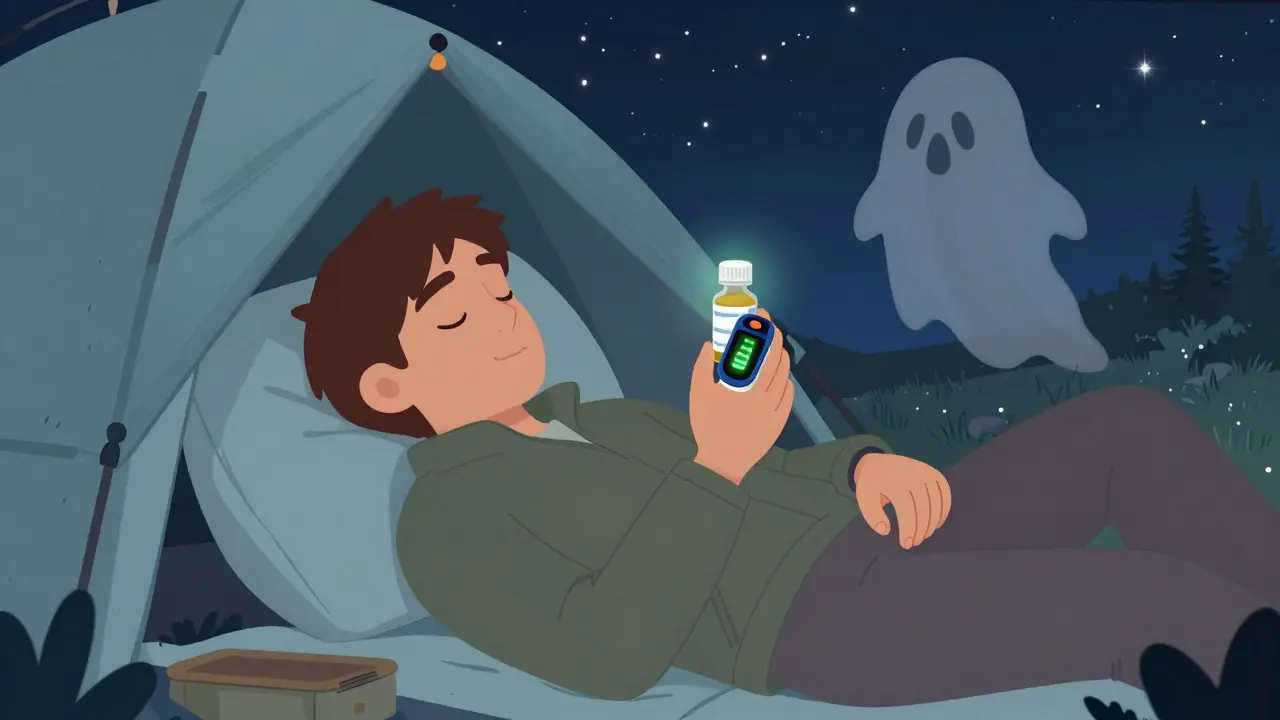
- Pulse Oximetry: Carry a portable pulse oximeter. The Adventure Medical Kits company reported a 22% year-over-year increase in sales of these devices, indicating growing awareness. Monitoring your SpO2 levels gives you objective data. If your levels drop below 85% during sleep, you know something is wrong, regardless of how well you think you slept.
If you absolutely must use a sedative due to a pre-existing condition, consult a travel medicine specialist at least 4-6 weeks before departure. Short half-life hypnotics like zolpidem 5 mg have been found "generally safe and effective" by the CDC, provided you allow at least 8 hours for the drug to dissipate before engaging in any activities. However, this is a narrow window and requires careful planning.
Preparing for Your Journey: A Checklist
Before you pack your bags, run through this checklist to ensure you are prioritizing safety over convenience:
- Consult a Professional: See a travel medicine clinic. Discuss your specific medications and ask about altitude-specific adjustments.
- Review Your Meds: Identify any prescriptions that act as respiratory depressants (benzodiazepines, opioids, muscle relaxants). Ask your doctor if they can be paused or substituted during your trip.
- Plan Your Ascent: Build rest days into your itinerary. Do not fly directly to high altitude if possible; spend a night at an intermediate elevation.
- Hydrate: Dehydration worsens altitude sickness. Drink plenty of water, but avoid alcohol and caffeine in excess.
- Listen to Your Body: If you develop a headache, nausea, or dizziness, do not ignore it. These are early signs of AMS. Descending is the only definitive cure.
The allure of high-altitude destinations is undeniable. From the Himalayas to the Andes, these places offer unparalleled beauty. But respecting the environment means respecting your physiology. By avoiding sedatives and understanding the risks, you protect not just your health, but your ability to enjoy the journey itself. Remember, the goal is to reach the summit safely and return home healthy, not to test the limits of human endurance with unnecessary pharmacological aids.
Can I take my regular anxiety medication at high altitude?
If your anxiety medication is a benzodiazepine (like Xanax, Valium, or Ativan), it is generally recommended to avoid it above 2,500 meters due to the risk of respiratory depression. Consult your doctor before traveling to discuss potential alternatives or temporary adjustments. Non-benzodiazepine options may be safer, but professional medical advice is essential.
Is it safe to drink wine or beer at altitude?
No, it is not considered safe, especially during the first 24-48 hours of acclimatization. Alcohol acts as a respiratory depressant, reducing your body's ability to respond to low oxygen levels. It can worsen symptoms of Acute Mountain Sickness (AMS) and lead to dangerous drops in blood oxygen saturation during sleep.
What is the safest sleep aid for high altitude?
Melatonin is often considered the safest option as it does not appear to depress respiration. Acetazolamide (Diamox) is also highly recommended as it helps with acclimatization and can improve nighttime oxygen levels. Always consult a healthcare provider before starting any new supplement or medication.
How quickly should I ascend to avoid altitude sickness?
A general rule is to not gain more than 300-500 meters (1,000-1,600 feet) in sleeping elevation per day once you are above 3,000 meters (10,000 feet). Include a rest day every 2-3 days. Flying directly to high altitude increases risk, so spending a night at an intermediate elevation is advisable.
Why do I wake up gasping for air at high altitude?
This is likely periodic breathing, a common phenomenon at altitudes above 2,700 meters. Your body breathes fast to get oxygen, which lowers carbon dioxide levels, causing your brain to temporarily stop sending breathing signals. This results in pauses in breathing (apnea) followed by a gasp to restart breathing. It is normal but can be worsened by sedatives.
omg this is so important!! i always thought taking a little xanax before sleeping in the mountains was fine but reading this makes me wanna throw up lol. my friend took benzos on his trek to peru and ended up in the hospital with severe hypoxia. we were all laughing about it at first but then he turned blue 😱. seriously though, thanks for sharing this info. im planning a trip to lekh pass next month and now im terrified of my own sleep meds. gonna stick to melatonin like the article said. also does anyone know if cbd gummies are safe? or do they count as sedatives too? please help me out here because i cant sleep without something
I lost my wife to altitude sickness because she took her prescribed valium. The doctors said it was an accident but I know they were lying. They wanted to cover up the fact that big pharma pushes these drugs knowing full well what happens at high elevations. It’s all part of the plan to thin out the population. Don’t trust the CDC. Don’t trust the doctors. Trust your gut. And if you feel weird, just keep going up. That’s what I did.
The data presented here is... interesting. However, one must question the source of the 'consensus'. Is it truly consensus? Or is it manufactured consent? The pharmaceutical industry has a vested interest in keeping us dependent on these very substances. Perhaps the real danger isn't the drug, but the lack of oxygen itself which is being manipulated by global warming agendas. We need to look deeper. Much deeper. The truth is hidden in plain sight. ;)
This article is painfully obvious to anyone who has spent more than five minutes in a medical library. The notion that people genuinely believe alcohol helps with acclimatization is laughable. It is not just risky; it is intellectually bankrupt. If you are bringing a bottle of wine to base camp, you are not a traveler; you are a liability. The table provided is adequate, though it lacks nuance regarding individual metabolic variances. Still, it is better than the usual drivel found on travel blogs. One hopes readers actually possess the cognitive capacity to understand the physiological mechanisms described, rather than simply skimming for keywords.
Typical amateur hour advice. You think a blog post can replace years of wilderness medicine training? Please. The reality is far more complex than 'avoid benzodiazepines.' Context matters. Dosage matters. Genetic predisposition matters. But no, let's simplify it for the masses so they feel informed while remaining dangerously ignorant. I've guided expeditions where controlled use of short-acting hypnotics prevented catastrophic anxiety-induced hyperventilation, which ironically causes worse outcomes than mild respiratory depression. Nuance is dead in this discourse.
It is fascinating how our bodies adapt to such extreme environments. This reminds me of the philosophical concept of resilience. We are not meant to fight nature, but to harmonize with it. When we take sedatives, we are essentially rejecting the natural rhythm of the mountain. Instead, perhaps we should view the discomfort as a teacher. It teaches us humility. It teaches us presence. I find that meditation and breathwork are far more effective than any pill. They connect us to the earth rather than disconnecting us from our own biology. Beautifully written piece on the science behind this wisdom.
nah man its totally fine i drink beer every night on the trail and never had a problem. maybe u guys r just weak. the whole thing about periodic breathing is overblown. sure u might wake up gasping once but thats normal right? why are yall making such a big deal out of it. probably just trying to sell more pulse oximeters. classic marketing scam. dont listen to them. just chug that ale and sleep tight 🍺😴
You're all missing the point. The real issue isn't the drugs. It's the air. The air is fake. I mean come on. Who controls the atmosphere? The government obviously. So why are we blaming the pills? Blame the system. Also melatonin is bad for you. It disrupts your pineal gland. Just stay awake. Sleep is for the weak anyway. Wake up early. See the sunrise. Ignore the science. Science is just a story they tell kids to make them behave.
interesting read. i went to qld high country last year and felt terrible. didn't realize it could be this serious. good to know about diamox. will ask doc next time. cheers mate.
let's circle back to the core competency of respiratory health. leveraging melatonin is a low-hanging fruit for optimization. we need to synergize our acclimatization strategies with holistic wellness paradigms. don't silo yourself into just avoiding benzos. think outside the box. embrace the journey of self-discovery through hypoxic stress testing. it's a win-win situation for your circadian rhythms and your overall vibe check. stay tuned for more insights on bio-hacking at altitude!
The statistical significance of the alcohol study is questionable given the sample size bias. Furthermore, the definition of 'high altitude' varies geographically. In the UK, we rarely exceed 1000m so this is largely irrelevant to most domestic travelers. However, for those venturing abroad, the advice is sound albeit alarmist. Do not panic. Just hydrate. Water cures everything. Even death eventually.
Hey folks! Just wanted to add that cultural practices around sleep vary wildly. In some Andean communities, communal sleeping helps regulate breathing patterns naturally. Its all about community support! Also watch out for typos in ur own comments lol. Kidding aside, this is super helpful info for my upcoming trip to Nepal. Gonna share this with my group chat. Thanks OP for putting this together! 🙌
One must consider the ontological implications of consciousness under hypoxic conditions. When the brain is deprived of oxygen, does the self dissolve? Or does it transcend? The use of sedatives is merely a crutch for those unwilling to face the void. True enlightenment comes from staring into the abyss of thin air without flinching. Embrace the suffering. It is the only path to authentic existence. 🧘♀️✨🌿
i cant believe i didnt know this!!! i always take ambien when i travel. omg. is it really that bad? i feel like ive been living a lie. thanks for waking me up literally and figuratively. gonna stop drinking wine on planes too. wow. just wow. this changes everything. love this thread so much. keep posting stuff like this pls!!