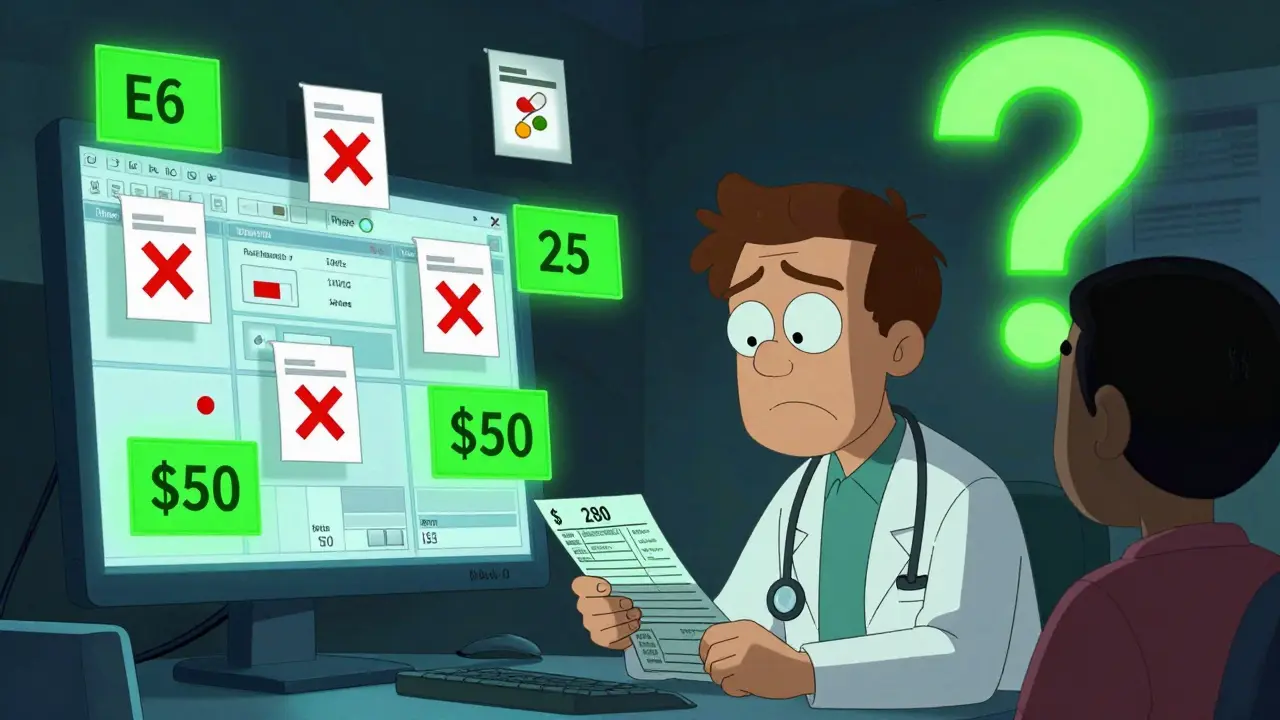
When a doctor writes a prescription, they rarely know how much the patient will actually pay at the pharmacy. Not the list price. Not the wholesale cost. But the real out-of-pocket bill that hits the patient’s wallet. And that gap in knowledge isn’t just inconvenient-it’s costing people their health.
Doctors are guessing, and patients are paying the price
A 2016 study of 254 doctors and medical students found that only 5.4% of them could accurately estimate the cost of generic drugs within 25% of the actual price. For brand-name drugs, it was slightly better-13.7% got it right. The rest? They were wildly off. Generic drugs were overestimated nearly 80% of the time. Expensive brand drugs? Underestimated by more than half.
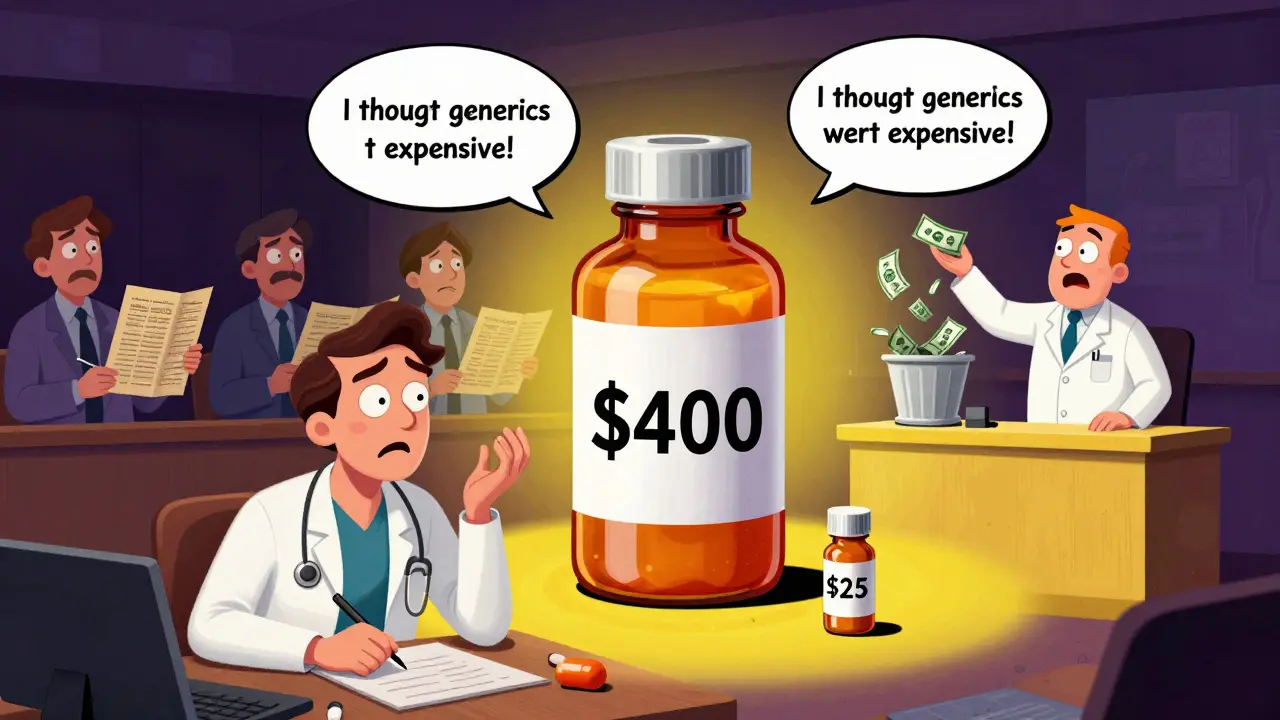
Why does this matter? Because if you don’t know the cost, you can’t choose the most affordable option-even when one exists. A patient with diabetes might get a $400 monthly insulin prescription when a generic alternative costs $25. A senior on a fixed income might skip doses because they can’t afford what was prescribed. And the doctor? They had no idea.
It’s not that clinicians are careless. It’s that the system makes cost information nearly impossible to access at the point of care. In a 2007 review of 29 studies, 92% of doctors said they wanted cost data during appointments-but couldn’t find it. Today, that hasn’t changed much. Checking drug prices can take 3 to 5 minutes per prescription. Multiply that by 20 patients in a day, and you’re adding 90 minutes to an already packed schedule.
Why do doctors get it so wrong?
Most physicians learned about drugs in medical school based on efficacy, side effects, and guidelines-not pricing. Drug companies market to doctors using clinical data, not price tags. And when they do hear prices, it’s often inflated list prices from pharmaceutical reps, not what patients actually pay after insurance.
There’s also a psychological blind spot. Doctors assume expensive drugs are better. But that’s not true. A 2021 study showed that 84% of doctors could name at least one source for drug pricing info-but only 40% of medical students could. And even among experienced doctors, fewer than half understood that drug prices have almost nothing to do with research and development costs. The real drivers? Patent protections, market exclusivity, and lack of competition.
One of the most shocking findings? Generic drugs-often 90% cheaper than brand names-are consistently overestimated. Why? Because doctors assume generics are less effective. Or they don’t realize how much prices have dropped. A $150 brand-name statin might have a $12 generic equivalent. But if the doctor thinks the generic is $80, they’ll stick with the brand. And the patient pays the difference.
Technology is starting to help-but not enough
Electronic health records (EHRs) are finally starting to include real-time cost data. In 2021, a JAMA Network Open study found that doctors who saw out-of-pocket costs pop up in their EHRs were significantly better at estimating prices. Even more powerful? When the system flagged a cheaper alternative, one in eight doctors changed their prescription. That number jumped to one in six when the savings were over $20 per month.
UCHealth, a Colorado-based health system, rolled out a real-time benefit tool (RTBT) in 2022. It showed patients’ actual copays based on their insurance plan. Within months, 12.5% of prescriptions were modified to lower-cost options. That’s not a small number-it’s thousands of patients saving hundreds of dollars a year.
But here’s the catch: these tools are still rare. As of Q3 2024, only 37% of U.S. health systems have them. And even when they exist, they’re often broken. One internal medicine resident on Reddit complained that their Epic system showed insurer pricing but didn’t factor in patient-specific copays. So the alert said “$50,” but the patient’s actual bill was $280. That’s worse than no alert at all-it erodes trust.
Another issue? The same drug can cost $15 at one pharmacy and $320 at another. Without knowing where the patient fills their script, cost alerts are meaningless. And if the patient is on Medicare Part D, the system often doesn’t even know their plan’s formulary. It’s like trying to buy a plane ticket without knowing the airline or the route.
Who’s getting hit the hardest?
It’s not just about cost-it’s about equity. Preliminary data from a 2024 study presented at AcademyHealth showed that safety-net clinics (which serve low-income, uninsured, and minority populations) had 22% higher rates of prescription changes after cost alerts than private practices. Why? Because those patients are more likely to skip doses or split pills when they can’t afford meds.
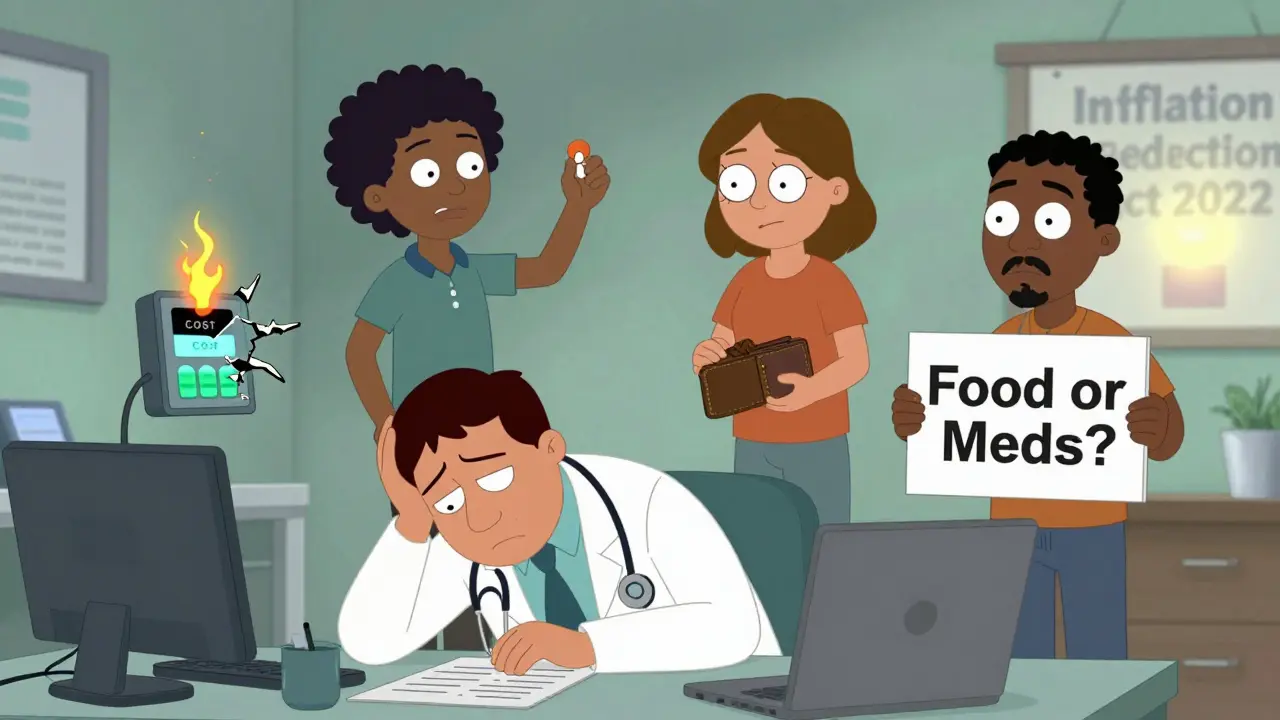
And it’s not just patients. Doctors in these settings feel guilty. They know their patients are choosing between food and medicine. But without reliable cost tools, they’re powerless to help. One primary care physician in Detroit told a researcher, “I prescribe what I think is best. Then I see the patient two weeks later because they didn’t fill it. I feel like I failed them.”
Education is lagging behind
Medical schools aren’t preparing future doctors for this reality. A 2021 study found that 56% of U.S. medical schools have no formal curriculum on drug pricing. Students graduate knowing how a drug works-but not how much it costs, or how to find alternatives.
Some schools are starting to change. At the University of Colorado, third-year students now get a module on cost-conscious prescribing. They compare prices of common drugs, learn how to use RTBTs, and even role-play conversations with patients about affordability. Early results show improvement in cost estimation accuracy-but it’s still the exception, not the rule.
And it’s not just students. Even experienced doctors need training. A 2023 study found that physicians under 40 adopted cost-aware tools 78% of the time. Those over 55? Only 52%. The learning curve is real. It takes about six weeks for clinicians to start using cost data naturally in their workflow. But without institutional support, most never make it that far.
The policy shift is real
Change isn’t just coming from clinics-it’s coming from Washington. The 2022 Inflation Reduction Act gave Medicare the power to negotiate prices for 10 high-cost drugs in 2026, with more to follow. This is historic. For the first time, the government is directly challenging pharmaceutical pricing.
And the public is behind it. KFF polling shows 83% of Democrats and 76% of Republicans support Medicare negotiating drug prices. Even more telling? 82% of U.S. adults say prescription drug costs are unreasonable. That pressure is forcing health systems to act.
Meanwhile, CMS now requires drug manufacturers to report out-of-pocket costs for their products. That data could eventually feed into EHRs, making cost alerts more accurate. But until that data is standardized and integrated, it’s just another spreadsheet.
What’s next?
The future of cost awareness isn’t just about showing prices. It’s about showing value. The Institute for Clinical and Economic Review is pushing for systems that don’t just say “this drug costs $50,” but “this drug costs $50 and has the same effectiveness as this $15 alternative.” That’s the next level.
By 2027, 75% of U.S. health systems are expected to have advanced real-time benefit tools. But that won’t fix everything. As long as drug prices keep rising without clinical justification-like Humira’s 4.7% price hike in 2023 with no new benefits-clinicians will keep being blindsided.
The real solution? A system where cost isn’t an afterthought. Where pricing data is as routine as allergy lists or lab results. Where every prescription comes with a clear, accurate, patient-specific price tag-and the option to switch to a cheaper, equally effective drug.
Until then, doctors are still guessing. And patients are still skipping pills.
Do doctors know how much prescription drugs cost?
Most doctors don’t know the exact out-of-pocket cost patients will pay. Studies show they often overestimate cheap drugs and underestimate expensive ones. Only about 5-14% of clinicians estimate drug prices within 25% of the actual cost, depending on whether the drug is generic or brand-name.
Why don’t doctors know drug prices?
Drug pricing is fragmented, opaque, and not taught in medical school. Doctors rely on outdated lists, pharmaceutical reps, or guesswork. Real-time pricing data isn’t routinely available in electronic health records, and when it is, it’s often incomplete or inaccurate.
Can EHR cost alerts help doctors prescribe more affordably?
Yes. Studies show that when EHRs show real-time out-of-pocket costs, one in eight doctors change prescriptions to cheaper alternatives-and that number doubles when savings exceed $20 per month. But only 37% of U.S. health systems have these tools, and many are poorly integrated.
Are generic drugs really cheaper than brand-name drugs?
Almost always. Generic drugs are typically 80-90% cheaper than their brand-name equivalents and have the same active ingredients. But doctors often overestimate their cost because they assume they’re less effective-or simply don’t know the current prices.
What’s being done to fix this problem?
The 2022 Inflation Reduction Act allows Medicare to negotiate drug prices. Some health systems like UCHealth have added real-time cost tools to EHRs. Medical schools are slowly adding pricing education. But progress is uneven, and most clinicians still lack the tools and training to make cost-conscious decisions reliably.
How does drug pricing affect patient adherence?
About 28% of U.S. adults report skipping doses or not filling prescriptions because of cost. When doctors prescribe without knowing the price, they unknowingly contribute to non-adherence. Patients who can’t afford their meds are more likely to be hospitalized, which costs the system far more than the drug itself.
Is there evidence that cost-aware prescribing improves outcomes?
Yes. A 2023 JAMA Internal Medicine study found that cost-transparency tools reduced patient out-of-pocket expenses by $187 per year per person. That’s not just savings-it’s better adherence, fewer ER visits, and lower long-term healthcare costs.
This is insane. My grandma skipped her insulin for weeks because the copay was $400 and she thought the doctor knew it was unaffordable.
It’s like prescribing a Ferrari when a reliable Honda exists-and no one tells you the gas bill is $200 a week. Doctors aren’t villains, they’re trapped in a broken system where the price tag is hidden behind layers of bureaucracy, insurance jargon, and outdated tech. We need cost data as routine as blood pressure readings. Until then, we’re just guessing with people’s lives.
I’m a nurse and I see this every day. Patients cry in the clinic because they’re choosing between meds and groceries. The EHR alerts we have? Half the time they’re wrong. One time it said $12 for a script-patient paid $290. Now they don’t trust anything. We need real integration, not flashy widgets that lie.
The systemic failure here is not merely technical but epistemological. Physicians are trained to prioritize clinical efficacy, pharmacodynamics, and evidence-based protocols, yet the economic dimension of therapeutic decision-making remains conspicuously absent from the curriculum. The pharmaceutical industry’s marketing apparatus has long been oriented toward clinical narratives, deliberately obscuring the commercial architecture of pricing-patent evergreening, tiered formularies, and rebate structures that render the notion of a ‘fair price’ a myth. Until medical education incorporates cost-effectiveness analysis, real-world pricing literacy, and ethical deliberation around access as a core competency, we are perpetuating a form of benevolent negligence. The data is clear: cost ignorance leads to non-adherence, which leads to hospitalization, which leads to higher aggregate costs. The irony is not lost on those of us who have witnessed the quiet despair of a patient who cannot afford the very medicine meant to save them.
Let’s be honest-this isn’t about doctors being unaware. It’s about the healthcare system being designed to extract profit, not to deliver care. The fact that 92% of doctors want cost data but can’t get it is a feature, not a bug. The pharmaceutical-industrial complex thrives on opacity. If doctors knew the real prices, they’d prescribe generics, and the margins would collapse. The system is rigged. And no amount of EHR pop-ups will fix that. We need price controls, not band-aids.
Doctors are clueless? Wow. And I thought my insurance was the problem. No wonder people die from pills they can’t afford. Someone needs to fire the whole system.
One must question the epistemic humility of clinicians who presume to prescribe without understanding the fiscal burden of their interventions. The very notion that cost transparency is an ‘add-on’ rather than a foundational component of therapeutic reasoning speaks volumes about the moral drift of contemporary medical practice. One cannot ethically prescribe without accounting for the patient’s economic reality. This is not a logistical issue-it is a crisis of professional integrity.
As someone from India, I’ve seen how generics work here-₹10 for a month’s supply of metformin. I can’t believe U.S. doctors still think generics cost $80. It’s like believing a smartphone costs $5000 because the brand one is $1500. We need training, yes-but also transparency. And maybe a reality check. 🤦♂️💊
You’re blaming doctors. The real issue is Medicare Part D’s formulary chaos. Fix the insurance structure, not the EHR.