Calcium-Juice Interaction Checker
-
Tetracyclines
Doxycycline, Minocycline -
Fluoroquinolones
Ciprofloxacin, Levofloxacin -
Bisphosphonates
Alendronate (Fosamax) -
Thyroid Hormones
Levothyroxine (Synthroid) -
Certain Antifungals
Ketoconazole -
Other / Not Listed
Penicillins, Cephalosporins, etc.
Why does this happen?
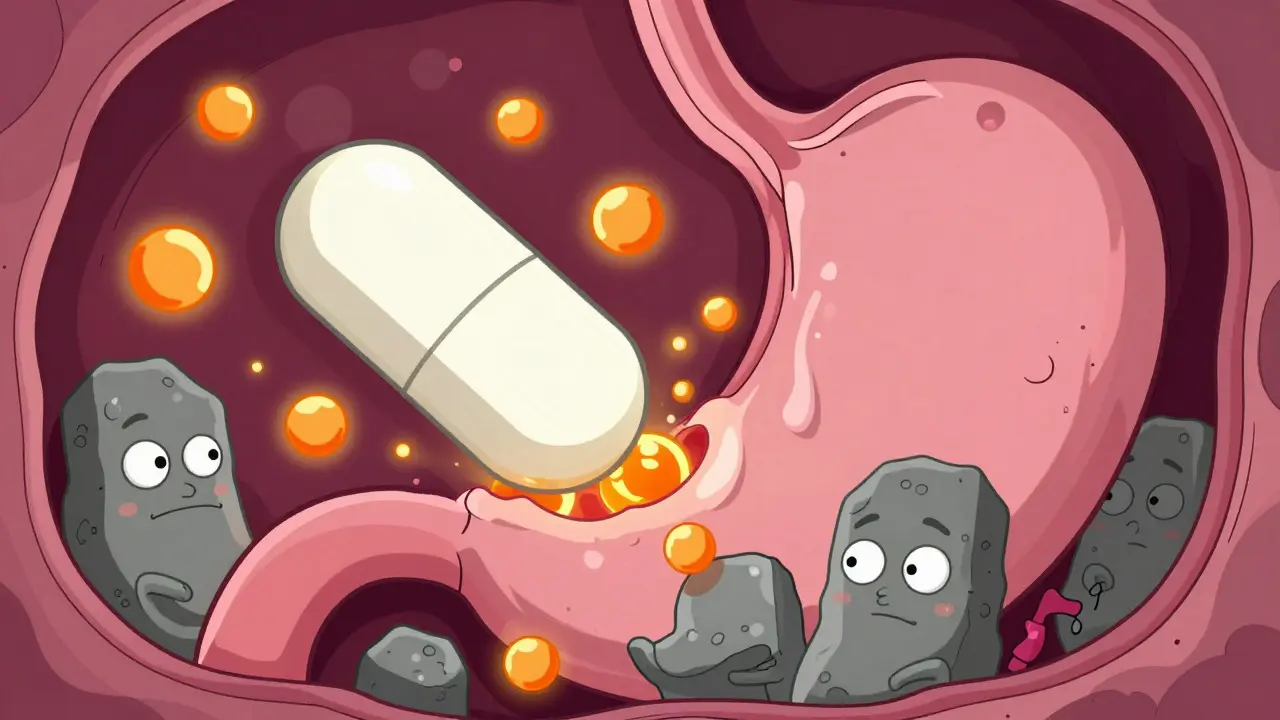
Calcium ions bind to certain medications in your gut, forming insoluble complexes that are too large to be absorbed into the bloodstream. This is known as chelation. If you take these meds with high-calcium drinks like fortified orange juice, the drug may pass through your system without working.
You’re trying to be healthy. You swap your morning milk for a glass of calcium-fortified orange juice because you’re lactose intolerant or just prefer the taste. It feels like a smart nutritional upgrade. But if you take certain medications with that same glass, you might be accidentally blocking their effect entirely. This isn’t rare advice; it’s a common clinical trap. Calcium binds to drugs in your gut, creating clumps that your body can’t absorb. The result? Your medication passes through you without doing its job.
Calcium-fortified juices are beverages like orange or apple juice enhanced with calcium salts such as calcium carbonate or citrate to boost nutritional value. First hitting the US market in the early 1990s, these drinks now deliver 300-350 mg of elemental calcium per serving-roughly what’s in a cup of milk. While great for bone health, this high mineral load creates significant pharmacokinetic challenges. When calcium meets specific drugs, they form insoluble chelate complexes. These large molecules are too big to cross the intestinal wall, meaning your body excretes the medicine instead of using it.
Why Calcium Blocks Drug Absorption
The mechanism is straightforward chemistry. Calcium ions carry a positive charge. Many medications have parts of their molecular structure that attract negative charges. When they meet in the acidic environment of your stomach or the neutral pH of your intestines, they lock together via electrostatic interactions. Think of it like two magnets snapping together so tightly that nothing else can get between them. In vitro studies show that exposing drugs to 300 mg/L of calcium can reduce dissolution by up to 80%. If the drug doesn’t dissolve, it can’t enter your bloodstream. You might swallow the pill, but biologically, you didn’t take it.
This issue is classified as a Class 1 food-drug interaction by the U.S. Pharmacopeia. It’s rated 'major' when calcium concentrations exceed 200 mg per serving. Most fortified juices sit comfortably above this threshold. The problem isn’t just the calcium, though. Orange juice specifically adds citric acid, which alters gastric pH. A 2021 study found that calcium-fortified orange juice reduced ciprofloxacin absorption by 42%, compared to 31% for plain calcium water. The acidity exacerbates the binding problem, making fortified OJ a double threat for sensitive medications.
Medications Most at Risk
Not every drug reacts with calcium. However, several common classes are highly susceptible. If you fall into any of these categories, your morning juice habit needs scrutiny.
- Tetracycline Antibiotics: Includes doxycycline and minocycline. These are often prescribed for acne, Lyme disease, or respiratory infections. Calcium binds to them almost instantly.
- Fluoroquinolones: Such as ciprofloxacin and levofloxacin. Commonly used for urinary tract infections (UTIs) and sinus infections. Failure rates for UTI treatment jump from 8-10% to 25-30% when taken with fortified juice.
- Bisphosphonates: Like alendronate (Fosamax). Used for osteoporosis. These drugs have extremely low bioavailability already; losing even a fraction matters.
- Thyroid Hormones: Levothyroxine (Synthroid). Critical for regulating metabolism. Absorption drops by 35-55% with concurrent calcium intake.
- Certain Antifungals: Such as ketoconazole. Requires an acidic environment for absorption, which calcium and juice disrupt.
A 2022 retrospective cohort study involving nearly 2,000 patients highlighted the real-world impact. Patients taking levothyroxine who regularly consumed calcium-fortified juices had 2.3 times higher odds of having thyroid-stimulating hormone (TSH) levels outside the therapeutic range. That means their dosage was effectively wrong, leading to fatigue, weight changes, or other hypothyroid symptoms despite taking their pills religiously.

How Long Should You Wait?
Timing is everything. You don’t have to give up fortified juice forever. You just need to separate it from your medication. The required window varies by drug class because of how quickly each drug absorbs and how strongly it binds to calcium.
| Medication Class | Example Drugs | Minimum Separation Time | Key Risk Factor |
|---|---|---|---|
| Tetracyclines | Doxycycline, Minocycline | 2-3 hours before or after | Rapid chelation in stomach |
| Fluoroquinolones | Ciprofloxacin, Levofloxacin | 2-4 hours before or after | High failure rate in UTIs |
| Bisphosphonates | Alendronate, Risedronate | 30 mins - 2 hours before | Extremely low baseline absorption |
| Thyroid Hormones | Levothyroxine | 4 hours minimum | Narrow therapeutic index |
For most people, taking medication first thing in the morning with water and waiting until lunch for juice works well. If you take multiple doses, plan your juice consumption around the gap. Remember, this applies to supplements too. If you take a calcium pill, treat it exactly like the juice.
The Awareness Gap
Why does this keep happening? Labeling failures. A 2023 analysis of 47 popular calcium-fortified juice products found that 92% contained no medication interaction warnings on their packaging. They highlight the vitamin C and calcium benefits but stay silent on the risks. Meanwhile, patient awareness remains critically low. A national survey revealed that 81% of consumers were unaware of potential interactions. Even worse, 68% mistakenly believe fortified juices are "safe" with all meds, confusing them with simple fruit juices.
Pharmacists see this constantly. In a 2023 survey, 73% of community pharmacists reported encountering patients who took affected meds with fortified juice, yet only 28% of those patients recalled receiving specific counseling. Doctors often warn about "dairy," but patients don’t think of orange juice as dairy. This semantic gap leads to preventable treatment failures. The Institute for Safe Medication Practices added these beverages to its High-Alert Food-Drug Combinations list in 2023, citing a 37% increase in reported incidents over two years.

Practical Strategies for Safe Consumption
You don’t need to become a chemist to manage this. Follow these rules to keep your bones strong and your meds effective.
- Read the Label: Look for "fortified with calcium." If it says 300mg+ per serving, assume it interacts.
- Separate by Hours: Use the table above. When in doubt, wait 4 hours. This covers almost all risky drugs.
- Stick to Water: Take pills with a full glass of plain water. Never use juice, coffee, or tea unless directed.
- Ask Your Pharmacist: Specifically ask, "Does my med interact with calcium-fortified juice?" Don’t settle for "avoid dairy." Get clarity on non-dairy sources.
- Monitor Symptoms: If your condition worsens despite adherence, tell your doctor you drink fortified juice. It could be the missing link in why your dose isn’t working.
There is also emerging research into better formulations. Companies like Nestlé Health Science are developing chelation-resistant calcium complexes that might reduce binding. Until those hit shelves widely, timing remains your best defense.
Frequently Asked Questions
Does regular orange juice interact with medications?
Regular orange juice generally has less calcium than fortified versions, so the binding risk is lower. However, some drugs, like fexofenadine (an antihistamine), interact with fruit juices due to transporter inhibition, not calcium. Always check your specific medication label.
Can I take my thyroid medication with almond milk?
Many plant-based milks are also calcium-fortified. Check the nutrition label. If it contains 300mg of calcium per cup, it poses the same risk as fortified juice. Stick to water for levothyroxine to ensure consistent absorption.
What happens if I accidentally take my antibiotic with juice?
One accidental occurrence usually isn’t catastrophic, but it reduces effectiveness for that dose. Do not double up on the next dose. Continue taking subsequent doses with water and separated from juice. Inform your doctor if symptoms persist, as incomplete treatment can lead to resistance.
Are there safe alternatives to calcium-fortified juice?
Yes. Plain fruit juice provides vitamins without the high calcium load. For calcium, consider eating yogurt or cheese away from medication times, or use a supplement taken at night if your doctor approves. Green leafy vegetables like kale provide calcium with different absorption profiles that may interfere less, but timing still helps.
Do all antibiotics bind with calcium?
No. Penicillins and cephalosporins generally do not have significant binding issues with calcium. The main culprits are tetracyclines and fluoroquinolones. Always verify with your pharmacist for your specific prescription.