
Aspirin and Blood Thinner Risk Calculator
Estimate your relative bleeding risk based on medication combinations and personal health factors.
Your Estimated Relative Risk Factor
Imagine taking a pill to protect your heart, only to find out it’s working against another medication you’re already on. This is the reality for millions of people who combine aspirin with prescription blood thinners. While aspirin is often seen as a harmless daily supplement for heart health, mixing it with other anticoagulants creates a dangerous synergy that can lead to severe, sometimes life-threatening, bleeding. You might be doing this without realizing it, thinking you are just being extra careful about your cardiovascular health.
The core issue isn't just that both drugs thin the blood; it's how they attack the body's clotting system from two completely different angles. When you combine them, you aren't just adding risks together-you are multiplying them. Understanding this interaction is crucial if you take medications like warfarin, rivaroxaban, or apixaban. Let’s break down why this combination is so risky and what you need to watch out for.
How Aspirin and Blood Thinners Work Together (And Against You)
To understand the danger, we first need to look at what these drugs actually do inside your body. They belong to different classes but share the same end goal: preventing clots. However, their methods differ significantly.
Aspirin is an antiplatelet agent. It works by irreversibly inhibiting an enzyme called cyclooxygenase-1 (COX-1). This action stops your platelets-the tiny cells in your blood that stick together to form clots-from producing thromboxane A2. Think of platelets as the quick-response team that plugs small leaks in your blood vessels. Aspirin essentially takes away their ability to stick together.
On the other hand, oral anticoagulants (OACs) like warfarin, rivaroxaban, apixaban, dabigatran, or edoxaban work on the coagulation cascade. These are the chemical factors in your plasma that create the fibrin mesh to seal larger wounds. OACs slow down or block these factors.
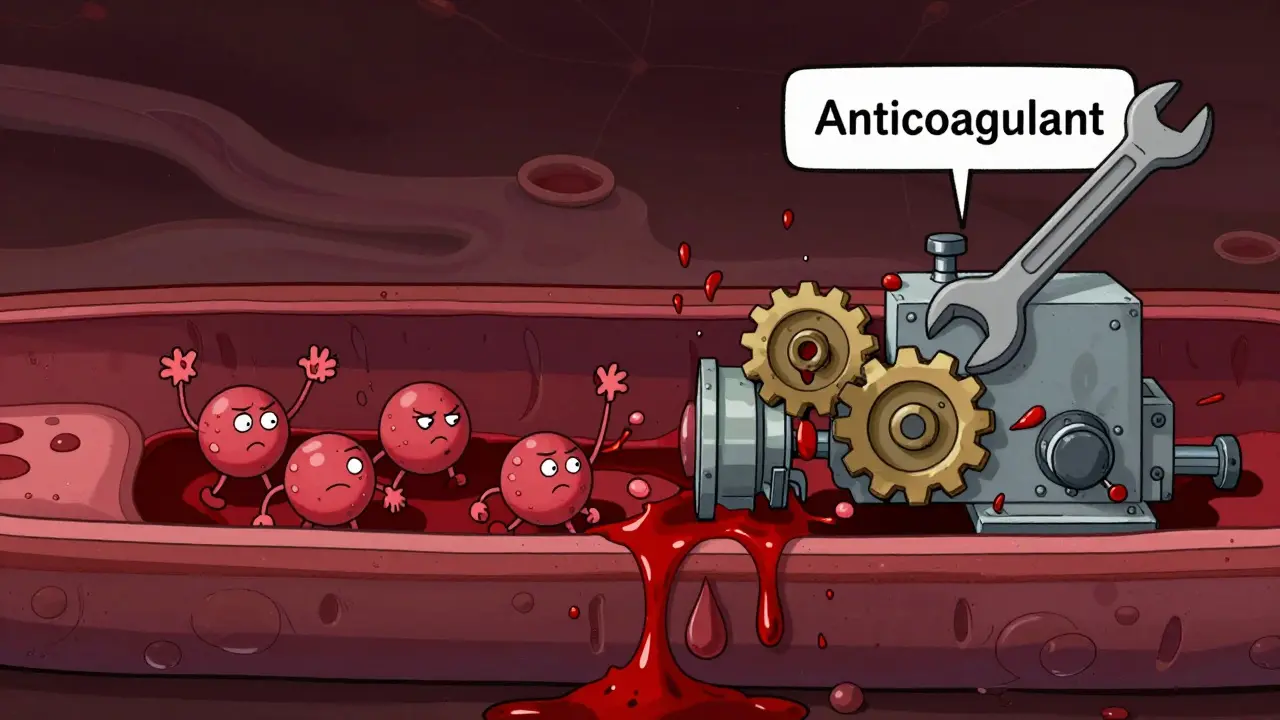
When you take both, you are disabling the platelet plug mechanism AND slowing down the fibrin mesh formation. This dual pathway inhibition compromises hemostasis (the process of stopping bleeding) far more than either drug alone. It’s like removing the brakes from a car while also cutting the steering cable. The result is a significantly elevated risk of hemorrhage.
The Real Numbers: How Much Does Risk Increase?
We don’t have to guess about the dangers; clinical evidence provides stark numbers. Current studies show that combining aspirin with oral anticoagulants can double the incidence of bleeding events compared to taking just one medication. But the risk isn't uniform across the body. Different organs face different levels of threat.
| Bleeding Site | Risk Increase Factor | Clinical Significance |
|---|---|---|
| Intracranial (Brain) | 3.22x higher | Potentially fatal stroke or bleed |
| Gastrointestinal (Stomach/Gut) | 2.24x higher | Common cause of hospitalization |
| Urinary Tract | 1.57x higher | Visible blood in urine |
| Pulmonary (Lungs) | 1.36x higher | Coughing up blood |
Notice that intracranial bleeding carries the highest multiplier. A bleed in the brain is not just an inconvenience; it is a medical emergency with high mortality rates. The ASPREE trial, which involved 19,000 healthy elderly participants, highlighted this specific danger. It found that daily low-dose aspirin (100mg) increased the risk of traumatic brain bleeding by 38% compared to a placebo. For someone already on a blood thinner, that baseline risk is even higher.
Not All Blood Thinners Are Created Equal
If you are already on a blood thinner, not all combinations carry the exact same weight of risk. Among the newer generation of drugs, known as Direct Oral Anticoagulants (DOACs) or NOACs, some data suggests variations in safety profiles when mixed with aspirin.
A meta-analysis published in 2024 by Priyanka Ghule et al., reviewing 24 studies, confirmed that aspirin-OAC combinations significantly elevate hemorrhagic events (p<0.001). However, within the DOAC class, rivaroxaban has been flagged in comparative analyses as carrying a potentially higher bleeding risk when combined with aspirin compared to others like apixaban. This doesn't mean rivaroxaban is "bad," but it means the margin for error is smaller.
It is also critical to remember that over-the-counter NSAIDs are not innocent bystanders. If you swap aspirin for ibuprofen or naproxen to ease joint pain while on a blood thinner, you are still in the danger zone. In fact, combining naproxen with anticoagulants raises bleeding likelihood by 4.1-fold, and diclofenac by 3.3-fold. Ibuprofen is slightly lower at 1.79-fold, but still dangerous. Many patients mistakenly believe that because aspirin is "mild," other painkillers are safe alternatives. They are not.
Who Should Never Mix These Drugs?
There is almost no scenario where a healthy person should combine aspirin with a prescription anticoagulant. The National Institute on Aging explicitly recommends against routine low-dose aspirin for healthy elderly patients due to this unfavorable risk-benefit profile. The potential benefit of preventing a first heart attack is vastly outweighed by the risk of causing a major bleed.
However, medicine is rarely black and white. There are specific, high-risk conditions where doctors may prescribe this combination despite the dangers. These include:
- Patient with mechanical heart valves (which require very strict anticoagulation).
- Recent stent placement (where antiplatelet therapy is needed to prevent stent thrombosis).
- Specific types of atrial fibrillation with additional acute coronary syndromes.
Even in these cases, the duration of the combination therapy is usually minimized. Dr. Weinrauch from Atlantic Health System cautions strongly against this mix, particularly for patients with hypertension, kidney disease, or existing bleeding disorders. If you fall into any of these categories, your doctor needs to perform a stringent evaluation before adding aspirin to your regimen.
Signs of Trouble: What to Watch For
If you are on this combination, you must become a detective in your own body. Bleeding doesn't always look like a pool of red liquid on the floor. Often, it is internal and silent until it becomes critical. Here is what you need to monitor daily.
Gastrointestinal Bleeding: This is the most common site. Look for tarry, black stools (melena) or bright red blood in the toilet. You might also experience vomiting material that looks like coffee grounds. Even mild indigestion or heartburn could be a warning sign of stomach lining erosion.
Neurological Changes: Sudden, severe headaches that feel different from usual migraines. Confusion, dizziness, weakness on one side of the body, or difficulty speaking. These are signs of an intracranial bleed and require immediate emergency care.
Physical Trauma Signs: Unusual bruising after minor bumps. Nosebleeds that last longer than 10 minutes. Bleeding gums when brushing teeth. If you cut yourself shaving, does the bleeding stop normally? If not, that’s a red flag.
Anemia from occult (hidden) bleeding occurs nearly three times more frequently under combination therapy. You might feel unusually tired, short of breath, or pale without knowing why. Regular hemoglobin checks are non-negotiable if you are on this regimen.

Safety Protocols: Living Safely on Combination Therapy
If your doctor has determined that the benefits of combining aspirin and a blood thinner outweigh the risks for your specific condition, you must adopt a lifestyle that minimizes injury. This isn't about living in fear; it's about smart precautions.
- Ditch the Razor Blade: Switch to an electric razor. Cuts from manual razors can bleed excessively and be hard to stop.
- Soft Bristles Only: Use a soft-bristle toothbrush and floss gently. Gum bleeding is a common early sign of excessive anticoagulation.
- Fall Prevention: Since head trauma is a major risk, remove tripping hazards from your home. Wear shoes with good grip, even indoors. Consider protective gear during activities like cycling or gardening.
- Medication Audit: Never take over-the-counter pain relievers (NSAIDs like ibuprofen, naproxen, diclofenac) without asking your pharmacist. Acetaminophen (Tylenol) is generally safer for pain relief in this context, but check with your doctor first.
- Food Buffer: The NHS advises taking aspirin with food to mitigate indigestion and reduce direct irritation to the stomach lining.
Your healthcare provider should also be using tools like the HAS-BLED score to assess your individual risk. This scoring system evaluates factors like hypertension, abnormal liver/kidney function, stroke history, bleeding history, labile INRs, elderly age, and drugs/alcohol use. If your score is high, the threshold for continuing combination therapy should be extremely high.
The Future of Treatment: Personalized Medicine
We are moving away from one-size-fits-all prescriptions. The current trend in cardiology and hematology is toward personalized dosing algorithms. Research is focusing on genetic testing for variants like CYP2C9 and VKORC1. These genes affect how your body metabolizes warfarin. Knowing your genetic profile could allow doctors to fine-tune doses precisely, reducing the need for "shotgun" approaches that involve multiple blood-thinning agents.
Additionally, the development of reversal agents is improving safety nets. For example, idarucizumab can reverse dabigatran, and andexanet alfa can reverse factor Xa inhibitors like rivaroxaban and apixaban. While aspirin reversal is trickier (often requiring platelet transfusions), having these options available means that if a bleed does occur, hospitals can act faster to save lives.
For now, however, the rule remains simple: Do not combine aspirin with blood thinners unless explicitly instructed by a specialist who understands your full medical history. The convenience of an extra pill is never worth the risk of a catastrophic bleed.
Can I take baby aspirin if I am on Eliquis (apixaban)?
Generally, no. Unless you have a specific high-risk cardiac condition like a recent stent placement, combining low-dose aspirin with apixaban significantly increases your risk of gastrointestinal and intracranial bleeding without providing additional stroke prevention benefits for most patients. Always consult your cardiologist before adding aspirin.
Is it safe to take Tylenol (acetaminophen) with blood thinners?
Acetaminophen is generally considered safer than NSAIDs or aspirin when taken with blood thinners because it does not inhibit platelet function. However, high doses or chronic use can still interact with warfarin, potentially increasing INR levels. It is best to use it sparingly and inform your doctor if you are using it regularly.
What should I do if I notice black, tarry stools?
This is a sign of gastrointestinal bleeding. You should seek immediate medical attention. Do not wait for it to go away on its own. Call your doctor or go to the emergency room, especially if you feel dizzy, weak, or short of breath.
Does eating garlic or fish oil increase bleeding risk with blood thinners?
Yes, supplements like high-dose fish oil, vitamin E, ginkgo biloba, and garlic can have mild blood-thinning effects. While less potent than pharmaceutical drugs, they can add to the overall bleeding risk when combined with anticoagulants. Discuss all supplements with your healthcare provider.
Why do some doctors still prescribe aspirin with warfarin?
In certain complex cases, such as patients with mechanical heart valves or those who have had both a stroke and a heart attack recently, the benefit of preventing a second clot may outweigh the bleeding risk. However, this decision requires careful monitoring and is becoming less common as guidelines evolve.
The pharmacological interplay between antiplatelet agents and oral anticoagulants is a subject of profound clinical significance, often misunderstood by the layperson. Aspirin’s irreversible inhibition of COX-1, thereby suppressing thromboxane A2 synthesis in platelets, operates on a fundamentally different mechanistic axis than the coagulation cascade modulation effected by warfarin or DOACs. To conflate these distinct pathways is to engage in a categorical error of no small magnitude. The resultant dual-pathway inhibition does not merely additive risks; it synergistically amplifies hemorrhagic potential, particularly intracranial bleeding, which carries a mortality rate that is nothing short of catastrophic. One must approach this topic with the requisite intellectual rigor.
Hey everyone! I was just reading this and it got me thinking about how our bodies are like little ecosystems, right? If you mess with one part, everything else goes haywire. It’s kind of like when you try to fix a leaky faucet but end up flooding the whole kitchen. We need to take responsibility for our health choices because our bodies are temples, and we shouldn’t treat them like garbage dumps. What do you think? Let’s talk about it!
Great article!! It is so important to understand the difference between aspirin and blood thinners!! Aspirin stops platelets from sticking together!! Blood thinners slow down clotting factors!! When you take both, you are disabling two major safety nets!! This leads to a much higher risk of bleeding!! Always consult your doctor before combining medications!! Stay safe!!
It is morally imperative that individuals recognize the gravity of self-medicating with aspirin while prescribed anticoagulants, for such negligence not only jeopardizes one’s own life but also places an undue burden on healthcare systems designed to mitigate preventable crises. The data presented herein underscores a truth that cannot be ignored: the combination of these drugs multiplies hemorrhagic risk, particularly in the brain, where even minor bleeds can prove fatal. To disregard this evidence is to exhibit a callous indifference toward personal well-being and societal responsibility alike. We must demand greater accountability from patients who choose ignorance over informed decision-making.
its obvious that most people dont know what theyre doing when it comes to meds. aspirin is not some magic bullet, its dangerous if u mix it with other stuff. the elites always hide this info from us because they want us sick and dependent on their system. wake up sheeple! the real conspiracy is in the pharmaceutical industry, not in your brain bleeds. stop trusting doctors and start thinking for yourself. theyre all in on it.
The juxtaposition of aspirin’s antiplatelet action with the anticoagulant effects of OACs invites a philosophical inquiry into the nature of balance within biological systems. Just as excess in any domain leads to chaos, so too does the unchecked potentiation of hemostatic disruption invite calamity. One might ponder whether the human inclination toward ‘more’-more protection, more prevention-is inherently flawed when applied to physiological processes governed by delicate equilibrium. In this light, the danger lies not solely in the chemistry but in the hubris of assuming that additional intervention equates to superior outcome.
I’ve been trying to wrap my head around how exactly these drugs interact at a molecular level. Does anyone have resources that explain the coagulation cascade in simpler terms? I’m curious about why intracranial bleeding has such a high multiplier compared to other sites. Is it due to the confined space in the skull, or is there something else going on?
Let’s dissect this properly, shall we? The term ‘blood thinner’ is a misnomer that perpetuates public misunderstanding. These agents do not alter blood viscosity; they interfere with hemostasis via distinct mechanisms. Aspirin inhibits TXA2 production in platelets, while DOACs target specific coagulation factors (e.g., Factor Xa or IIa). Combining them creates a dual-hit scenario on hemostatic integrity. The ASPREE trial data clearly demonstrates elevated traumatic brain bleed risk with low-dose aspirin alone-imagine compounding that with an OAC. This isn’t speculation; it’s evidence-based pathology. Those dismissing this as alarmism lack foundational medical literacy.
hey guys i just read through this and its pretty scary how easy it is to accidentally harm yourself with common meds. i guess the takeaway is to always check with your doc before adding anything new. no need to stress too much though, just stay informed and keep an eye out for symptoms. hope everyone stays healthy out there :)
It is essential to emphasize that the risks associated with combining aspirin and oral anticoagulants are well-documented and should never be underestimated. Clinical trials, including the ASPREE study, provide robust evidence supporting the increased incidence of hemorrhagic events, particularly intracranial bleeding. Patients currently prescribed anticoagulants must engage in open dialogue with their healthcare providers regarding the necessity of concurrent aspirin therapy. In many cases, the marginal benefit does not justify the substantial risk. Prudence and adherence to medical guidance remain paramount.
One cannot overlook the ethical dimensions of patient autonomy versus professional oversight in this context. Individuals who elect to combine aspirin with prescribed anticoagulants without explicit medical approval demonstrate a troubling disregard for established clinical protocols. Such behavior reflects not only personal irresponsibility but also a broader cultural tendency to prioritize anecdotal advice over scientific consensus. Until society collectively acknowledges the supremacy of evidence-based medicine, we will continue to witness preventable tragedies stemming from misguided self-treatment.
so basically if ur on a blood thinner dont take aspirin unless your doc says ok. makes sense right? the risks are way too high especially for brain bleeds. ive seen friends get hospitalized over silly stuff like this. just chill and ask questions before mixing meds. no big deal really lol
While the article presents compelling data, one must consider the possibility that pharmaceutical companies may be exaggerating these risks to discourage independent use of aspirin-a cheap, accessible medication that reduces their profit margins. The ASPREE trial, funded by industry interests, could easily be manipulated to serve corporate agendas. Furthermore, the emphasis on ‘dual-pathway inhibition’ appears designed to instill fear rather than educate. Citizens should question the motives behind such narratives instead of accepting them uncritically.
The intricacies of hemostatic regulation demand a nuanced understanding far beyond the simplistic explanations offered here. Aspirin’s role in inhibiting cyclooxygenase-1 is not merely a biochemical footnote but a cornerstone of cardiovascular prophylaxis, albeit one fraught with peril when juxtaposed against modern anticoagulants. The meta-analysis cited reveals disparities in safety profiles among DOACs, suggesting that rivaroxaban and apixaban may pose lesser risks than dabigatran when combined with aspirin. However, such distinctions require meticulous evaluation by specialists versed in pharmacokinetics and dynamic drug interactions. Laypersons would do well to refrain from drawing hasty conclusions based on superficial interpretations.