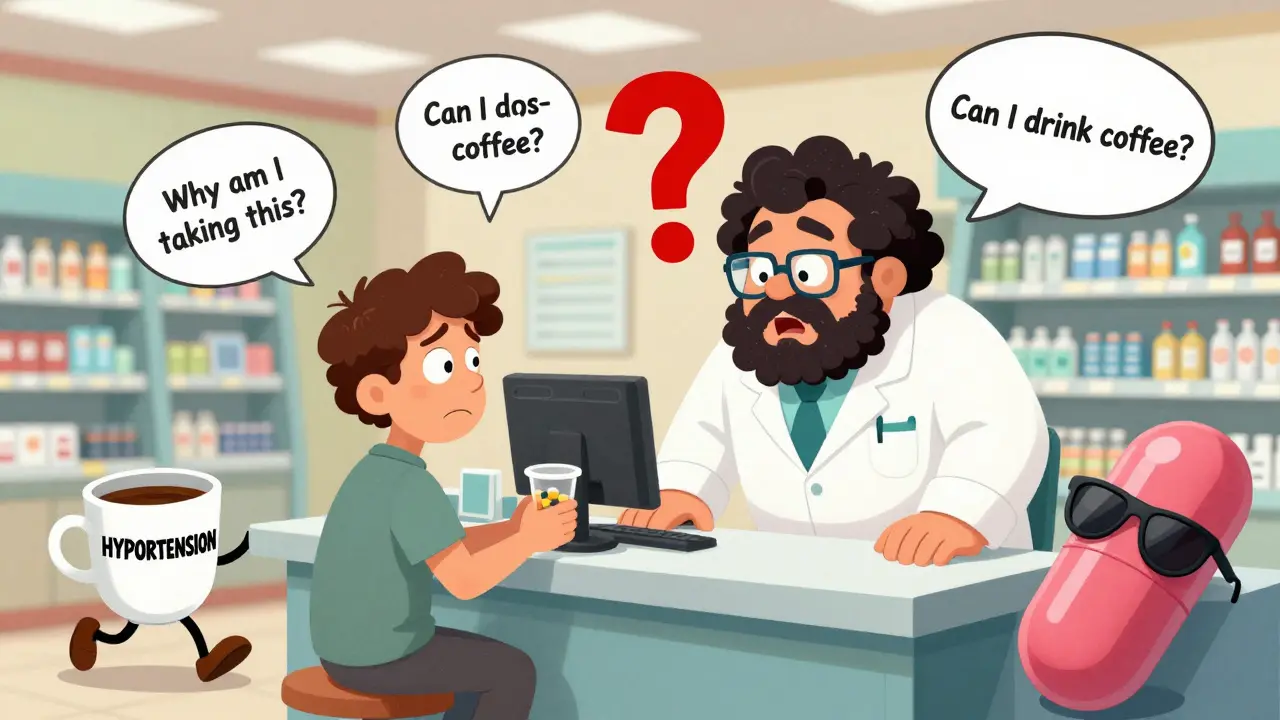
Don’t Just Take It-Ask About It
You walk up to the counter, hand over your prescription, and get a little cup with pills inside. The pharmacist says, "Take one daily," and hands you the bag. You nod, thank them, and leave. But what if you don’t know why you’re taking it? What if you’re not sure whether it’s safe with your other meds-or your morning coffee? You’re not alone. Most people don’t ask enough questions, and that’s where mistakes happen.
Medication errors send about 1.3 million people to the emergency room every year in the U.S. Many of those could’ve been avoided with just a few simple questions asked at the pharmacy. Pharmacists aren’t just the people who hand out pills. They’re trained medication experts, and they’re often more accessible than your doctor. In fact, 94% of Americans live within five miles of a community pharmacy. That means your pharmacist is probably the closest healthcare professional you’ve got.
What Is This Medicine For?
It sounds basic, but 30% of medication errors happen because patients don’t understand why they’re taking a drug. You might get a prescription for something like "hydrochlorothiazide" and think, "Okay, I’ll take it." But what does it actually do? Is it for high blood pressure? Fluid retention? Kidney issues?
Always ask: "What is this medication for, and how will it help me?" Don’t settle for a one-word answer like "blood pressure." Ask how it works in your body. If you’re taking it for cholesterol, find out if it lowers LDL or raises HDL. If it’s for pain, ask if it’s reducing inflammation or just masking the signal. Knowing the purpose helps you notice if it’s working-or if something’s wrong.
How and When Should I Take It?
"Take one daily" isn’t enough. When? Morning? Night? With food? On an empty stomach? Some meds need to be taken with food to avoid stomach upset. Others lose effectiveness if taken with dairy or grapefruit juice. One common mistake? Taking antibiotics with yogurt or milk, which can block absorption.
Ask: "Should I take this with or without food?" "What time of day works best?" "Should I avoid driving, alcohol, or sun exposure?" Some blood pressure meds make you dizzy when you stand up fast. Some antibiotics make your skin burn in the sun. Others make you sleepy. If you don’t know, you might end up falling, getting a bad sunburn, or nodding off behind the wheel.
What Side Effects Should I Watch For?
All medications have side effects. Some are mild-like a dry mouth or a headache. Others are serious and need immediate attention.
Ask: "What are the most common side effects?" "Which ones mean I should call you or go to the ER?" "How can I manage the ones I can expect?"
For example, if you’re on a statin for cholesterol, muscle pain is a known side effect. But if it’s severe or accompanied by dark urine, that could mean muscle breakdown-a rare but dangerous condition. If you’re on an antidepressant and start feeling unusually agitated or suicidal, that’s not normal. That’s a red flag. Pharmacists know which side effects are routine and which are emergencies. They can also suggest practical fixes: "Take it with a snack," "Drink more water," or "Try taking it at bedtime."
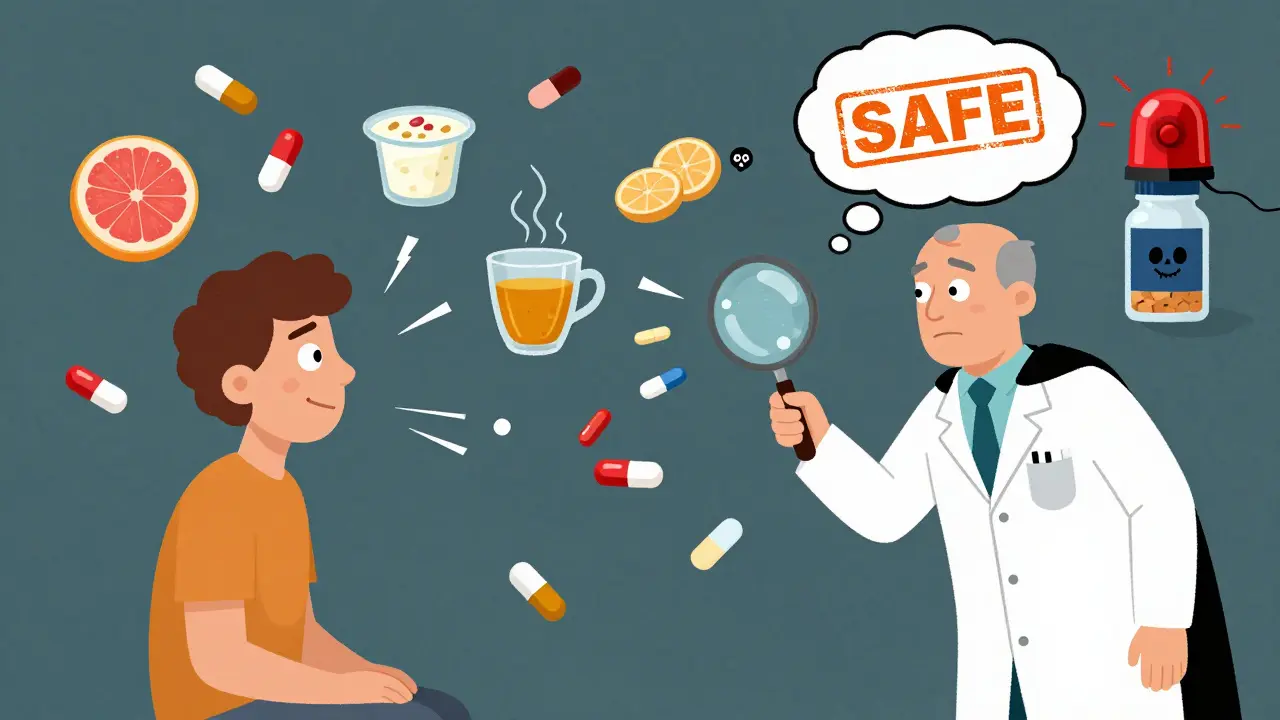
Could This Interact With Anything Else I’m Taking?
This is one of the most overlooked questions. You might be taking five prescriptions, three over-the-counter pills, and a handful of supplements. That’s a recipe for hidden dangers.
Ask: "Does this interact with my other medications, supplements, or foods?" Be specific. Don’t just say "I take vitamins." List them all: fish oil, magnesium, St. John’s Wort, turmeric, melatonin. Even herbal teas like hawthorn berry can interfere with blood pressure meds. One Reddit user found out their blood pressure pill reacted badly with hawthorn berry-something their doctor never mentioned.
The FDA says 15% of hospital admissions are caused by drug interactions that could’ve been avoided. Pharmacists have software that checks every combination. Use it. Bring your full list-every pill, patch, and tincture. Even if you think it’s "just natural," tell them.
What If I Miss a Dose?
Life happens. You forget. You’re traveling. You’re sick. You don’t know what to do next.
Ask: "What should I do if I miss a dose?" Some meds you should take as soon as you remember. Others you should skip entirely and wait for the next scheduled dose. Taking two at once could be dangerous. For example, missing a dose of blood thinners like warfarin increases clot risk. But doubling up on painkillers like acetaminophen can cause liver damage.
Also ask: "Are there cost-saving options?" Generic drugs are just as effective as brand names-but cost 80-85% less. The FDA requires them to meet the same standards. If your prescription is expensive, ask if a lower-cost version exists. Some pharmacies offer $4 generic lists for common meds. Or ask about patient assistance programs.
When Will I Know If It’s Working?
Many people stop taking meds because they don’t feel any difference. But not all drugs make you feel better right away.
Ask: "When should I start noticing improvement?" "Will I need blood tests or other checks?" "How will we know if this is working?"
Antidepressants can take 4-6 weeks to kick in. Blood pressure meds might not make you feel different at all-but your numbers will change. If you don’t know what to look for, you might think the drug isn’t working and quit early. That’s why 50% of people stop taking chronic condition meds within the first year. You need to know what success looks like. And if it’s not happening, you need to know when to call back.
Are There Other Options?
Is this the only way? Are there non-drug alternatives? Could a different medicine work better for me?
Ask: "Is there a generic version?" "Are there lifestyle changes that could help?" "Where can I find reliable information about this?"
For example, if you’re on a statin, ask if diet and exercise could reduce your need for it. If you’re on acid reflux meds, ask if reducing caffeine or eating earlier could help. Pharmacists know the research. They can point you to trusted sources like the FDA’s medication guides or the National Institutes of Health. Avoid random websites. Stick to science-backed info.
How to Get the Most Out of Your Pharmacy Visit
Most pharmacy consultations last less than three minutes. That’s not enough time if you’re unprepared.
Here’s how to make it count:
- Bring your full list of everything you take: prescriptions, OTC meds, vitamins, herbs, supplements. Use the FDA’s "My Medicine Record" form-it’s free online.
- Ask at pickup. That’s when pharmacists have a few extra minutes. Don’t wait until you’re halfway home and realize you forgot to ask something.
- Use the teach-back method. After they explain something, say: "Just to make sure I got it right-you’re saying I should take this after breakfast, avoid grapefruit, and call if I get severe dizziness?" If you can repeat it, you’re more likely to remember it.
- Ask at least three questions. Studies show patients who ask three or more specific questions have 65% fewer medication problems.
And if you’re rushed? Say so. "I have a few questions and want to make sure I get this right." Most pharmacists will slow down if you’re clear about your needs.
Why This Matters More Than You Think
Medication errors don’t just cause discomfort-they cause hospital stays, organ damage, and even death. But pharmacist interventions cut emergency visits by 33% and hospital admissions by 27%. That’s not a small number. That’s life-changing.
Pharmacists are now prescribing naloxone, smoking cessation aids, and even birth control in 45 states. They’re doing more than dispensing. They’re managing your health. And they’re paid to do it-thanks to Medicare’s 2022 redesign, which increased reimbursement for medication reviews by 35%.
Still, access is uneven. Rural areas face pharmacist shortages. Over 37 million Americans live in areas with too few pharmacists. That’s why telepharmacy is growing. If you can’t get in person, ask if virtual consultations are available.
Final Thought: You’re the Captain of Your Health
Doctors write prescriptions. Pharmacists make sure they’re safe and effective. But you’re the one who takes the pills. You’re the one who notices if something feels off. You’re the one who remembers what you ate, what you took, and how you felt.
Don’t wait until something goes wrong to speak up. Ask the questions. Write them down. Bring your list. Be clear. Be persistent. Your pharmacist is there to help-not just hand out pills, but keep you safe.
What should I do if I don’t understand what the pharmacist says?
Ask them to explain it again in simpler terms. Say, "Can you say that another way?" or "Can you give me an example?" If you still don’t get it, ask if they can write it down. Many pharmacies have printed handouts. You can also ask for a follow-up call or a video explanation. No question is too basic.
Can I ask about side effects even if I haven’t experienced them yet?
Absolutely. In fact, you should. Knowing what side effects to expect helps you spot problems early. Some side effects are mild and go away after a few days. Others are warning signs. Your pharmacist can tell you which is which and what to do if they happen. It’s better to be prepared than surprised.
Do I need to tell my pharmacist about vitamins and supplements?
Yes. Supplements aren’t regulated like prescription drugs, and many can interact dangerously. For example, St. John’s Wort can make antidepressants, birth control, and blood thinners less effective. Garlic supplements can increase bleeding risk with aspirin or warfarin. Even common ones like calcium or iron can block absorption of antibiotics. Always list everything.
Is it okay to switch to a generic version of my medicine?
Yes, and it’s often recommended. Generics have the same active ingredient, strength, and effectiveness as brand-name drugs. The FDA requires them to meet the same standards. The only differences are in color, shape, or inactive ingredients-which rarely matter. Switching can save you hundreds a year. Ask your pharmacist if a generic is available and right for you.
What if my pharmacist says there’s no interaction, but I still feel weird?
Trust your body. If you feel new or unusual symptoms-dizziness, rash, nausea, confusion-contact your pharmacist or doctor. Not all interactions show up in databases, especially with herbal products or new combinations. Your pharmacist can help you track symptoms, adjust timing, or suggest alternatives. Never ignore how you feel.
Can pharmacists help with chronic conditions like diabetes or high blood pressure?
Yes. Many offer Medication Therapy Management (MTM), which includes regular reviews of all your meds, checking for duplicates, adjusting doses, and helping you stay on track. If you take three or more prescriptions for a chronic condition, ask if you qualify for a free MTM session. These are covered by Medicare Part D and many private plans.
What if I can’t get to the pharmacy to ask questions?
Many pharmacies now offer phone or video consultations. Call and ask if they have a pharmacist available for a quick chat. Some even send follow-up emails with key points. If you’re in a rural area, telepharmacy services let you connect with a pharmacist remotely. Don’t assume you have to be there in person-ask for alternatives.
I took my blood pressure med with grapefruit juice for six months and thought I was just getting older. Turns out my pharmacist had to pull me aside and say, "You’re lucky you didn’t end up in ICU." Now I keep a little chart taped to my fridge. Don’t be me.
People still don’t know that generics are the same? Wow. I mean, I get it, brand names have pretty packaging. But if your cholesterol pill looks like a rainbow gummy bear and costs $120, you’re being scammed. The FDA doesn’t lie. Period.
you know what they dont tell you the big pharma owns the pharmacies now they just want you to keep buying the same thing over and over the real solution is fasting and sunlight and youll never need meds again
i asked my pharmacist why my antidepressant made me feel like a robot and she said "it’s not supposed to make you feel anything, it’s supposed to stop you from feeling everything" and i just sat there holding my coffee like i’d been punched. sometimes the truth is weirder than the side effects.
Let me tell you something real. I’m from a village where the nearest pharmacy is 40 miles away. When I finally got to one, I brought a shoebox full of bottles - vitamins, leftover antibiotics, my grandma’s herbal tea, even that weird mushroom powder I thought would "boost my chi." The pharmacist didn’t judge. She sat with me for 45 minutes. Wrote everything down. Made me a color-coded chart. I cried. Not because I was sick - because someone finally saw me. You’re not just a prescription. You’re a person. And that matters.
I don’t care what your "trusted sources" say. If your doctor didn’t tell you, it’s a lie. They’re all in the pocket of Big Pharma. I looked up my blood thinner on a forum in Ukraine. Turns out the FDA banned it in 2019 and just kept selling it under a new name. I stopped taking it. My blood pressure dropped. Coincidence? I think not.
I brought my list. Asked three questions. The pharmacist nodded, smiled, and said, "You’re the first person this week who didn’t just grab the bag and leave." That quiet moment meant more than any pamphlet ever could.
The idea that pharmacists are just pill dispensers is a myth that keeps people sick. They’re the unsung heroes of primary care. I’ve had mine adjust my dosage, catch a dangerous interaction between my fish oil and blood thinner, and even call my doctor to suggest a different antibiotic. They’re not assistants - they’re clinicians. And we treat them like cashiers.
It is my sincere belief that the responsibility for medication safety ultimately resides with the patient. While pharmacists are highly trained professionals, their capacity to intervene is limited by the information provided to them. Therefore, the onus lies upon the individual to maintain accurate, comprehensive, and up-to-date records of all substances consumed, including those perceived as benign.
This article is a joke. In America, you need insurance to even get to a pharmacist. In rural areas, they’re closing down. And you want people to "ask questions"? Good luck when you’re working two jobs, can’t afford the copay, and your pharmacy is 70 miles away. This isn’t advice - it’s privilege dressed up as public health.