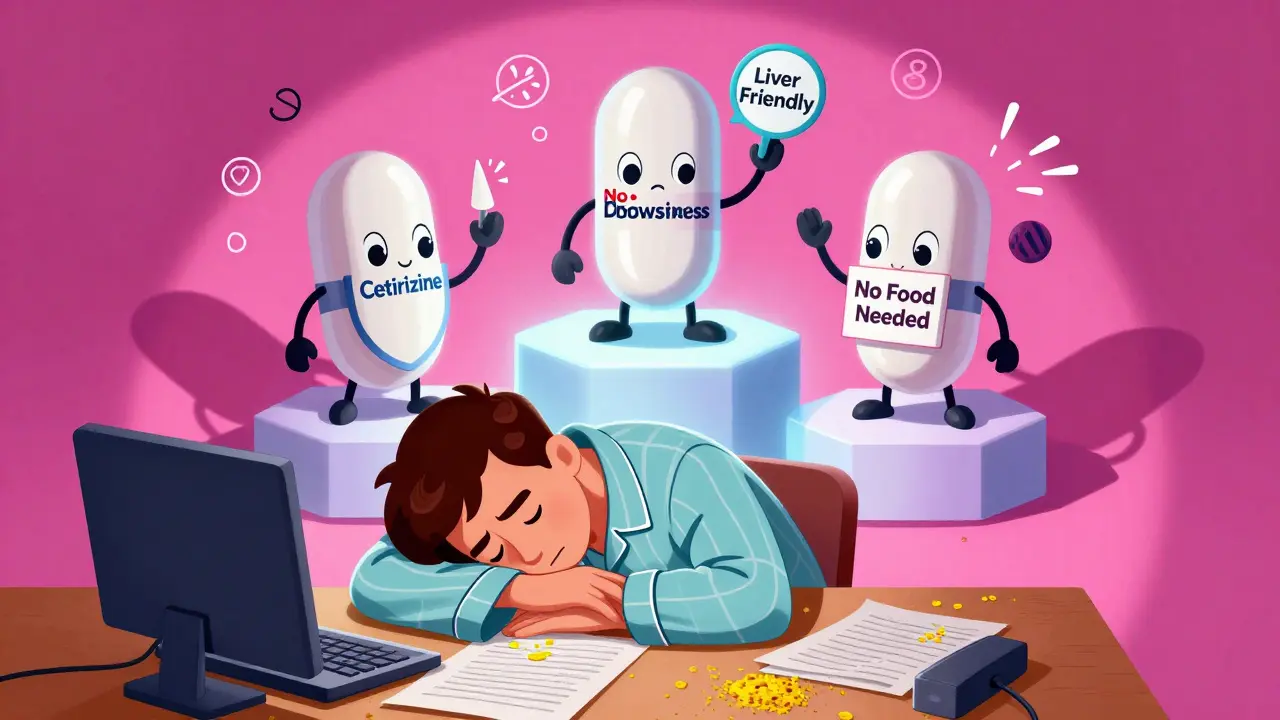
Allergy Antihistamine Selector
Find Your Best Antihistamine Match
Based on your symptoms and sensitivity preferences, this tool will recommend the most appropriate second-generation antihistamine from cetirizine, loratadine, or fexofenadine.
Your Recommended Antihistamine
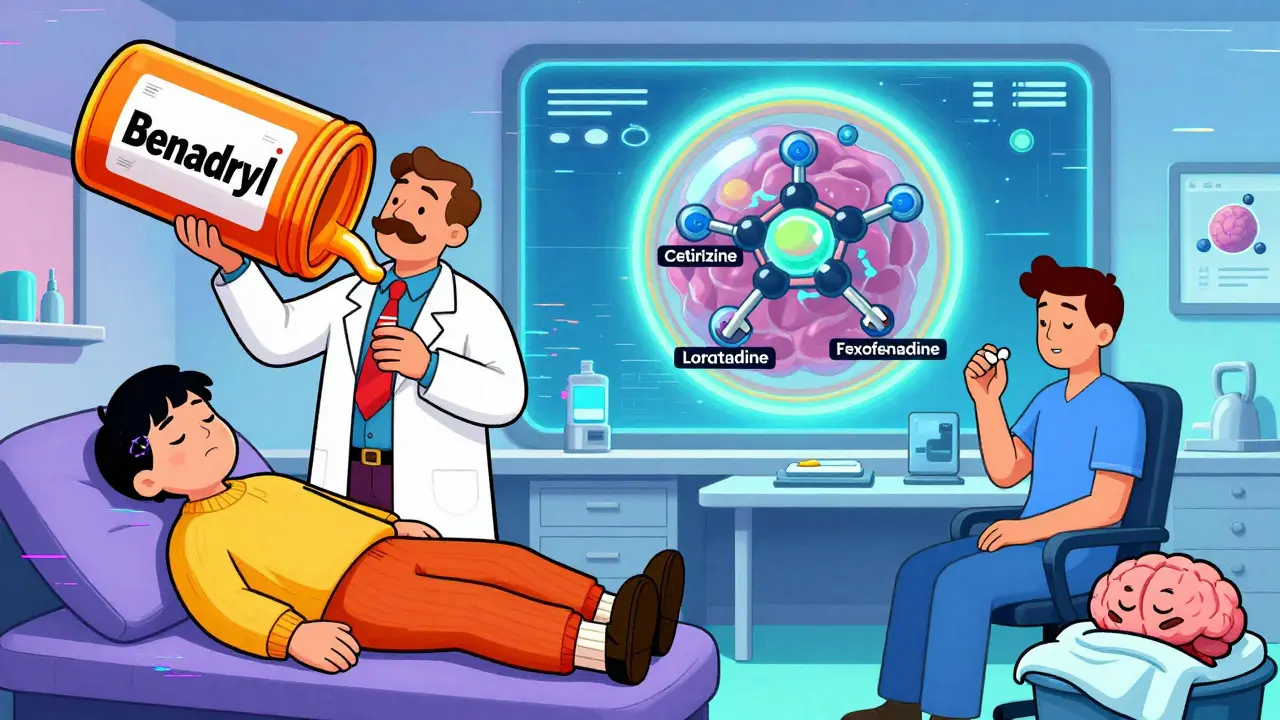
Most people know the drowsiness that comes with taking Benadryl for allergies. You take it to stop the sneezing and itching, but then you can barely stay awake at your desk or behind the wheel. That’s why millions of people switched to second-generation antihistamines - and why they now make up 85% of the global antihistamine market. These drugs - like cetirizine, loratadine, and fexofenadine - were designed to do the same job as the old-school antihistamines but without knocking you out. And for most people, they deliver.
How Second-Generation Antihistamines Work Differently
First-generation antihistamines like diphenhydramine and chlorpheniramine cross the blood-brain barrier easily. That’s why they cause drowsiness, dry mouth, and blurred vision. They don’t just block histamine in your nose and skin - they also mess with brain chemicals. Second-generation antihistamines were built to avoid that. They’re larger, more polar molecules that can’t slip through the blood-brain barrier the same way. This means they block histamine where it matters: in your nasal passages, eyes, and skin - not in your brain.Studies using cryo-electron microscopy show these drugs latch onto the H1 receptor in a very specific way. They wedge into a deep pocket in the receptor, stopping histamine from triggering the allergic response. But because they don’t fit into brain receptors as easily, they don’t trigger sedation. This isn’t just theory - it’s measurable. Clinical trials show sedation rates of only 6-14% with second-generation drugs, compared to 50-60% with first-gen options.
The Three Main Players: Cetirizine, Loratadine, and Fexofenadine
Not all second-generation antihistamines are the same. Three dominate the market, and each has its own profile.
- Cetirizine (Zyrtec): Works fast, often within an hour. Half-life is about 8.3 hours, so it lasts 24 hours for most people. It’s the most likely to cause mild drowsiness - around 10-14% of users report it, especially at higher doses. Still, 78% of users on WebMD rate it as “excellent” or “good” for allergy relief.
- Loratadine (Claritin): Less likely to cause drowsiness than cetirizine, but also slower to kick in. Peak effect takes 1-3 hours. It’s one of the most affordable options and is sold over-the-counter in many countries. Some users report headaches, though this is rare.
- Fexofenadine (Allegra): The least likely to cause drowsiness of the three. Only 5% is metabolized by the liver - most of it is passed out unchanged in urine and stool. That means fewer drug interactions. It’s also the only one that doesn’t need to be taken with food to work properly. People who are sensitive to side effects often find fexofenadine is the best fit.
Market data shows cetirizine leads with 35% share, loratadine at 30%, and fexofenadine at 20%. But what works for one person doesn’t work for another. A Mayo Clinic survey found 35% of users tried two or three different second-generation antihistamines before finding one that worked without side effects.
What They Don’t Do - And Why That Matters
Second-generation antihistamines are great for itching, runny nose, and sneezing caused by pollen, pet dander, or dust mites. But they’re not magic bullets. One big gap? Nasal congestion.
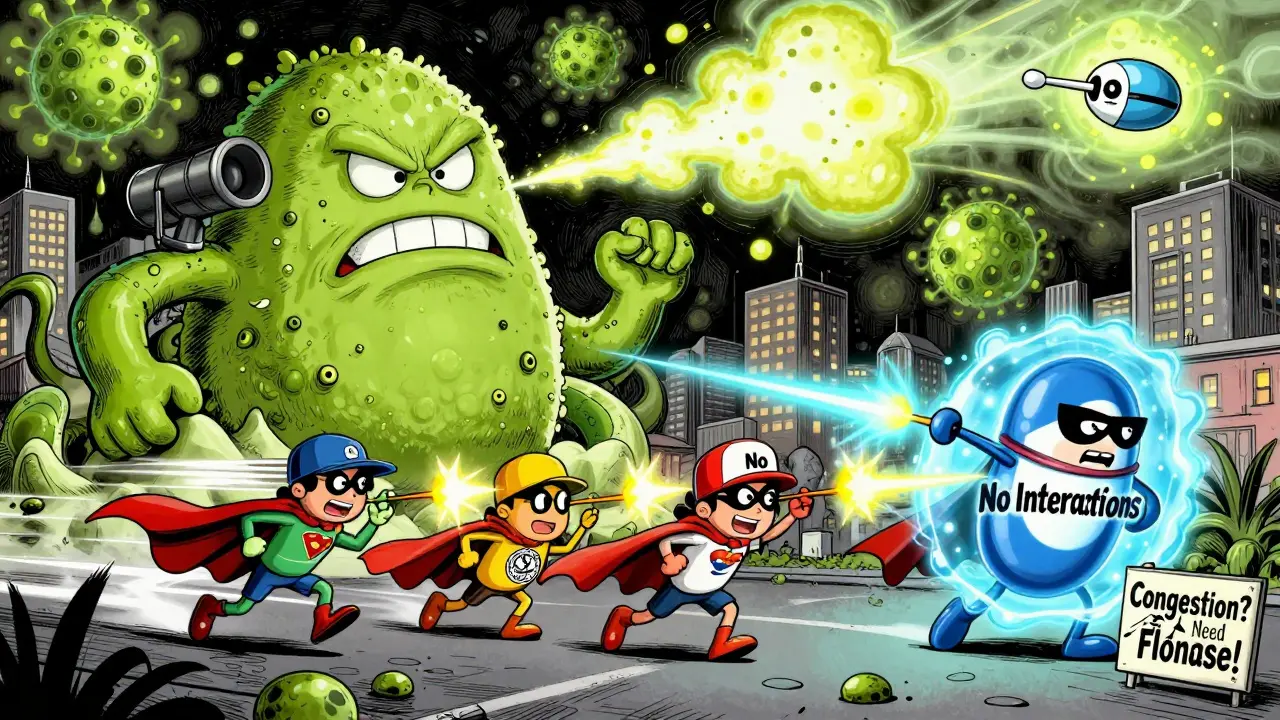
First-gen antihistamines can help with stuffiness because they also block acetylcholine - a neurotransmitter involved in mucus production. Second-gen drugs don’t do that. So if you’re dealing with a blocked nose, you’ll likely need something extra: a decongestant like pseudoephedrine, or a nasal spray like Flonase. That’s why products like Allegra-D (fexofenadine + pseudoephedrine) make up 22% of the nasal congestion treatment market.
And here’s another surprise: second-generation antihistamines don’t help with sneezing from colds. A 2001 Johns Hopkins study showed they had zero effect on rhinovirus-induced sneezing, while first-gen drugs did. That’s because colds trigger different pathways - ones that involve more than just histamine. So if you’re taking Zyrtec for a cold and nothing’s changing, it’s not you - it’s the drug.
Side Effects: Less Drowsiness, But Not None
Yes, these drugs are much safer. But they’re not side-effect-free.
Headaches are reported by about 10-15% of users - more often with loratadine. Some people report a strange taste in their mouth (metallic or bitter), especially with cetirizine. A small number (around 5%) say they feel fatigued even without feeling sleepy. And while cardiac risks were a big problem with early second-gen drugs like terfenadine (withdrawn in 1997), modern versions like fexofenadine and loratadine have shown no significant QT prolongation risk in FDA post-marketing data through 2023.
One exception: cetirizine. It’s processed partly by the liver, and if you take it with other drugs that slow down CYP3A4 metabolism - like certain antibiotics or antifungals - levels can build up. That’s why it’s important to tell your doctor what else you’re taking, even if it’s just a supplement.
Consumer Reports surveyed 1,245 allergy sufferers in 2023. Only 12% reported taste disturbances, but 63% said they still needed extra meds for congestion. And while 82% praised the lack of drowsiness, 38% mentioned headaches or other mild side effects that made them switch brands.
How to Use Them Right
Timing matters. Taking your antihistamine 1-2 hours before you know you’ll be exposed to allergens - like going outside on high-pollen days - can improve effectiveness by 40-50%, according to the Journal of Allergy and Clinical Immunology. That’s because the drug needs time to bind to receptors before histamine floods the system.
Don’t wait until you’re sneezing nonstop. Prevention beats reaction. Also, stick with the same brand for at least two full allergy seasons. Your body adapts. If you switch too often, you might think one isn’t working - when it’s just your expectations changing.
Most people figure out what works for them within a year. But 28% of new users don’t realize these drugs won’t fix a stuffy nose. That’s why the American Academy of Allergy, Asthma & Immunology recommends pairing them with nasal sprays if congestion is a problem.
What’s Next? The Future of Allergy Treatment
Research is already moving beyond second-generation antihistamines. In January 2024, scientists published a breakthrough in Nature Communications showing a second binding site on the H1 receptor. That opens the door to third-generation drugs that could be even more selective - targeting only the allergy response without any side effects at all.
One candidate already in the pipeline is bilastine XR, a once-weekly formulation the FDA granted breakthrough therapy status to in March 2024. If it works, it could fix the biggest complaint among users: forgetting to take a daily pill. Right now, 37% of people don’t take their antihistamine consistently, mostly because they forget or think they only need it when symptoms flare.
Meanwhile, climate change is making allergies worse. Pollen counts are projected to rise 25-30% by 2050. That could mean higher doses or more frequent use for some people - something doctors are already watching closely.
For now, though, second-generation antihistamines remain the gold standard. They’re safe, effective, and non-sedating. They’ve replaced first-gen drugs for good reason. And with new research underway, they’re not going anywhere anytime soon.
Are second-generation antihistamines really non-drowsy?
Most people don’t feel drowsy, but it’s not zero. About 6-14% of users report mild sleepiness, especially with cetirizine. Loratadine and fexofenadine are even less likely to cause it. If you’re sensitive, try fexofenadine first - it has the lowest risk.
Can I take second-generation antihistamines every day?
Yes. Unlike first-gen antihistamines, these are designed for daily use. Many people take them all season long without issues. Long-term studies show no major safety concerns for up to a year of continuous use. Always follow the label or your doctor’s advice.
Why doesn’t my antihistamine help with my stuffy nose?
Second-generation antihistamines block histamine, which causes itching and runny nose - but not congestion. Stuffy noses come from swollen blood vessels, which histamine blockers don’t affect. You’ll need a decongestant (like pseudoephedrine) or a nasal steroid spray (like Flonase) to open up your nasal passages.
Which is better: cetirizine, loratadine, or fexofenadine?
There’s no single best choice - it depends on your body. Cetirizine works fastest and is strongest for itching. Loratadine is gentler on the stomach and cheaper. Fexofenadine has the least side effects and the fewest drug interactions. Try one for two weeks. If you still have symptoms or side effects, switch to another.
Do these drugs interact with other medications?
Fexofenadine has almost no interactions. Loratadine has few. Cetirizine can interact with drugs that slow liver metabolism - like ketoconazole, erythromycin, or certain antidepressants. Always check with your pharmacist before mixing with other meds, especially if you take multiple prescriptions.
i just take zyrtec and call it a day no more naps at my desk lol
The pharmacokinetic profile of fexofenadine is particularly advantageous due to its minimal hepatic metabolism via CYP3A4, resulting in a negligible potential for drug-drug interactions compared to cetirizine, which exhibits significant first-pass metabolism. This is a critical consideration in polypharmacy populations.
I used to think antihistamines were all the same until I switched from Zyrtec to Allegra and suddenly I could actually focus at work. So glad I didn’t just give up.
For anyone feeling discouraged-try one for two weeks, then another. Your body will tell you what it needs.
So let me get this straight... you’re telling me I’ve been taking Claritin for YEARS just to feel mildly annoyed by my own headaches?? And now I need a spray on top of it?? 😭 I just wanted to stop sneezing, not start a daily medical routine.
In South Africa, we don’t have easy access to all these brand names, but the generic versions work just fine. Fexofenadine is often sold as Telfast here, and it’s the only one my son can tolerate without feeling like a zombie.
Also, pollen counts are insane here now-especially in Cape Town during spring. I’ve seen kids in school with red, swollen eyes in October, and no one connects it to allergies. We need better public awareness.
They say second gen are non sedating but have you looked at the fine print on the bottle? The real story is the pharma companies spent billions making sure the sedation was just below the threshold of legal liability while still keeping you just drowsy enough to buy more pills next month
You ever wonder why all these drugs are made to be taken daily? It’s not because they’re safe-it’s because they’re profitable. Imagine if you only needed to take one pill once a month. The industry would collapse. That’s why they pushed daily dosing and made us believe we need it every day.
And don’t get me started on the ‘breakthrough’ once-weekly bilastine. It’s just a new way to lock us in. They’ve been doing this since aspirin.
The empirical evidence presented herein, while statistically significant, fails to account for the confounding variable of individual neurochemical variance. One must consider that the blood-brain barrier permeability is not a binary construct but a dynamic, biochemically modulated interface, influenced by genetic polymorphisms in ABC transporters. Therefore, the assertion of universal non-sedation is methodologically unsound.
I’m a neurologist and I’ve seen patients who swear Zyrtec made them ‘zombie-like’-but their blood levels were normal. It’s not the drug. It’s their brain. Some people have hypersensitive histamine receptors in the hypothalamus. It’s not sedation-it’s CNS depression. And yes, I’ve had patients cry because they thought they were ‘going crazy’ from the fatigue.
Also, fexofenadine is great, but if you’re taking it with apple juice? You’re wasting your money. The juice inhibits OATP transporters. Take it with water. Always.
I’ve been using loratadine for 10 years and never had an issue. I don’t care about the science as long as it works. My dog sneezes more than I do, but I’m fine. Chill out everyone
Did you know that the FDA approved these drugs based on studies funded by the same companies that sell them? And the ‘6-14% drowsiness’? That’s self-reported. They didn’t use brain scans or EEGs. They just asked people if they felt tired.
Meanwhile, the real research-on how these drugs affect long-term cognitive function in children-is being buried. I’ve got 17 PDFs from leaked internal memos. They knew. They just didn’t want you to know.
And now they’re pushing weekly pills? That’s not progress. That’s surveillance. Every pill you take is logged. They’re building a database of your allergies... to sell to insurers.