G6PD Deficiency Risk Assessment Tool
G6PD Deficiency Risk Assessment
This tool helps you assess your risk of having G6PD deficiency based on your ancestry, gender, and medical history. G6PD deficiency can cause life-threatening hemolytic anemia when taking nitrofurantoin.
Every year, millions of people take nitrofurantoin to treat a simple urinary tract infection (UTI). It works fast, costs little, and most people never have a problem. But for a small group - often undiagnosed - this common antibiotic can trigger a life-threatening reaction: hemolytic anemia. And the biggest risk factor? Glucose-6-phosphate dehydrogenase (G6PD) deficiency.
What Is G6PD Deficiency, and Why Does It Matter?
G6PD deficiency is a genetic condition that affects red blood cells. It’s more common than you think. Around 400 million people worldwide have it, according to the World Health Organization. It’s especially common in people of African, Mediterranean, Middle Eastern, and Southeast Asian descent. In some populations, up to 14% of men have it. Many don’t know they have it until they take a drug like nitrofurantoin - and then their body starts destroying red blood cells.
Here’s how it works: G6PD is an enzyme that protects red blood cells from oxidative stress. When this enzyme is missing or weak, the cells can’t handle certain chemicals. Nitrofurantoin? It’s one of those chemicals. Once taken, it creates reactive compounds that attack hemoglobin. Without enough G6PD, red blood cells break apart - a process called hemolysis. The result? Hemolytic anemia.
How Nitrofurantoin Triggers Hemolytic Anemia
Nitrofurantoin isn’t dangerous for everyone. In fact, for most people with normal G6PD levels, it’s safe and effective. But in those with G6PD deficiency, the drug turns into a toxin inside red blood cells. The body tries to clear it, but the oxidative stress overwhelms the cells. Hemoglobin clumps together, cells become rigid, and the spleen starts destroying them.
Symptoms usually show up within 24 to 72 hours of starting the drug. You might feel feverish, tired, or notice dark urine. Jaundice (yellowing of the skin or eyes) is common. Blood tests reveal low hemoglobin, high bilirubin, low haptoglobin, and elevated LDH - classic signs of hemolysis. In severe cases, patients can go into shock, have kidney damage, or need hospitalization.
A 2023 case report in the National Center for Biotechnology Information described a patient who developed confusion, vomiting, and dangerously low blood pressure after just two days of nitrofurantoin. Within 48 hours of stopping the drug and getting IV fluids, they fully recovered. No transfusion needed. But not everyone gets that lucky. Studies show 10 deaths have been directly linked to nitrofurantoin-induced hemolysis.
Who’s Most at Risk?
It’s not random. Certain groups are far more likely to have G6PD deficiency:
- Men (it’s an X-linked gene - one copy is enough to cause deficiency)
- People of African descent (10-14% prevalence)
- People from the Mediterranean or Middle East (4-7%)
- People from Southeast Asia (2-5%)
- Pregnant women (especially if they’ve had previous hemolytic episodes)
- Infants exposed to the drug through breast milk or in utero
And here’s the scary part: up to 60% of people with G6PD deficiency don’t know they have it. They’ve never been tested. No one asked. No one thought to ask.
Why Isn’t Testing Routine?
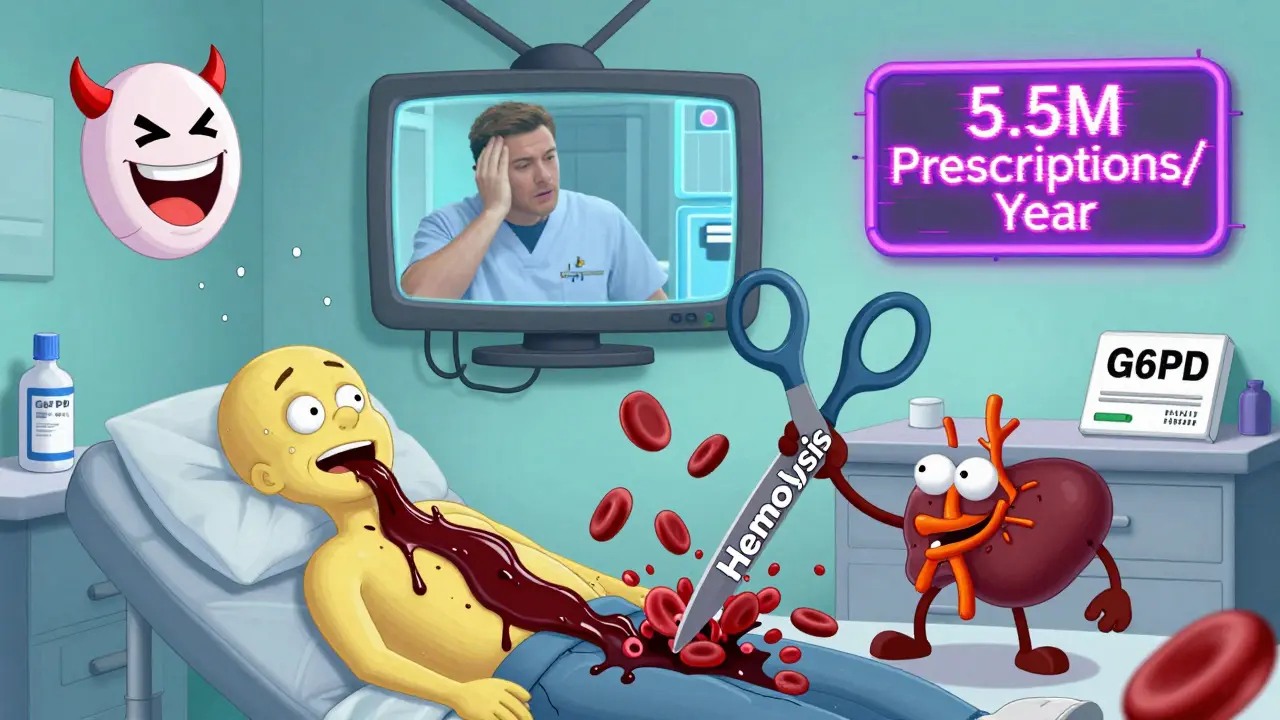
Despite decades of evidence, nitrofurantoin’s label doesn’t require pre-screening. The FDA warns about hemolytic anemia in G6PD-deficient patients - but doesn’t say you must test first. In the U.S., about 5.5 million prescriptions are filled each year. Only 32% of primary care doctors say they routinely check G6PD status before prescribing it, according to a 2022 survey of 350 physicians.
Why? Cost. A G6PD test runs $35-$50. A hospitalization for hemolytic anemia? $8,500 to $12,000. But many clinics don’t have the systems to test before prescribing. Electronic health records rarely flag high-risk patients unless someone manually adds a note.
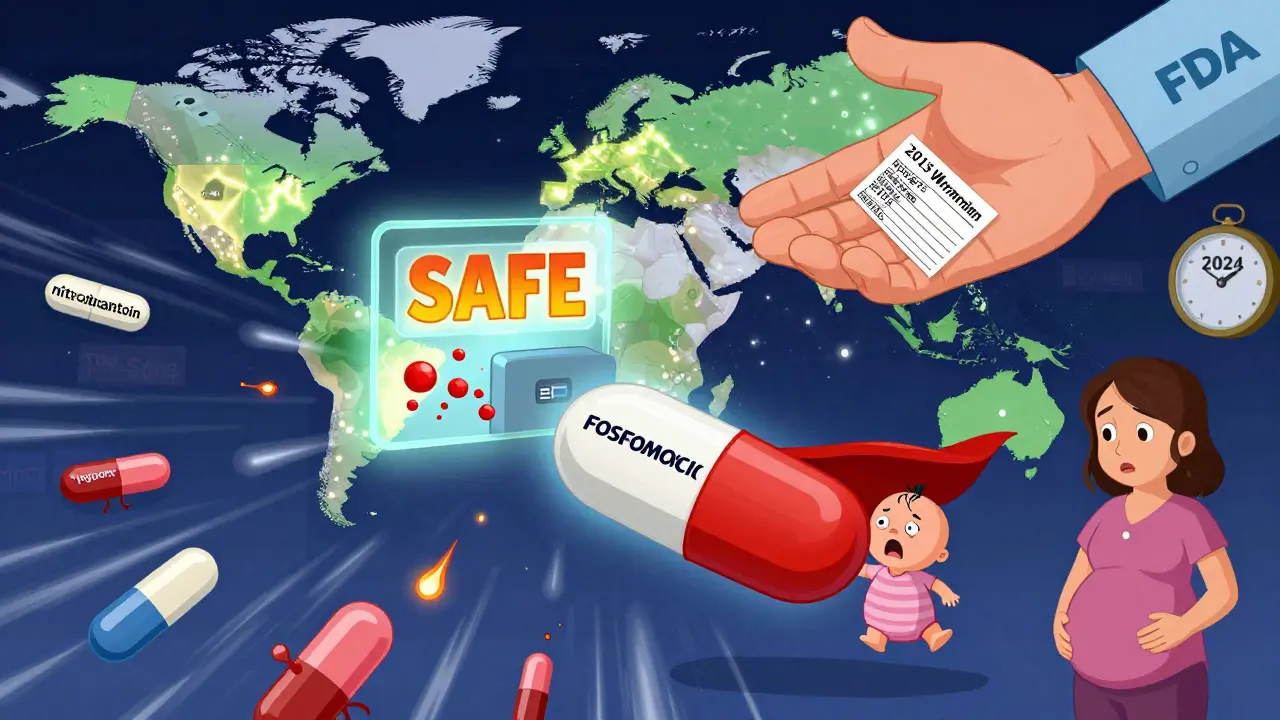
Meanwhile, the European Medicines Agency updated its safety guidelines in 2021 to strongly warn about this risk. The U.S. FDA hasn’t changed its label since 2015. Advocacy groups are pushing for change. But until then, the burden falls on the prescriber - and the patient.
Alternatives to Nitrofurantoin
If you’re at risk, there are safer options:
- Fosfomycin: A single-dose oral antibiotic. No known hemolytic risk. Often used for uncomplicated UTIs.
- Cephalexin: A first-generation cephalosporin. Safe in G6PD deficiency.
- Amoxicillin-clavulanate: Effective against common UTI bugs. Lower hemolysis risk.
- Praziquantel: Not an antibiotic, but sometimes used in recurrent UTIs with specific causes.
Trimethoprim-sulfamethoxazole (TMP-SMX) is another common UTI drug - but it also carries a hemolytic risk in G6PD-deficient patients. So it’s not automatically safer.
The American Society of Hematology and the Clinical Pharmacogenetics Implementation Consortium (CPIC) both say: Avoid nitrofurantoin in known G6PD deficiency. CPIC’s 2023 guidelines even split recommendations: avoid completely if you have chronic hemolytic anemia, and use extreme caution if you don’t - but still avoid if possible.
Real-World Consequences
A 2022 review of 318 hemolytic anemia cases linked to nitrofurantoin found 42 were confirmed or highly probable in G6PD-deficient patients. Eight of those were in pregnant women. Three were in infants - two from maternal exposure, one from accidental overdose.
One patient in a case study was a 32-year-old woman of Nigerian descent. She had a UTI. Her doctor prescribed nitrofurantoin. She didn’t know she had G6PD deficiency. Three days later, she was in the ER with dark urine, extreme fatigue, and a hemoglobin level that had dropped from 13 to 7.8 g/dL. She didn’t need a transfusion - but she was hospitalized for three days. Her doctor later admitted he’d never thought to ask about ancestry or family history.
That’s the problem. We treat UTIs like minor bugs. But for some, they’re a gateway to a medical emergency.
What Should You Do?
If you’re prescribed nitrofurantoin:
- Ask: “Do I have G6PD deficiency?”
- Know your ancestry. If you’re from Africa, the Mediterranean, or Southeast Asia, the risk is higher.
- Ask for a G6PD test before starting the drug - especially if you’ve had unexplained anemia before.
- If you’ve had dark urine, jaundice, or fatigue after taking antibiotics in the past, tell your doctor.
- Don’t assume you’re safe just because you’ve taken it before. G6PD deficiency doesn’t go away.
If you’re a healthcare provider:
- Screen patients with ancestry linked to higher G6PD prevalence.
- Use clinical decision support tools - many EHRs now have alerts for high-risk patients.
- Consider fosfomycin as a first-line alternative.
- Don’t rely on patient memory. Many don’t know their own history.
The Bigger Picture
The global market for G6PD testing is expected to hit $310 million by 2027. Why? Because we’re finally starting to see how genetics affects drug safety. Nitrofurantoin is just one example. Others include dapsone, rasburicase, and certain antimalarials.
Point-of-care G6PD tests are now available - results in 15 minutes. Some clinics in high-risk areas are starting to use them. But they’re not standard yet.
Research is ongoing. The NIH is running a trial to see if routine screening before nitrofurantoin use saves money and lives. Results are expected in 2024.
For now, the message is simple: don’t assume. Ask. Test. Choose safer alternatives. Because when it comes to antibiotics and genetics, ignorance isn’t bliss - it’s dangerous.
Can nitrofurantoin cause hemolytic anemia even if I’ve taken it before without issues?
Yes. G6PD deficiency doesn’t change. If you had a mild reaction before, it might be worse the next time. Or you might have never had symptoms until now. The enzyme level doesn’t improve over time. What changed was the dose, your health, or your body’s response. Never assume past safety means future safety.
Is G6PD testing expensive or hard to get?
No. A G6PD test costs between $35 and $50 in the U.S. and is often covered by insurance. Many clinics can run it in-house with a simple finger-prick blood test. Results come back in under an hour. It’s not a complex procedure - it’s just not routinely offered. Ask your doctor.
If I have G6PD deficiency, does that mean I can never take nitrofurantoin again?
Yes. Once you’ve had a hemolytic reaction to nitrofurantoin, you should avoid it permanently. Even if your symptoms were mild, future exposure could be life-threatening. The same applies to other oxidant drugs like sulfonamides and primaquine. Your doctor can help you find safe alternatives for future UTIs.
Are children at risk of nitrofurantoin-induced hemolysis?
Yes. Infants can be affected in two ways: if they inherit G6PD deficiency, or if their mother takes nitrofurantoin while breastfeeding. The drug passes into breast milk. In documented cases, newborns developed jaundice and anemia within days. Pediatricians should avoid prescribing nitrofurantoin to infants unless absolutely necessary - and only after confirming G6PD status.
Why hasn’t the FDA required pre-screening for nitrofurantoin?
The FDA requires warnings, not mandatory testing. The agency argues that the risk is low in the general population, and widespread screening would be costly. But critics say that’s shortsighted - especially since 50-60% of G6PD-deficient people are undiagnosed. The cost of one hospitalization often exceeds the cost of screening thousands. Many experts believe the current policy is outdated and puts vulnerable patients at unnecessary risk.
Nitrofurantoin is a disaster waiting to happen for millions of South Asians and Africans who never get tested. G6PD deficiency isn't some rare genetic curiosity - it's a silent time bomb in 1 in 7 men from my region. And yet? Doctors here still prescribe it like it's aspirin. I had a cousin who nearly died after a UTI. Dark urine. Jaundice. ICU for three days. No one asked about ancestry. No one checked. This isn't medical negligence - it's systemic racism wrapped in a white coat. We need mandatory screening, not warnings. The FDA is asleep at the wheel.
And don't even get me started on how Western medicine treats non-Western bodies like lab experiments. We’re not outliers. We’re the majority. Stop acting like we're the exception.
Stop prescribing. Start screening. Or keep burying people under the rug of 'low risk.' I'm done with being collateral damage in your clinical inertia.
Thank you for this meticulously detailed and critically important post. As a healthcare professional with over 15 years of clinical experience, I can confirm that the data presented here is not only accurate but alarmingly under-recognized in primary care settings.
The American College of Physicians has issued multiple position papers since 2018 urging integration of pharmacogenetic risk stratification into routine prescribing protocols - yet adoption remains below 20% in most U.S. clinics. The disconnect between evidence and practice is staggering.
I strongly encourage all clinicians to implement point-of-care G6PD screening for patients with ancestry from high-prevalence regions, particularly when prescribing oxidizing agents. Fosfomycin is not just an alternative - it is the new first-line standard for uncomplicated UTIs in at-risk populations.
Education, not assumption, must drive our prescribing habits. Thank you for elevating this conversation with such precision and urgency.
Simple version: If you’re from Africa, Asia, or the Med, and your doc prescribes nitrofurantoin, say ‘hold up.’ Ask for a quick blood test. It’s $40. Takes 15 minutes. Saves your life.
I’ve seen this happen twice. Both times, the patient didn’t know they had G6PD deficiency. Both times, they got better fast after stopping the drug. No big deal if you check. Big deal if you don’t.
As a nurse who works in a community clinic, I can tell you: we started doing finger-prick G6PD tests before prescribing nitrofurantoin six months ago.
Within 30 days, we caught three undiagnosed cases - all women of color, all with UTIs, all asymptomatic until the antibiotic hit.
One was a 28-year-old mom who thought her ‘bad anemia’ after a C-section was just postpartum. Turns out, she’d had G6PD since birth.
Now we screen everyone from high-risk backgrounds. No cost to the patient. No paperwork. Just a drop of blood.
It’s not rocket science. It’s basic care.
My sister took nitrofurantoin for a UTI last year. She got so tired she couldn’t get out of bed. Her skin turned yellow. We thought it was the flu.
Turns out - she’s G6PD deficient. Never knew. No one asked. Now she carries a medical alert card.
I’m so glad this post exists. It’s not just about antibiotics - it’s about who gets seen, who gets tested, and who gets left behind.
To everyone reading: if you’ve ever had unexplained fatigue or jaundice after meds - ask your doctor. Seriously. It could save your life. Or your mom’s. Or your kid’s.
We’re all just one prescription away from a crisis.
OMG I JUST REALIZED I TOOK THIS DRUG LAST YEAR 😭 I’M HALF INDIAN AND HAD A TERRIBLE CASE OF ANEMIA AFTERWARDS… I THOUGHT IT WAS STRESS 😭
MY MOM JUST TEXTED ME SHE HAD THE SAME THING 20 YEARS AGO AND THEY NEVER FIGURED IT OUT 😭😭😭
THIS IS A TRAGEDY. I’M TELLING EVERYONE I KNOW.
There’s a deeper truth here: medicine treats genetics like a footnote, not a foundation.
We live in a world where we map genomes to predict cancer risk… but still hand out antibiotics like lottery tickets.
Is it really so hard to test a finger prick before prescribing? Or are we more comfortable with reactive triage than proactive care?
Perhaps the real disease isn’t G6PD deficiency.
It’s the arrogance of assuming uniformity in a genetically diverse species.
Just a thought.
G6PD test is cheap, fast, and life-saving. Doctors who skip it are gambling with lives. Fosfomycin works just as well. No excuses.