
Imagine handing a patient a prescription that looks perfect but contains chalk instead of medicine. It sounds like a movie plot, but it is a real threat in the global pharmaceutical industry. Counterfeit drugs are not just a problem in developing nations; they infiltrate legitimate supply chains everywhere. According to World Health Organization data from 2017, up to 1% of the global pharmaceutical supply is compromised, representing roughly $200 billion in annual losses. For pharmacists and healthcare administrators, understanding pharmacy sourcing requirements is no longer just about getting the best price. It is a critical safety mandate.
The rules for buying drugs have changed dramatically over the last decade. We moved from simple paper trails to complex digital verification systems. If you are responsible for procuring medications, whether for a hospital or an independent pharmacy, you need to know exactly what 'legitimate' means in today’s regulatory landscape. This guide breaks down the standards, the laws, and the practical steps you must take to keep your patients safe and your business compliant.
The Legal Backbone: Understanding DSCSA
To understand modern procurement, you first need to look at the Drug Supply Chain Security Act (DSCSA). Passed by the U.S. Congress in November 2013 as part of the Drug Quality and Security Act, this law created the framework for tracking prescription drugs. The goal was simple: build an electronic, interoperable system to identify and trace drugs as they move from manufacturer to dispenser.
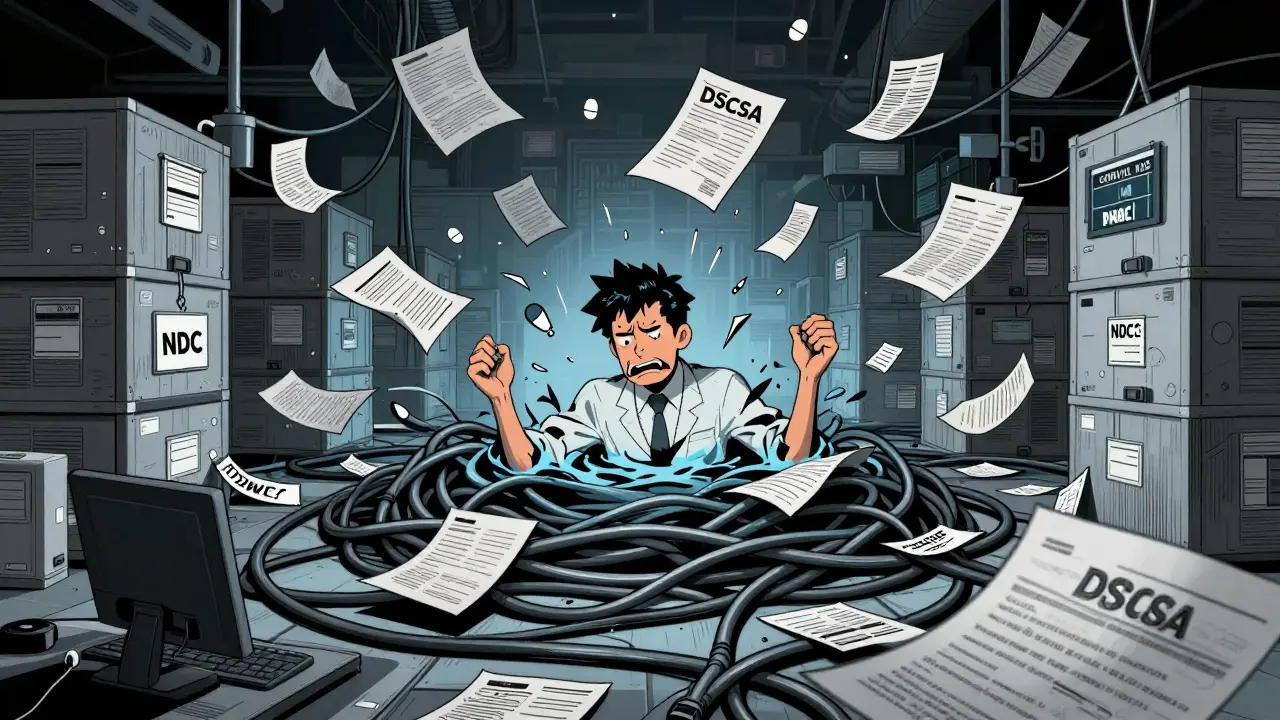
By late 2023, all trading partners had to implement systems for 'product tracing.' This isn't optional. If you buy from a wholesaler who cannot provide a digital transaction statement with valid National Drug Codes (NDCs), lot numbers, and expiration dates, you are breaking the law. The Food and Drug Administration (FDA) enforces these rules strictly because the cost of failure is human life.
Who Can You Buy From? Supplier Verification
You might think any licensed distributor is safe, but the reality is more nuanced. The American Society of Health-System Pharmacists (ASHP) released draft guidelines in 2022 that outline exactly how to vet suppliers. You cannot just pick a vendor based on speed or cost. You must verify their legitimacy.
Here is what you need to check before signing a contract:
- FDA Registration: Does the supplier have current registration with the FDA?
- State Licenses: Are they licensed in every state where they operate? As of January 2023, 49 states (all except Mississippi) require participation in the Verified-Accredited Wholesale Distributors (VAWD) program.
- Compliance History: Do they have at least three consecutive years of documented compliance with regulatory standards?
- Quality Systems: Do they follow Current Good Manufacturing Practices (cGMP)?
Dr. Elena Petrova, Head of Global Pharmaceutical Supply Chains at Management Sciences for Health, puts it bluntly: "A pharmaceutical supply chain is only as strong as its weakest link, and often, that link is an unvetted supplier." If you skip these checks, you risk introducing stolen or contaminated drugs into your inventory.
Technical Specs: What Data Must You Track?
Legitimate procurement isn't just about who you buy from; it's about what data you keep. Under 21 CFR Part 203 regulations, you must maintain detailed records of all transactions for a minimum of six years. This includes:
- Transaction Information: Product identifier (NDC), quantity, shipment date, and addresses of both sender and receiver.
- Transaction History: A record of all prior transfers since the drug left the manufacturer.
- Transaction Statement: A written declaration that the product has not been diverted or tampered with.
For temperature-sensitive products, the stakes are even higher. You need robust monitoring systems. Most refrigerated drugs require storage between 2°C and 8°C. If your supplier cannot prove the cold chain was maintained during transit, you should reject the shipment. ASHP recommends implementing barcode scanning for 100% of incoming products to verify identity against purchase orders immediately upon receipt.
Risk Profiles: Traditional vs. Non-Traditional Procurement
Not all sourcing methods carry the same risk. Let's compare the most common approaches.
| Method | Supply Chain Integrity | Cost Impact | Risk Level |
|---|---|---|---|
| Authorized Distributors (White Bag) | Highest | 5-15% Higher | Low |
| Patient-Sourced (Brown Bagging) | Unverified | Variable | Very High |
| Specialty Pharmacy Direct (White Bagging) | Moderate | Lower | Medium-High |
| International Generic Procurement | Variable | Significantly Lower | High |
Traditional procurement through authorized distributors keeps the supply chain tight. However, it costs more. Many health systems try to save money by using 'brown bagging,' where patients bring specialty drugs from retail pharmacies to be administered at the facility. This is dangerous. ASHP reported that 42% of health systems using nontraditional supply chains experienced at least one medication error related to improper handling in 2022. When you lose control of the chain, you lose visibility.
International procurement adds another layer of complexity. While countries like Denmark achieve 90% generic substitution rates through strict co-payment structures, the U.S. market remains fragmented. Importing generics without rigorous verification opens the door to substandard products. The safest route remains direct contracting with manufacturers, especially under programs like the 340B Drug Pricing Program, which requires covered entities to prove that 100% of purchased drugs go to eligible patients.
The Human Factor: Challenges in Implementation
Knowing the rules is one thing; following them daily is another. Hospital pharmacy directors report spending 15 to 20 hours per week just verifying supplier compliance. Since the full implementation of DSCSA, regulatory burdens have increased by at least 40% for many facilities.
I spoke with a hospital pharmacy manager recently who shared a frustrating experience. He posted online about having to quarantine $87,000 worth of product because his distributor’s system glitched during a DSCSA data transfer. Without complete transaction histories, he had no choice but to hold the stock. That is dead inventory costing him money while he waits for verification.
Independent pharmacies face even steeper hurdles. The National Community Pharmacists Association found that 65% of independent pharmacies spend more than 10% of their operational budget on compliance activities. Chain pharmacies spend closer to 6%. This disparity pushes many small players toward Group Purchasing Organizations (GPOs). GPOs offer centralized compliance verification. In fact, 89% of hospitals using GPOs with dedicated compliance teams reported zero supply chain security incidents in 2022.

Future Trends: AI and Blockchain in Procurement
The landscape is shifting again. By 2026, we expect 90% of pharmaceutical transactions to use artificial intelligence for anomaly detection. AI can spot irregularities in supply chain data faster than any human auditor, potentially reducing counterfeit incidents by up to 75%, according to Deloitte’s Healthcare Supply Chain Report.
Blockchain technology is also gaining traction. Platforms like TraceLink and rfxcel are building immutable ledgers for drug tracking. While adoption varies-only 65% of independent pharmacies have comprehensive DSCSA systems compared to 98% of large hospitals-the trend is clear. Digital verification is becoming the standard.
However, threats persist. The FDA received 2,147 suspicious activity reports related to pharmaceutical diversion in 2022, a 28% increase from the previous year. Sophisticated counterfeiters are adapting. They target specialty pharmaceuticals that move through complex networks. Vigilance is not optional; it is a daily practice.
Practical Steps for Your Pharmacy
If you want to ensure your sourcing meets legitimate standards, start here:
- Audit Your Suppliers: Review every vendor against the ASHP seven-criteria checklist. Drop those who cannot provide proof of cGMP compliance or VAWD status.
- Upgrade Your Tech: Ensure your ERP system integrates with your EMR and traceability platform. If data doesn’t flow seamlessly, you have gaps.
- Train Your Staff: New procurement staff need about 120 hours of specialized training. Consider certifications like the CHCSCP to build expertise.
- Monitor Temperature Logs: Don't trust verbal assurances. Require digital temperature logs for all cold-chain products.
- Join a GPO: If you are an independent pharmacy, leverage the collective power of a GPO for better pricing and shared compliance resources.
Legitimate drug procurement is a balance of regulation, technology, and vigilance. It costs time and money, but the alternative is risking patient safety and legal liability. Stay informed, verify everything, and never cut corners on the supply chain.
What is the DSCSA and why does it matter for pharmacies?
The Drug Supply Chain Security Act (DSCSA) is a federal law that requires the electronic tracing of prescription drugs throughout the supply chain. It matters because it mandates that pharmacies verify the authenticity of every drug they receive, preventing counterfeit or stolen medications from reaching patients. Full compliance became mandatory in November 2023.
How do I verify if a wholesale distributor is legitimate?
You should check for current FDA registration, valid state pharmacy licenses, and participation in the Verified-Accredited Wholesale Distributors (VAWD) program. Additionally, request documentation of their compliance history for the past three years and evidence of adherence to Current Good Manufacturing Practices (cGMP).
What are the risks of 'brown bagging' medications?
Brown bagging occurs when patients bring medications from external sources to be administered at a healthcare facility. This creates significant safety risks because the facility cannot verify the drug's origin, storage conditions, or authenticity. ASHP data shows that 42% of health systems using nontraditional supply chains experienced medication errors due to improper handling.
How long must pharmacies keep transaction records?
Under 21 CFR Part 203 regulations, pharmacies must maintain detailed records of all pharmaceutical transactions, including transaction information, history, and statements, for a minimum of six years. These records must be available for inspection by regulatory authorities.
Can independent pharmacies afford DSCSA compliance?
Compliance is costly, with independent pharmacies spending over 10% of their operational budget on these activities. However, joining a Group Purchasing Organization (GPO) can help mitigate costs by providing centralized compliance verification and bulk purchasing power. Technology investments in traceability platforms are also essential for long-term viability.