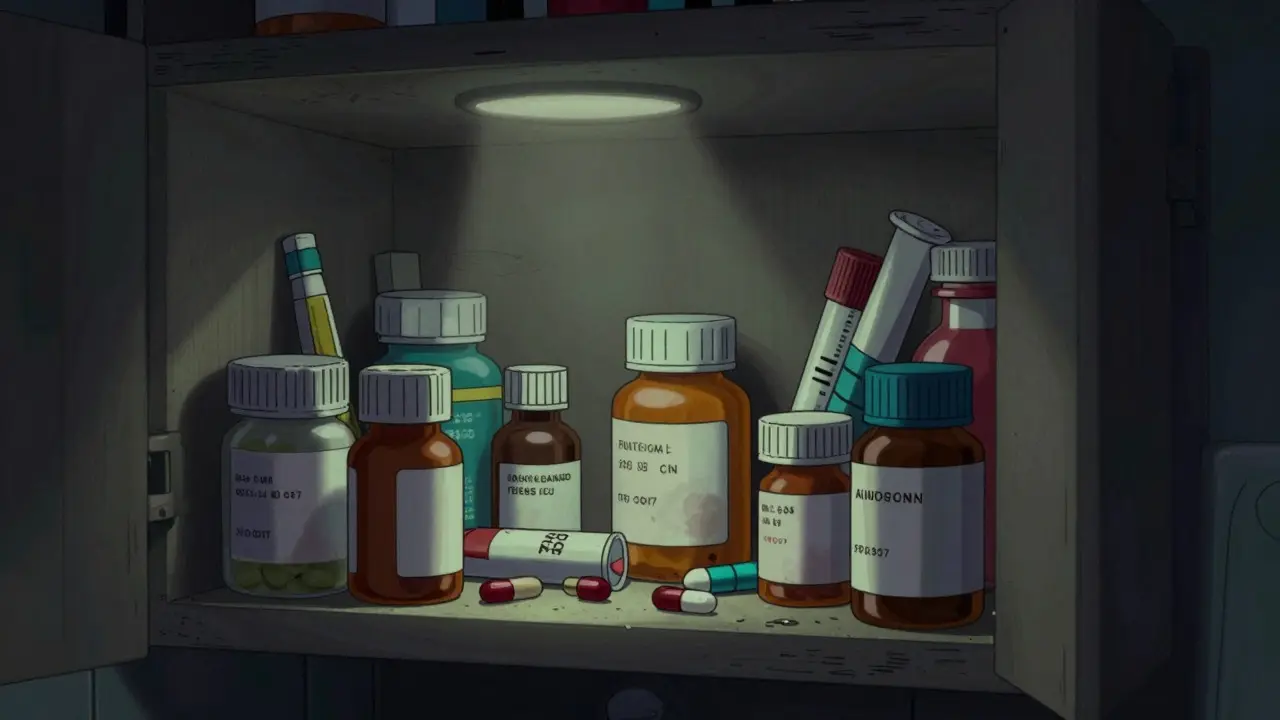
Have you ever opened a pill bottle, squinted at the tiny print on the label, and wondered if that medicine is still safe to take? You are not alone. Most of us keep a stash of prescriptions and over-the-counter remedies in our bathrooms or nightstands, but few of us check when they expire until we actually need them. The problem is that taking an expired medication can be risky. It might not work as well, or in rare cases, it could even become harmful. On the flip side, throwing away perfectly good drugs too early wastes money and hurts the environment. Creating a medication expiration review schedule is the smart middle ground. It keeps you safe, saves your wallet, and ensures your medicines do their job when you need them most.
Why Expiration Dates Matter More Than You Think
The idea of an expiration date on medicine isn't just a manufacturer's way of making you buy more stuff. It comes from strict regulations. The U.S. Food and Drug Administration (FDA) requires these dates based on stability testing. This means the date tells you exactly how long the drug retains its full strength, quality, and purity, assuming you store it correctly. According to FDA guidelines, once that date passes, the guarantee ends. The drug might start breaking down. For some medicines, this doesn't matter much. But for others, it can be dangerous.
Think about insulin or nitroglycerin. These are high-risk medications. If they lose potency, the consequences can be severe. A study by the National Institutes of Health (NIH) highlighted that liquid antibiotics, insulin, and nitroglycerin degrade faster than other types of pills. If your insulin isn't working fully because it's old, your blood sugar could spike without you realizing why. Similarly, an expired asthma inhaler might not deliver enough medicine during an attack. That is why knowing what you have and when it expires is a critical part of personal health management.
There is also a lot of confusion out there. You might have heard about the military's Shelf Life Extension Program (SLEP), which found that many stockpiled drugs remained effective years after their labels said they should be tossed. While true for some solid pills stored in perfect conditions, your bathroom cabinet is not a military warehouse. Temperatures fluctuate, humidity changes, and light exposure varies. The Institute for Safe Medication Practices (ISMP) warns against guessing. They recommend sticking to labeled dates unless a pharmacist tells you otherwise. Relying on a structured review schedule removes the guesswork entirely.
Setting Up Your Personal Review System
Creating a system doesn't require expensive software or hours of work. In fact, setting up a basic home review schedule takes about 45 to 60 minutes. After that, maintenance only takes a few minutes each month. The goal is to create a rhythm that fits your life. Here is how to build a simple, effective process using tools you likely already have.
- Gather Everything: Pull all medications from every drawer, cabinet, and bag in your house. Include prescription drugs, over-the-counter pain relievers, vitamins, and even topical creams. Don't forget emergency items like epinephrine auto-injectors or antihistamines for allergies.
- Clean House First: Before you schedule anything, throw away what is already expired. Check the "Exp" or "Best By" date on the bottle. If it has passed, dispose of it properly. Do not flush most medications down the toilet unless the label specifically says to do so. Look for local take-back programs or use a disposal kit from your pharmacy to prevent environmental contamination.
- Create a Master List: You can use a spreadsheet, a notebook, or a smartphone app. Write down the name of each medication, the dosage, the quantity left, and most importantly, the expiration date. Also note where you store it. This helps you remember if a drug is kept in a hot car or a humid bathroom.
- Set Reminders: Based on your list, set calendar alerts. Group medications by their expiration windows. If three bottles expire in March, set one reminder for February to check them. This prevents you from having to look at every single bottle every week.
For those who prefer digital help, apps like Medisafe offer free features to track expiration dates alongside dosing schedules. If you want something low-tech, a simple whiteboard on your fridge with a column for "Expires Soon" works wonders. The key is consistency. Pick a day-maybe the first Sunday of every month-and stick to it.
Different Rules for Different Drugs
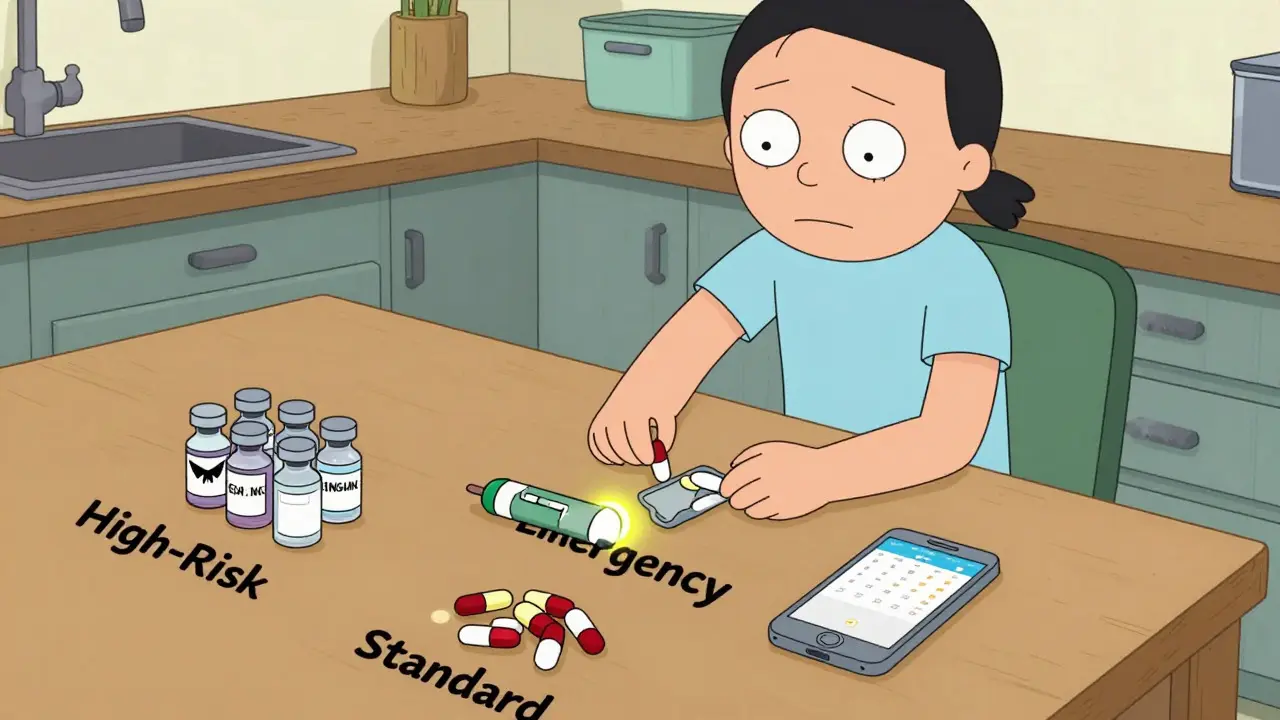
Not all medications need the same level of attention. Some degrade quickly, while others are quite stable. Understanding the categories helps you prioritize your reviews. High-risk drugs deserve weekly or monthly checks, while stable supplements can wait for a quarterly sweep.
| Medication Type | Examples | Review Frequency | Storage Notes |
|---|---|---|---|
| High-Risk / Critical | Insulin, Nitroglycerin, Liquid Antibiotics | Weekly | Check temperature sensitivity; discard if discolored or clumped. |
| Emergency Supplies | Epinephrine Auto-Injectors, Asthma Inhalers | Monthly | Keep accessible; ensure indicator window shows clear color. |
| Standard Prescriptions | Blood pressure meds, Statins, Antidepressants | Quarterly | Store in cool, dry place away from direct sunlight. |
| Over-the-Counter & Vitamins | Pain relievers, Multivitamins, Cough syrup | Semi-Annually | Vitamins may oxidize; check for smell or texture changes. |
Notice the emphasis on storage conditions. The FDA states that expiration dates assume proper storage. Room temperature is defined as 20°-25°C (68°-77°F). Your bathroom, with its steamy showers, is often too warm and humid. This accelerates degradation. Moving your meds to a bedroom closet or a dedicated drawer in a cooler room can extend their effectiveness. Refrigerated drugs, like certain insulins or eye drops, need stricter monitoring because temperature fluctuations in a mini-fridge can ruin them faster than heat in a cupboard.
Navigating Confusion and Common Pitfalls
One of the biggest hurdles people face is reading the labels. Many seniors struggle with small print. An AARP survey found that nearly half of older adults have trouble distinguishing between the manufacture date and the expiration date. The expiration date is always marked as "EXP," "Exp," or "Best By." The manufacture date is usually labeled "MFG." Never confuse the two. Another common mistake is repackaging pills into unlabeled containers. While pill organizers are great for daily doses, they strip away vital information. If you use a blister pack organizer, write the expiration date on the box itself with a permanent marker.
Financial waste is another major concern. Patients often hold onto antibiotics "just in case" or keep unused painkillers for years. However, keeping expired meds creates clutter and risk. The Kaiser Family Foundation reported that billions of dollars worth of unexpired medications are thrown away annually due to confusion. By having a clear schedule, you avoid buying duplicates. When you get a new prescription, check your stash first. Do you still have last month's leftover antibiotics? Ask your doctor if you can finish those first before starting a new course, if appropriate. This practice, known as "First Expired, First Out" (FEFO), is used in warehouses and works just as well in your home.
Also, beware of compounded medications. These are custom-made drugs prepared by pharmacists. Unlike mass-produced pills, they don't always have standard expiration dates printed on them. Instead, they have a Beyond Use Date (BUD). According to guidelines from the American Society of Health-System Pharmacists (ASHP), non-sterile compounded meds typically last 180 days at room temperature. Sterile ones last much less time. Always ask your pharmacist for the specific BUD when you pick up a compounded prescription and add it immediately to your log.
Disposal and Sustainability
Once your review schedule flags a medication for disposal, how do you handle it safely? Flushing drugs is generally discouraged because it contaminates water supplies. Throwing them in the trash is better, but not ideal if pets or children can access them. The best option is a drug take-back program. The DEA hosts National Prescription Drug Take Back Days twice a year, but many pharmacies and police stations have permanent drop-off boxes. Using these services ensures that expired medications are incinerated safely. It also supports sustainability efforts. The Healthcare Environmental Resource Center has noted a rise in take-back programs, helping reduce the environmental footprint of pharmaceutical waste.
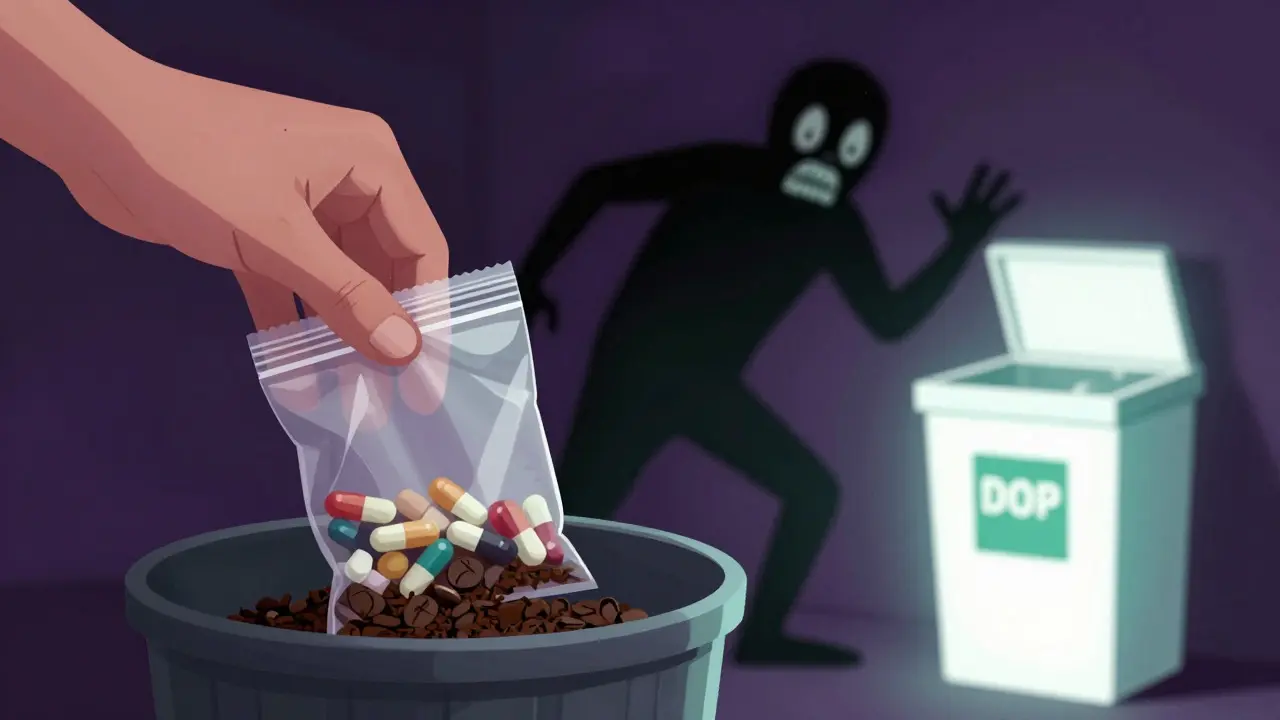
If no take-back site is nearby, mix the pills with an unappealing substance like dirt, cat litter, or used coffee grounds in a sealed plastic bag before tossing them in the trash. Remove or scratch out personal information from the bottle label to protect your privacy. This simple step closes the loop on your medication lifecycle, ensuring safety from shelf to disposal.
FAQs About Medication Expiration
Can I take medication a few days past its expiration date?
While many solid pills may retain potency for a short time after expiration, it is not guaranteed. For critical medications like heart drugs or insulin, even a slight loss of potency can be dangerous. The FDA recommends discarding any drug past its expiration date. If you are in an emergency and have no other option, consult a poison control center or pharmacist immediately, but do not make it a habit.
How do I know if my medication has gone bad before the expiration date?
Look for physical changes. Pills that are cracked, discolored, or crumbly may have degraded. Liquid medications that change color, develop cloudiness, or smell strange should be discarded. Capsules that are stuck together or sticky indicate moisture damage. If in doubt, throw it out and replace it. Storage conditions play a huge role here; heat and humidity speed up spoilage.
Is it safe to store medications in the bathroom?
Generally, no. Bathrooms are often hot and humid due to showers and baths. This environment accelerates the breakdown of many drugs. The FDA recommends storing medications in a cool, dry place, such as a bedroom closet or a drawer in a hallway. Avoid places near sinks, stoves, or windows where temperature and light fluctuate.
What is the difference between a manufacture date and an expiration date?
The manufacture date (MFG) is when the drug was made. The expiration date (EXP) is the last day the manufacturer guarantees full potency and safety. Always follow the expiration date. Confusing the two can lead to using old medication prematurely or discarding fresh medication unnecessarily. The expiration date is the one that matters for your health.
How should I dispose of expired medications safely?
The safest method is to use a drug take-back program at a pharmacy or police station. If none is available, mix the pills with an unappetizing substance like cat litter or coffee grounds in a sealed bag and throw them in the trash. Remove personal info from the bottle. Only flush medications if the label explicitly instructs you to do so, as this is reserved for highly addictive or dangerous drugs that pose immediate risk if ingested accidentally.