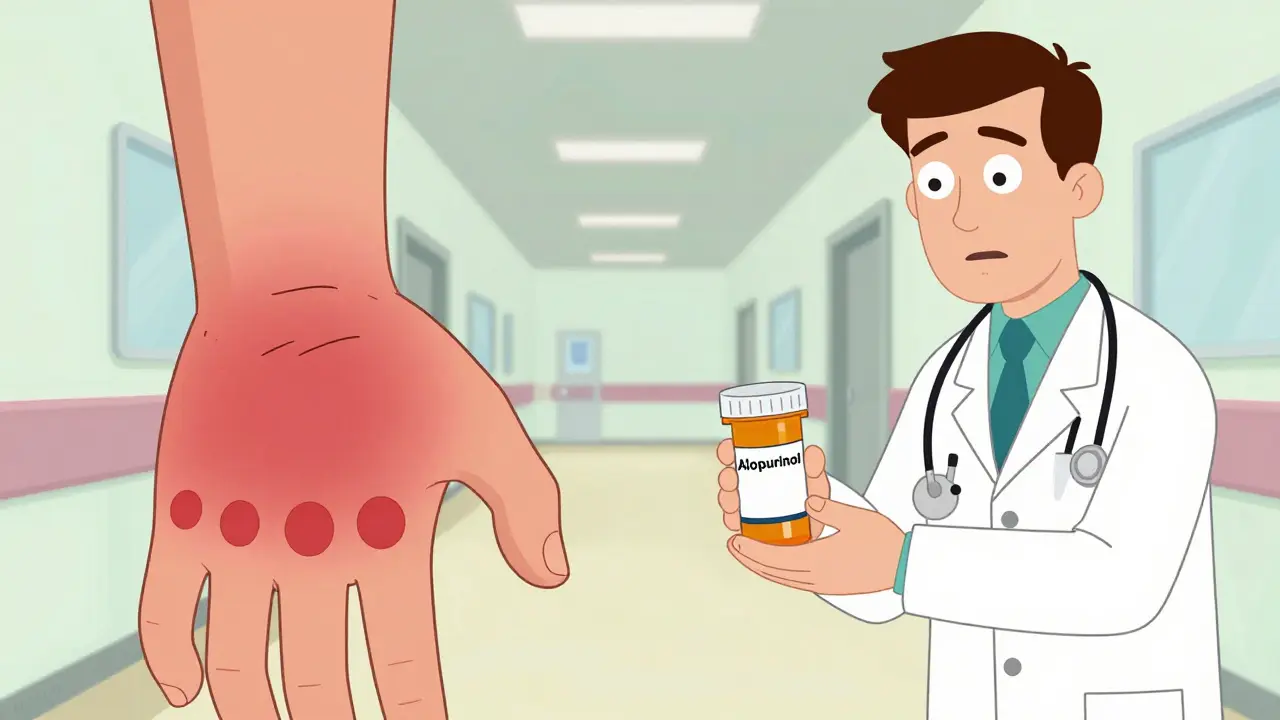
Drug Interaction & Safety Checker: Allopurinol + Azathioprine
Use this tool to simulate different medication scenarios and understand the resulting metabolic impact and safety requirements.
Why These Two Drugs Clash
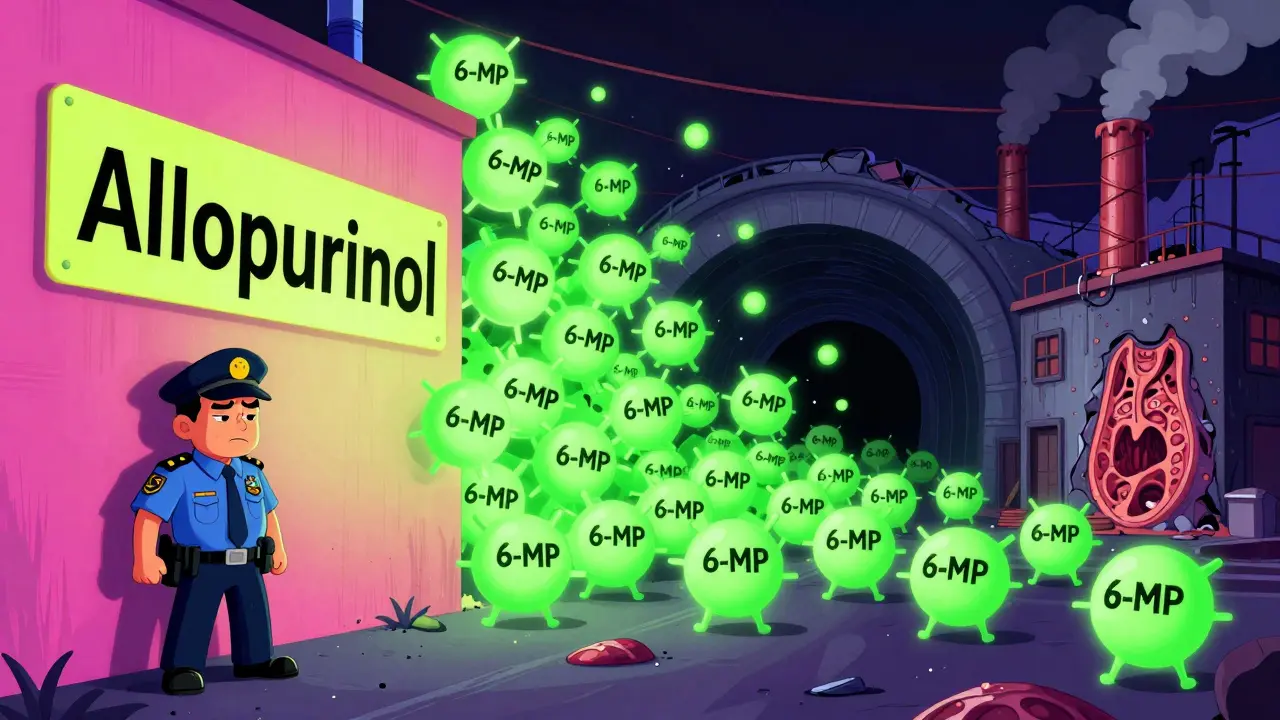
To understand the danger, we have to look at how the body breaks down medication. Azathioprine is a drug used to suppress the immune system. Once it enters your system, it turns into an active metabolite called 6-mercaptopurine (6-MP). To keep the levels of 6-MP in check, your body relies on an enzyme called xanthine oxidase (XO) to neutralize it and turn it into an inactive form. Here is where the problem starts. Allopurinol, commonly used to treat gout, works specifically by blocking that same xanthine oxidase enzyme. When you take both, you effectively shut down the exit door for 6-MP. Because the enzyme is blocked, the 6-MP doesn't get neutralized. Instead, it gets shunted into a different pathway, creating an overload of active thioguanine nucleotides (6-TGNs). These active compounds are great for suppressing the immune system, but in excessive amounts, they become toxic. They attack the bone marrow, preventing the production of the very cells your body needs to survive: white blood cells, red blood cells, and platelets.The Real-World Danger: Bone Marrow Suppression
When this interaction occurs, it leads to a condition called myelosuppression or pancytopenia. This means your bone marrow essentially stops working. In one documented case of a heart transplant recipient, the patient's white blood cell count plummeted to 1.1 × 10³/mm³, and hemoglobin dropped to a staggering 3.7 g/dL. What does this actually mean for a person?- Extreme Infection Risk: With neutrophils (a type of white blood cell) falling below 0.5 × 10³/mm³, the body cannot fight off basic bacteria. A simple cold can turn into systemic sepsis.
- Severe Anemia: Low hemoglobin means your organs aren't getting enough oxygen, leading to crushing fatigue and shortness of breath.
- Hemorrhage Risk: When platelets drop (sometimes below 20 × 10³/mm³), your blood can't clot, leading to spontaneous bruising or internal bleeding.
When the Risk is Used as a Tool: Thiopurine Shunters
You might wonder why any doctor would ever risk this combination. In very specific cases, specialists actually use this interaction as a targeted therapy. This is primarily for people with Inflammatory Bowel Disease (IBD) who are known as "thiopurine shunters." Most people process azathioprine into helpful 6-TGNs. However, about 25-30% of patients "shunt" the medication toward a metabolite called 6-MMP, which is toxic to the liver. For these patients, the drug doesn't work for their bowel disease, and it might actually damage their liver. By adding a very low dose of allopurinol, doctors can intentionally block the XO enzyme to stop the production of the liver-toxic 6-MMP and force the body to produce more of the therapeutic 6-TGNs. In a study of 73 IBD patients, this strategy helped 81% of them successfully stop using steroids. But let's be clear: this is a high-wire act. It is only done in specialized centers with constant blood monitoring.| Feature | Standard Azathioprine | Combination (Low-dose Allopurinol) |
|---|---|---|
| Primary Goal | Immune suppression | Redirecting metabolism (6-MMP to 6-TGN) |
| Typical Dose | 2-2.5 mg/kg/day | 0.5-0.75 mg/kg/day (reduced to ~25%) |
| Primary Risk | Liver toxicity (in shunters) | Severe bone marrow suppression |
| Monitoring Frequency | Periodic blood tests | Weekly blood counts (initially) |

How to Safely Manage Gout and Immunosuppression
If you are taking azathioprine and start feeling the symptoms of gout-like sudden, intense joint pain and swelling-do not simply take an over-the-counter supplement or a prescription from a clinic that doesn't have your full medical history. If a doctor must prescribe a gout medication for someone on azathioprine, there are safer alternatives. Medications like Febuxostat do not interact with the 6-MP pathway in the same way and are generally preferred in these high-risk scenarios. For those rare cases where allopurinol is insisted upon by a specialist, the safety protocol is rigid:- Dose Reduction: The azathioprine dose is typically slashed to 25% of the normal amount.
- Baseline Testing: Full blood counts and liver function tests are conducted before the first dose.
- Aggressive Monitoring: Complete blood counts (CBC) are checked weekly for the first month, then biweekly for two months, and monthly thereafter.
- Metabolite Tracking: Specialists track 6-TGN and 6-MMP levels to ensure the patient is in the "therapeutic window" and not sliding into toxicity.
Summary of Safety Precautions
To prevent a medical emergency, both patients and providers should follow these rules of thumb. If you are a patient, keep a current list of all medications and hand it to every doctor you see, even for a quick visit. If you are a prescriber, always screen for allopurinol before starting azathioprine, and vice versa. Remember that the window between "the drug is working" and "the drug is killing the bone marrow" is incredibly narrow when these two are combined. This is not a combination for primary care; it is a specialist's tool that requires the precision of a laboratory.Can I take allopurinol if I am on azathioprine?
Generally, no. This combination is avoided because allopurinol blocks the enzyme that breaks down azathioprine's active metabolite. This can lead to life-threatening bone marrow suppression. It should only be done under the strict supervision of a specialist (like a gastroenterologist) and with a massive reduction in the azathioprine dose.
What are the symptoms of this drug interaction?
Symptoms usually stem from a lack of blood cells. This includes extreme fatigue and pale skin (low red cells), frequent infections or mouth ulcers (low white cells), and easy bruising or tiny red spots on the skin called petechiae (low platelets).
Is there a safer alternative to allopurinol for gout patients?
Yes, medications such as Febuxostat are often used as alternatives because they do not share the same dangerous metabolic interaction with thiopurines like azathioprine.
How does a "thiopurine shunter" differ from a normal patient?
A normal patient converts azathioprine into 6-TGNs, which treat the disease. A shunter converts it into 6-MMP, which is toxic to the liver and offers little therapeutic benefit. In these specific patients, low-dose allopurinol is sometimes used to "push" the metabolism back toward the helpful 6-TGNs.
How often should blood be monitored if taking both?
If a specialist deems the combination necessary, the protocol typically involves weekly complete blood counts (CBC) for the first four weeks, followed by biweekly checks for two months, and then monthly monitoring indefinitely.
Absolute madness! The sheer negligence of a physician prescribing a gout medication without checking a patient's immunosuppressant history is nothing short of a medical tragedy! I am simply aghast that such fundamental lapses in clinical judgment still occur in this day and age. It is a symphony of incompetence!
imagine being a doc and not knowing this stuff lol pure incompetence honestly we need better standards in this country or we just let ppl die from basic mistakes
It's fascinating how the body can be steered like this. The concept of
Scary stuff!!! Did you have this happen... or know someone who did???
Funny how the 'official' guides always omit the fact that these drug cocktails are often tested on us without full disclosure. The pharmaceutical complex loves these 'narrow windows' because it keeps patients dependent on constant, expensive monitoring. It's a perfect loop for profit, designed by the elites to keep us tethered to the system under the guise of 'safety protocols' and 'specialized centers' while they hoard the real cures.
Big Pharma just wants more money 🙄 they make the drugs dangerous so you have to pay for more tests!! wake up people! 🙄
its actually kind of nice that there is a way to help shunters even if its risky we just gotta trust the process and keep the system honest man
Life is a cycle of pain and healing. This shows that even a small pill can be a weapon if not used with wisdom. We must respect the balance of nature.
I truly appreciate how this guide highlights the delicate balance required for patient safety, and while it might seem daunting to some, I believe that with an open dialogue between patients and their healthcare providers, we can navigate these complexities together to ensure that everyone receives the most compassionate and effective care possible, because at the end of the day, we are all just trying to find a path toward wellness in a very complicated world.
The pharmacokinetic profile here is basic 🙄 just a simple XO inhibition leading to TGN accumulation. Truly elementary stuff for anyone with a real degree 💅