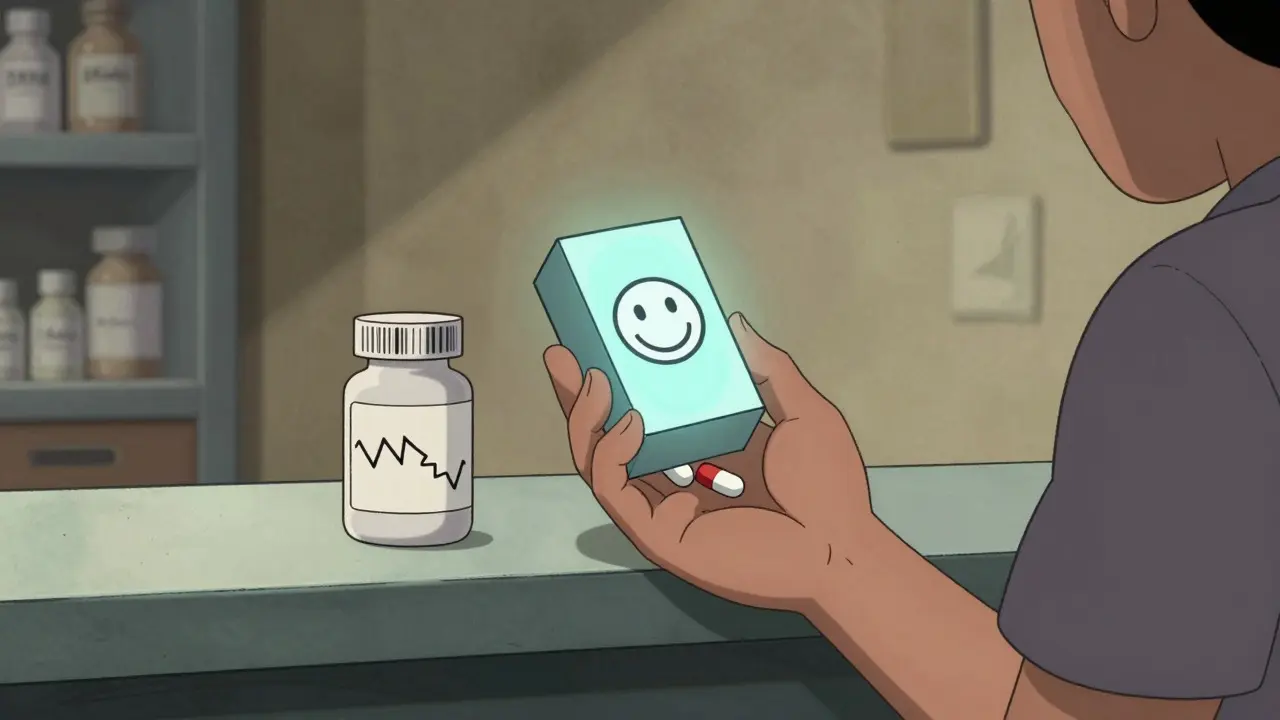
Imagine holding two pills. One is wrapped in a sleek, branded box with a logo you trust. The other sits in a plain white bottle with a barcode and a name that sounds like a chemistry experiment. Both contain the same active ingredient. Both were approved by the U.S. Food and Drug Administration (FDA). Yet, for millions of patients, taking the second pill feels like rolling the dice on their health. This is the reality of risk perception regarding generic drugs.
It’s not just about being stubborn or expensive. It’s a deep-seated psychological reaction to uncertainty. When we talk about how patients assess generic safety, we aren’t just discussing pharmacology; we are exploring the gap between scientific fact and human fear. Understanding this gap is crucial because it directly impacts whether people take their medicine at all. If you believe a drug might not work-or worse, might hurt you-you’re less likely to fill the prescription or stick to the regimen.
The Science Behind the Label: Bioequivalence Explained
To understand why the fear persists, we first need to look at what the science actually says. Since the passage of the Hatch-Waxman Act in 1984, the pathway for approving generic drugs has been rigorous. The core standard is bioequivalence. In simple terms, this means the generic version must deliver the same amount of active ingredient into your bloodstream within the same timeframe as the brand-name drug.
The FDA allows a margin of error here-typically between 80% and 125% of the brand-name drug’s pharmacokinetic parameters. For most medications, this range is clinically insignificant. Your body processes them effectively the same way. However, when you explain "80-125%" to a patient worried about heart failure or depression, those numbers don’t sound like "the same." They sound like variables. This statistical nuance is where the disconnect begins. Patients often interpret any difference in numbers as a difference in quality or safety.
| Attribute | Brand-Name Drug | Generic Drug |
|---|---|---|
| Active Ingredient | Identical chemical compound | Identical chemical compound |
| Dosage & Strength | Standardized | Standardized (same strength) |
| Absorption Rate | Reference standard | Bioequivalent (80-125% range) |
| Inactive Ingredients | Proprietary mix (colors, binders) | May differ (affects allergies/taste) |
| Cost | High (R&D recovery costs) | Low (competition drives price down) |
Note the row on inactive ingredients. While the active drug is the same, the fillers, dyes, and binders can differ. For a small subset of patients with specific sensitivities, this matters. But for the vast majority, it shouldn’t. The problem is that patients rarely know which category they fall into until they’ve already had a bad experience-or heard someone else describe one.
Why We Fear the "Cheap" Option: Psychological Biases
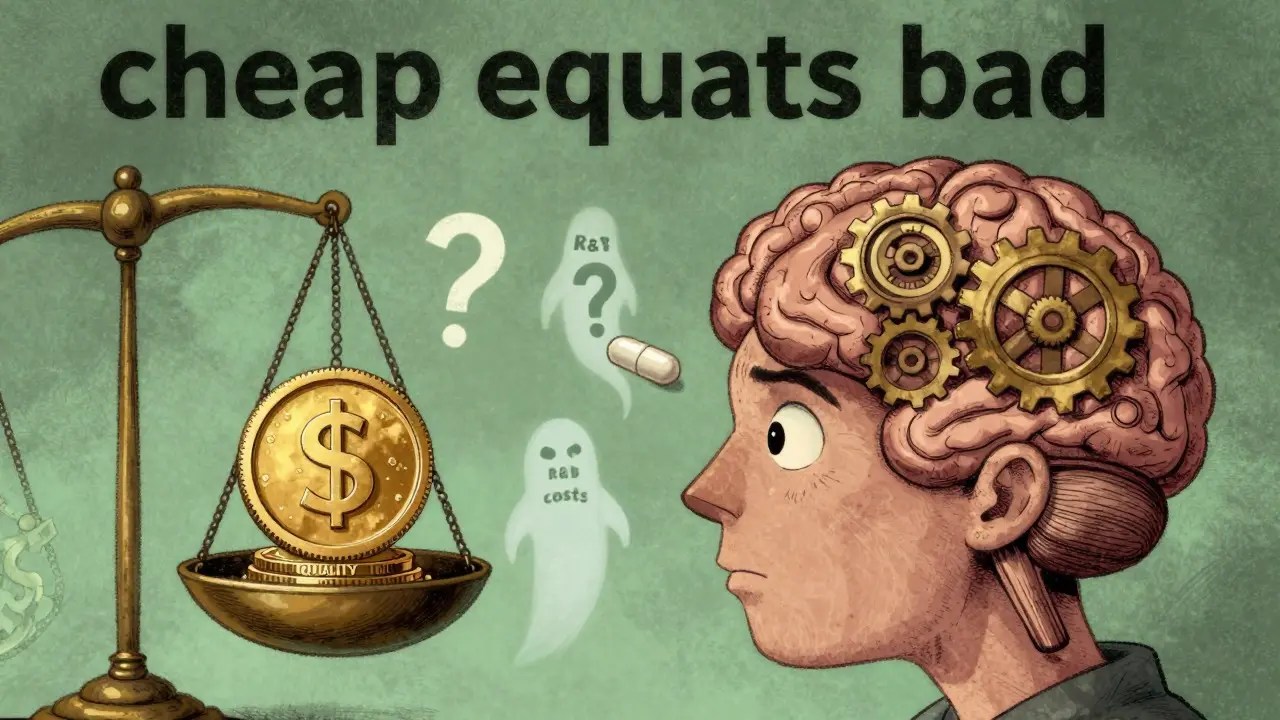
Human brains are wired to associate cost with quality. It’s a heuristic-a mental shortcut-that usually works well for cars, clothes, or electronics. If something is cheap, we assume corners were cut. Dr. Aaron S. Kesselheim from Harvard Medical School has pointed out that the word "generic" itself triggers a cognitive bias. It connotes "lesser" or "copycat," whereas "brand" implies "original" and "tested."
This isn’t irrational; it’s predictable. When a patient switches from a $300 monthly script to a $10 one, part of their brain asks, "What did I lose?" If the efficacy is supposed to be the same, the perceived loss must be in safety or reliability. This is known as the "no free lunch" fallacy applied to healthcare. Patients worry that if the manufacturer didn’t spend billions on research and development (R&D), the product must be inferior.
Furthermore, there is a lack of transferability in trust. A study led by Dr. Karen E. Lasser found that patients do not automatically transfer their confidence in an older, established medication to its generic counterpart. Even if they trusted the brand name for years, the switch feels like starting over with an unknown entity. This breaks the continuity of care in the patient’s mind, creating anxiety every time they reach for the pillbox.
Who Is Most Skeptical? Demographic Patterns
Risk perception isn’t uniform across the population. Data reveals clear patterns in who worries more about generic safety, which helps providers target their communication strategies.
- Health Literacy: Patients with lower health literacy scores are significantly more likely to believe generics are less safe. A 2015 study showed that among those with inadequate health literacy, 50% believed generics were less effective, compared to only 25% of the general population. Complex medical jargon around bioequivalence confuses rather than reassures these patients.
- Age: Older adults, particularly those over 60, show heightened concern about side effects. As people age, they often take multiple medications (polypharmacy). Any change in a regimen feels risky because the interactions are harder to track. A 2024 machine learning analysis confirmed that age is a significant predictor of safety concerns.
- Ethnicity: Non-Caucasian patients, including Black and Hispanic populations, have historically shown higher skepticism toward generic safety. Research indicates they are up to 1.8 times more likely to express safety concerns than White patients. This may stem from broader systemic distrust in healthcare institutions rather than just the drugs themselves.
- Education Level: Interestingly, while lower education correlates with fear of danger, higher education sometimes correlates with fear of *change*. Highly educated participants were more concerned about treatment regimen changes, suggesting they over-analyze minor variables.
Socioeconomic status also plays a role. You might expect low-income individuals to prefer generics due to cost, but studies show unemployed and retired participants often have more positive attitudes toward generics (39.5%) compared to employed individuals. Perhaps those with tighter budgets have learned to accept the trade-off, while those with more disposable income can afford the "peace of mind" tax of brand names.
The Power of Anecdote: Why Stories Trump Statistics
No matter how many FDA pamphlets you hand out, one bad story will undo weeks of education. This is the power of anecdotal evidence. In online forums like Reddit’s r/pharmacy or PatientsLikeMe, thousands of users share experiences like, "I switched to generic sertraline and had terrible withdrawal symptoms." These stories are visceral and immediate.
Consider the case of bupropion XL. In 2012, the FDA issued a safety communication after reports suggested some generic versions were less effective. For patients taking this drug for depression or smoking cessation, the stakes felt incredibly high. Even though the issue was isolated to specific manufacturers, the narrative spread: "Generics aren't always reliable."
These anecdotes create a "availability heuristic." When asked to assess risk, patients recall the vivid story of a friend who got sick after switching, rather than the dry statistic that 90% of prescriptions filled are generics with no issues. The emotional weight of "my neighbor’s blood pressure spiked" outweighs the logical weight of "clinical trials show equivalence."
Moreover, individual biology varies. Two people can take the same generic batch and react differently due to gut microbiome differences, metabolism rates, or placebo/nocebo effects. If Patient A feels fine and Patient B feels dizzy, Patient B concludes the drug is unsafe, ignoring the fact that Patient A took the exact same pill. This subjectivity makes objective safety data hard to swallow.
Bridging the Gap: What Actually Works?
If fear is driven by psychology and anecdotes, how do we counter it? Shouting facts doesn’t work. We need targeted interventions that address the root causes of mistrust.
- Physician Communication is Key: The strongest predictor of generic acceptance is what the doctor says. A meta-analysis found that patients who received a clear explanation about bioequivalence from their provider were 3.2 times more likely to accept generics. Doctors need to move beyond "It’s the same thing" to "Here’s how we ensure it works just as well for you."
- Pharmacist Counseling: Pharmacists are the last line of defense. Studies show that patients who receive counseling from pharmacists about generic safety have 37% higher adherence rates. However, time is a barrier-the average consultation lasts only 47 seconds. Training pharmacists to use brief, impactful scripts can make a huge difference in that short window.
- Tailored Education: One size does not fit all. Educational materials designed specifically for low-health-literacy patients reduced safety concerns by 42%. Use plain language, visuals, and analogies. Avoid terms like "pharmacokinetics" unless you define them immediately in simple terms.
- Timing Matters: Address the issue at the point of prescribing, not at the pharmacy counter when the patient is already anxious about paying. Explain the switch before they leave the office.
Technology is also emerging as a tool. Machine learning models can now predict which patients are at highest risk for safety concerns with 87% accuracy. By identifying these individuals early, healthcare teams can proactively offer extra support or monitoring during a switch, turning a potential crisis into a managed transition.
The Economic Stakes: Why This Isn't Just About Feelings
This isn’t just a clinical debate; it’s an economic imperative. Generic drugs account for 90% of prescriptions but only 23% of U.S. drug spending. That efficiency saves the healthcare system hundreds of billions annually. However, "brand loyalty" driven by unfounded safety fears costs the system approximately $8 billion a year in unnecessary brand-name prescriptions.
If we could close the gap in generic utilization by addressing these perception barriers, the Congressional Budget Office estimates savings of $1.67 trillion over the next decade. That money could go toward better insurance coverage, more research, or lower premiums. Every time a patient refuses a generic due to fear, they are voting for a more expensive healthcare system-not just for themselves, but for everyone.
Insurance designs are trying to help. Medicare Part D plans with $0 copays for generics see 18% higher utilization than those with tiered structures. Financial incentives nudge behavior, but they don’t fix the underlying trust issue. If a patient believes the $0 pill is dangerous, they’ll pay the $50 copay for the "safe" one anyway.
Complex Generics: The New Frontier of Concern
While pills are relatively straightforward, new types of generics are complicating the picture. Inhalers, topical creams, and complex injectables are harder to prove bioequivalent for because delivery mechanisms vary. A 2023 survey found that 48% of patients expressed specific concerns about these "complex generics."
For example, an asthma inhaler requires precise coordination between breath and spray. If the generic device feels slightly different in resistance or mist pattern, the patient may feel they aren’t getting the full dose, even if the chemical content is identical. This tactile feedback loop reinforces the belief that "different means worse." Healthcare providers need to spend extra time demonstrating proper technique for these devices to mitigate this specific type of risk perception.
Are generic drugs really as safe as brand-name drugs?
Yes. The FDA requires generic drugs to demonstrate bioequivalence, meaning they contain the same active ingredient, strength, and dosage form as the brand-name drug. They must perform similarly in the body. While inactive ingredients may differ, rigorous testing ensures safety and efficacy match the original product.
Why do some patients feel different side effects with generics?
Side effect differences can occur due to variations in inactive ingredients (fillers, dyes) which may trigger allergies or sensitivities in rare cases. Additionally, the nocebo effect-where expecting negative outcomes causes them-can play a role. Individual metabolic differences also mean reactions vary from person to person, regardless of brand.
Should I avoid switching to generics for serious conditions like heart disease?
Generally, no. Studies show no significant difference in safety perceptions or outcomes for chronic conditions like cardiac issues when using generics. However, for narrow therapeutic index drugs (where small changes in dose matter greatly), consult your doctor. They may monitor levels more closely during a switch to ensure stability.
How can doctors help reduce patient fear of generic drugs?
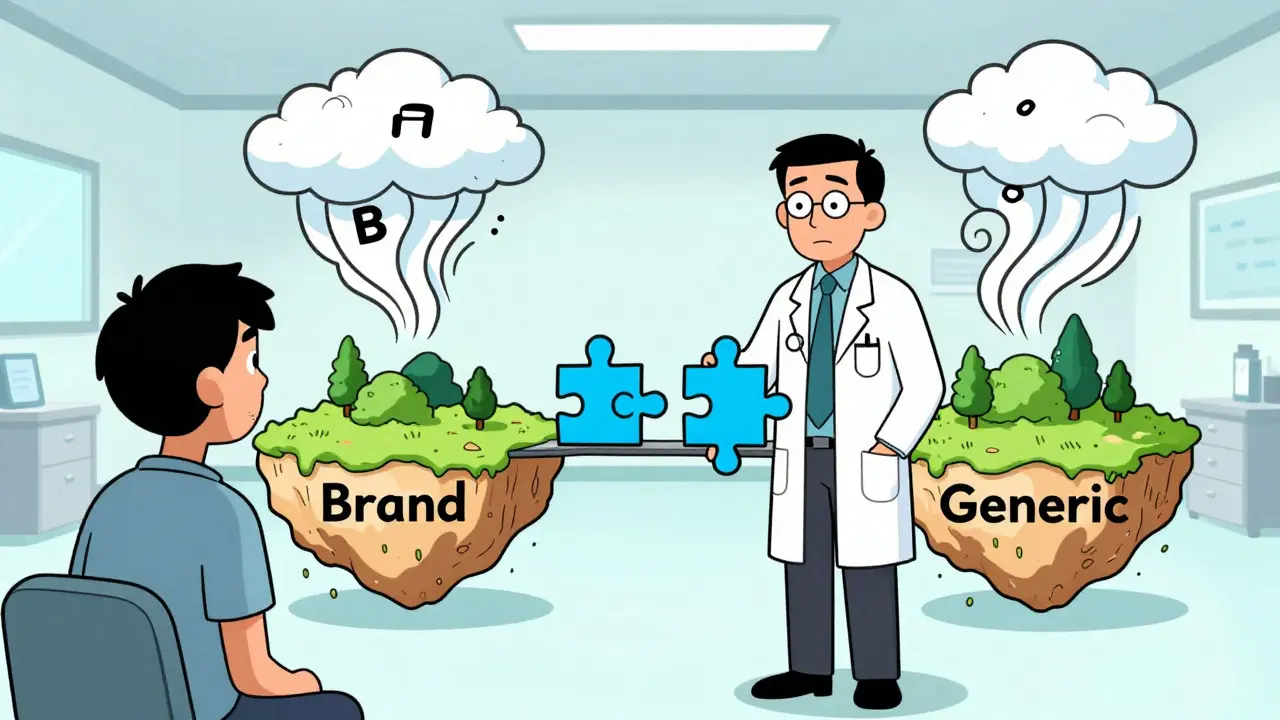
Doctors should explain bioequivalence in simple terms, acknowledge valid concerns about inactive ingredients, and provide clear reasons for the switch. Personalizing the conversation and offering follow-up monitoring can build trust. Using visual aids or plain-language handouts tailored to the patient's health literacy level is also effective.
Do insurance companies push generics just to save money?
Partially, yes. Insurance designs favor generics to reduce overall healthcare costs. However, this aligns with clinical guidelines that recommend generics as the first-line option due to proven safety and efficacy. The goal is to maximize access to necessary treatments without compromising quality, making healthcare sustainable for more people.