
We’ve all seen the headlines about empty pharmacy shelves, but the reality behind those news stories is far more complex than simple logistics failure. Since the pandemic, it became painfully clear that our medical supply lines were stretched to their breaking point. You might wonder why modern medicine still relies on a system so fragile that a single factory closure can stop life-saving treatments from reaching patients. The answer lies in decades of prioritizing efficiency over safety, a mistake we are now paying to correct.
The High Cost of Fragility
To understand why we need resilience, you have to look at what happens when things go wrong. The Food and Drug Administration (FDA)regulates pharmaceuticals in the U.S. documented 245 distinct drug shortages in 2022 alone. These weren’t minor inconveniences like running out of a vitamin brand. Sixty-two percent of those shortages involved sterile injectable products-medicines used in emergency rooms and surgeries where alternatives rarely exist.
When a hospital cannot source insulin or chemotherapy agents, patient care suffers immediately. Beyond human cost, the economic hit is staggering. A 2023 analysis by the Department of Health and Human Services estimated these disruptions cost the U.S. healthcare system approximately $216 million annually just in additional administrative and substitution expenses. That figure doesn't even account for delayed surgeries or worsened health outcomes, which inflate costs significantly further.
Key Takeaways
- Vulnerability is concentrated: Nearly three-quarters of active pharmaceutical ingredient facilities serving the U.S. are located overseas.
- Resilience costs money: Implementing robust safety measures requires upfront investment but saves long-term revenue loss.
- Technology is key: Only 35% of companies currently see beyond their immediate suppliers, creating blind spots for risk assessment.
- Regulation is tightening: By late 2026, manufacturers will face stricter transparency rules tied to reimbursement.
What Does Resilience Actually Look Like?
You don't fix a broken system with a patch; you rebuild the foundation. In 2021, the National Academies of Sciences, Engineering, and Medicine published a roadmap called "Building Resilience into the Nation's Medical Product Supply Chains." This framework established that resilience isn't just one tactic, but a mix of three main capabilities: anticipation, strategic planning, and risk management.
Think of it like home insurance, but proactive. Anticipation means monitoring global markets for raw material spikes or political instability. Strategic planning involves designing your network so it can absorb a shock without snapping. Risk management deploys the actual fixes when those risks materialize. Experts found that awareness measures provide the best return on investment-they are 37% more efficient than pure mitigation. Knowing exactly where your vulnerabilities lie allows you to spend your budget smarter.
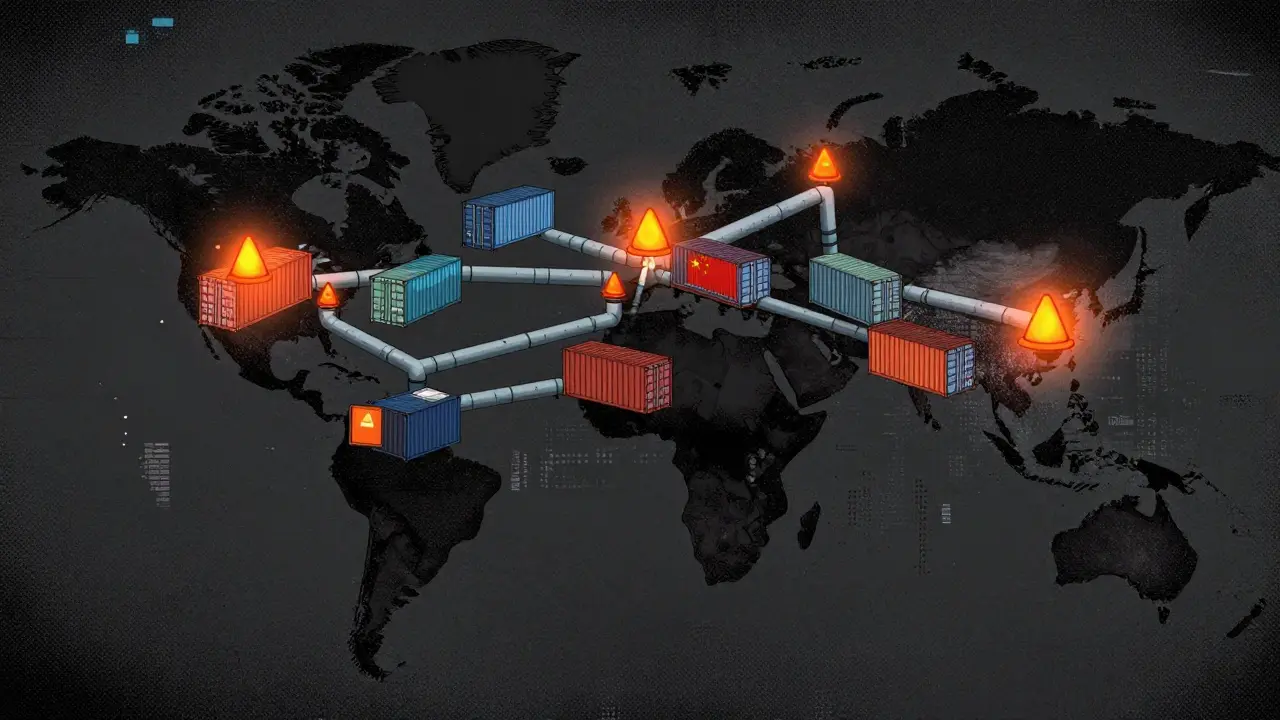
The Big Three: Stockpiles, Diversity, and Redundancy
While policy discussions often sound abstract, the mechanics of fixing the problem come down to three concrete actions. First, buffer stockpiling. Historically, companies ran "lean," meaning they kept zero inventory to save cash flow. For critical medicines, experts now recommend holding a six-to-twelve-month supply. It sounds expensive, but compared to the chaos of a shortage, it's manageable insurance.
Second is supplier diversification. Currently, 28% of Active Pharmaceutical Ingredients (APIs)-the raw compounds that make up your pills-are manufactured in just two countries: China and India. If those regions face export bans or trade disputes, the global pipeline dries up. The standard advice is now to have at least three geographically dispersed suppliers for critical drugs. This ensures that if one region goes dark, production continues elsewhere.
Third is manufacturing redundancy. This concept involves dual-sourcing APIs for high-volume products. Companies like Pfizer demonstrated during the early pandemic that having a secondary line ready to flip on can reduce stockouts significantly. While reshoring everything isn't feasible, moving 40% of API production back domestically, a target set by the 2024 American Rescue Plan Act initiatives, offers a massive safety net without the total cost penalty of moving every single component.
Tech Solutions: Seeing the Invisible
One of the biggest hurdles remains a lack of visibility. Most pharmaceutical giants know their Tier 1 suppliers-the ones who bottle their drugs-but they are often blind to Tier 2 and Tier 3. Those are the chemical plants making the raw ingredients. According to the Duke-Margolis Center, just 12% of companies have full visibility down to those raw material levels.
This gap creates dangerous blind spots. If a fire burns down a Tier 3 facility in Southeast Asia, the drugmaker might only realize it weeks later when shipments stop arriving. To combat this, companies are investing in supply chain mapping technologies. One study noted that implementing full supply chain visibility resulted in 32% fewer disruptions. It’s not magic; it’s simply data integration that connects the dots between shipping containers, factories, and warehouses in real-time.
Cybersecurity is another layer of technology that is becoming vital. With digital systems managing everything from inventory orders to automated dispensing, the attack surface has widened. Healthcare distribution alliances reported a 214% increase in cyberattacks targeting these chains between 2020 and 2023. A breach doesn't just steal data; hackers can lock down production schedules or alter shipment manifests, effectively paralyzing the supply chain physically. Embedding NIST Cybersecurity Framework controls across all partners is no longer optional-it's a baseline requirement.

The Economic Reality of Resilience
We have to be honest about the price tag. Building a resilient supply chain costs more money upfront. L.E.K. Consulting analyzed that reshoring API production typically raises costs by 25% to 40%. That’s a hard sell for procurement teams focused on quarterly margins. However, the alternative is catastrophic waste. A hybrid model-combining targeted domestic capacity for the highest-risk products with diversified international partnerships-is emerging as the sweet spot. Estimates suggest this approach could prevent 85% of critical shortages while costing significantly less than maintaining massive physical stockpiles alone.
There is also an external financial incentive coming soon. The Centers for Medicare & Medicaid Services (CMS) proposed a rule in 2024 linking reimbursement to transparency. As we move toward the 2026 deadline for these requirements, manufacturers will be forced to disclose full supply chain maps to receive payment for many drugs. This regulation essentially forces the hand of companies that otherwise might delay investments in risk analytics.
Human Capital: Who Builds the System?
You can have the best software in the world, but you need skilled people to run it. McKinsey projects we will need 125,000 additional supply chain risk specialists in the pharmaceutical sector by 2027. That is a 220% increase from 2020 levels. Right now, there is a severe skills gap. Only 35% of supply chain staff are trained specifically in risk analytics. This workforce crisis means that implementing these new systems requires significant hiring and training efforts.
Successful transformations usually take time. Case studies from Merck and Pfizer show timelines ranging from 18 to 24 months to fully integrate these new resilient architectures. They require dedicated teams of 5-7 specialists per billion dollars in annual revenue to maintain. It’s a shift from viewing supply chain as a back-office function to treating it as a core strategic pillar.
Frequently Asked Questions
Why is most drug manufacturing located overseas?
Historically, regulatory frameworks and labor costs made manufacturing cheaper in countries like India and China. Additionally, specialized equipment for certain APIs was concentrated there, making local production difficult without massive infrastructure investment.
How much does a drug shortage actually cost the system?
A 2023 ASPE analysis puts the cost at approximately $216 million annually in direct additional expenses, but indirect costs from delays and patient harm are significantly higher and harder to quantify.
What is the role of government in fixing supply chains?
Government agencies like the FDA and HHS set safety standards and incentivize domestic production through grants. The 2024 Implementation Plan allocated $520 million specifically for domestic manufacturing of critical medicines.
Can technology fully solve shortages?
No. Technology improves visibility and prediction, but it needs physical redundancy (factories, stockpiles) to handle actual disruptions. Tech guides the strategy, but infrastructure executes it.
When do new transparency rules kick in?
Major mandates regarding reimbursement linkage and mapping disclosure are targeting full compliance around late 2025 to early 2026, aligning with upcoming CMS requirements.
It really shows how much work needs to be done across all sectors and we cannot ignore the risks anymore. Many people think it is just logistics but it involves policy and human resources too. Collaboration is key moving forward so companies must talk to regulators more often. The old way was too focused on cost cutting and now we see the price of that mistake. Safety has to come before margins because patients deserve better protection than we offered lately. Hopefully the new rules help fix the gaps quickly enough.
The data proves we were foolish to rely on such fragile systems entirely.
Supply chain visibility metrics need to integrate tier two and tier three nodes effectively. API sourcing requires robust redundancy protocols. Digital twinning of manufacturing lines helps mitigate latency issues during disruption events. Cybersecurity frameworks like NIST should be mandatory across vendors. Inventory buffer management is critical for lead time reduction. Risk analytics platforms must feed directly into ERP systems for real-time decision making.
I feel pretty good about the direction things are heading now. Technology will definitely bridge those gaps in the road map. People are finally waking up to what matters most here. It takes time to build trust back in the system though. We have to stay positive while waiting for results. There is still so much potential for improvement ahead. Everyone wants safe medicine access again eventually.
One might argue that these solutions are merely reactive measures. True sophistication lies in preventative architecture design. Most practitioners lack the nuance to understand strategic foresight. It is disappointing to see the discourse remain so superficial. Real change requires elite level oversight of these processes. Perhaps next time the industry leaders will listen properly.
It is truly heartbreaking to read about patients suffering from these shortages 💔. We need to remember that every number represents a real person waiting for care 😢. The economic figures mentioned in the article are staggering but meaningless without context. Families endure nights of worry while factories sit idle overseas 😟. It makes me wonder if the priorities shifted correctly after the pandemic 🤔. Healthcare workers bear the burden of managing these chaotic situations daily 😓. We must demand better infrastructure investment from our government representatives 🙏. Transparency is absolutely vital for rebuilding public trust in the process 🗣️. Every delay costs someone their health or their livelihood sadly 😞. We cannot afford to let greed dictate safety standards again ever 🚫. The roadmap suggests progress but implementation remains slow unfortunately 😴. I hope we see more domestic facilities coming online soon 🏭. Resilience should never be an optional extra feature for life saving drugs ❤️. Until then we wait for the next crisis to force our hand 💢. Everyone hopes to see how local pharmacies can help adapt 🛒. We need to prioritize patient safety above profit margins at all costs 🔍.
Great discussion everyone! Let's keep pushing for these changes together. Small steps add up to big wins over time. We got this! 💪
This situation is extremely important!!! The regulations!! Are changing fast!! We must adapt!! Immediately!! Safety cannot wait!!!!