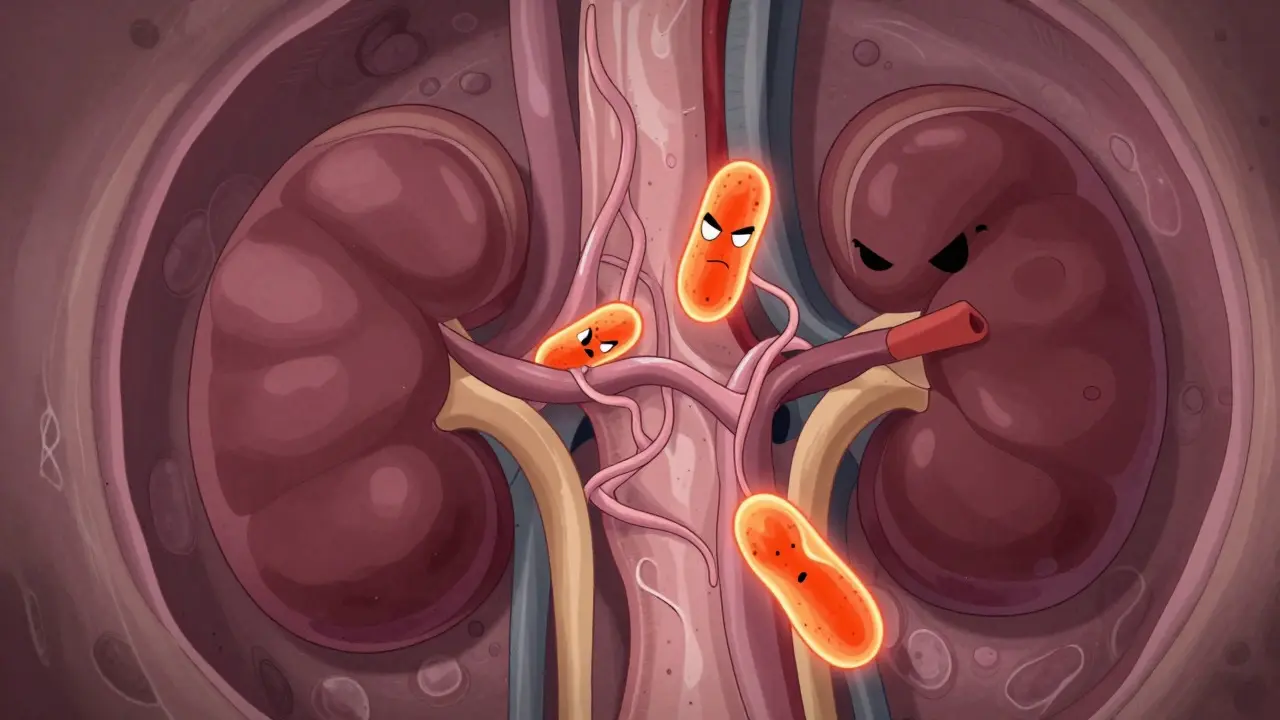
Imagine your immune system accidentally attacking your own kidneys. That is exactly what happens in IgA Nephropathy, also known as Berger's disease. It is an autoimmune condition where immunoglobulin A (IgA) builds up in the tiny filters of your kidneys called glomeruli. This buildup causes inflammation and slowly damages kidney function over time. For decades, doctors mostly watched this disease progress while managing blood pressure. But in 2025, the landscape changed completely with new global guidelines that offer real hope for stopping the damage early.
If you or a loved one has been diagnosed with IgA Nephropathy, you probably have two big questions: How bad will it get? And what can we do about it right now? The answers are more complex than ever, but they are also more actionable. We are moving away from a "wait and see" approach toward active, targeted treatments designed to keep you off dialysis for life.
Understanding the Risk: What Does Your Prognosis Look Like?
The old way of predicting outcomes was simple but flawed: look at how much protein is leaking into your urine. If it was high, things were bad. If it was low, you were safe. The new reality is much more nuanced. According to the updated KDIGO 2025 guidelines, we now look at a combination of factors to determine your risk of progressing to end-stage kidney disease (ESKD).
Here is the hard truth: without effective treatment, about 30% to 50% of patients with persistent proteinuria will develop kidney failure within 10 to 20 years. That is a significant number. However, "persistent proteinuria" is the key phrase here. If you can lower that protein leak, you drastically change your odds.
Your doctor will likely use a clinical calculator that considers four main things:
- Proteinuria levels: How much protein is in your urine per day.
- Blood pressure: Is it well-controlled?
- eGFR: Your estimated glomerular filtration rate, which measures how well your kidneys are filtering waste.
- Oxford Classification (MEST-C score): This comes from your kidney biopsy. It looks at specific patterns of damage under a microscope, such as mesangial hypercellularity or crescents.
This multi-factor approach helps identify who needs aggressive therapy immediately and who can manage with supportive care alone. It stops the guesswork.
The Big Shift: KDIGO 2025 Guidelines Explained
The Kidney Disease: Improving Global Outcomes (KDIGO) organization released major updates in 2025. These guidelines represent a paradigm shift. In the past, doctors would start you on blood pressure meds and wait three months. If your protein didn't drop enough, they would add steroids. This sequential approach meant your kidneys were taking hits during those waiting periods.
The new rule? Start everything at once if you are high-risk.
KDIGO 2025 recommends simultaneous initiation of therapies. This means combining drugs that protect the kidney structure (like blood pressure meds) with drugs that calm down the immune system (like steroids or newer targeted agents). Dr. Laura H. Mariani from the University of Michigan calls this the most significant departure from previous standards. It addresses the gap where disease activity continued unchecked during the initial support phase.
The goal has also gotten stricter. Previously, getting proteinuria below 1 gram per day was the target. Now, the goal is less than 0.5 grams per day. Why the change? Recent data showed that even patients with "moderate" protein leaks (between 0.44 and 0.88 g/g) still had a 30% chance of kidney failure within a decade. Lowering the bar saves lives.
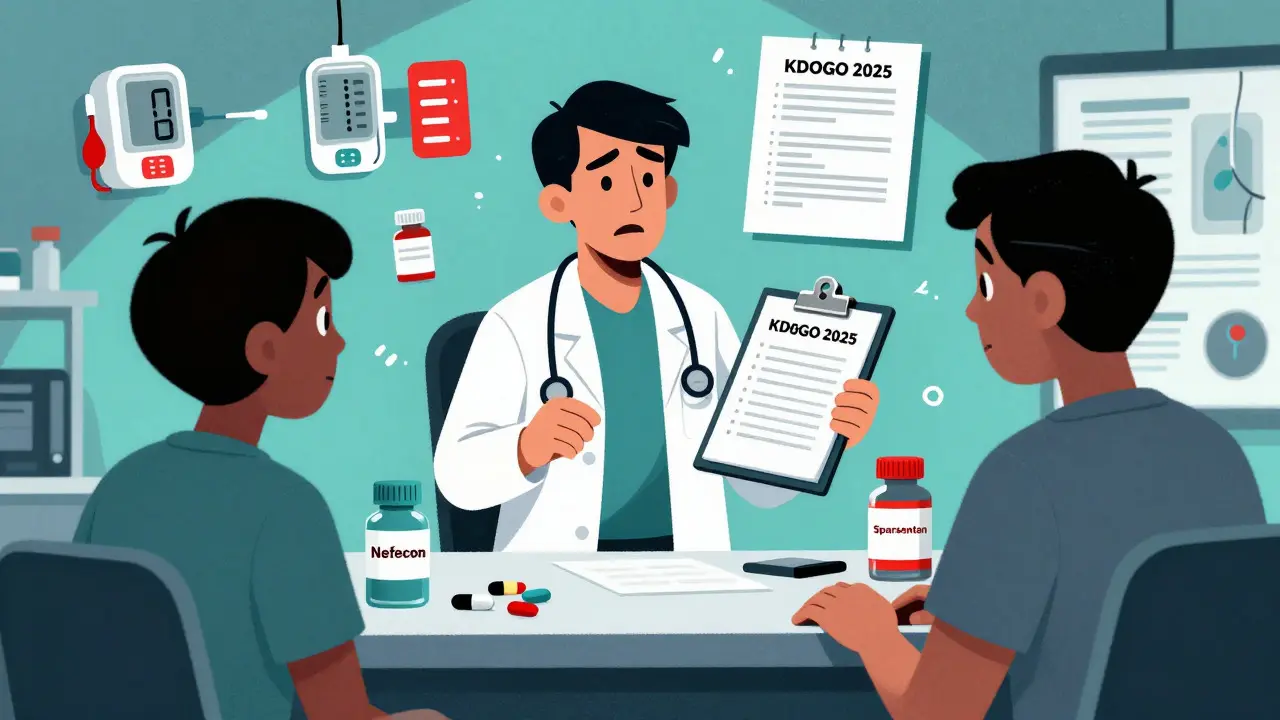
Current Treatment Options: From Blood Pressure Meds to New Drugs
Treatment falls into two buckets: generic protection and specific attack. Generic protection reduces stress on the kidneys regardless of the cause. Specific attack targets the IgA immune complexes directly.
| Treatment Type | Examples | How It Works | Key Considerations |
|---|---|---|---|
| RAS Inhibitors | Lisinopril, Losartan | Reduces blood pressure and protein leakage by relaxing blood vessels in the kidney. | First-line therapy for almost everyone. Cheap, widely available, but requires monitoring of potassium levels. |
| SGLT2 Inhibitors | Dapagliflozin, Empagliflozin | Originally diabetes drugs, they protect kidney cells from energy stress and reduce inflammation. | Strong evidence for slowing decline. Added to RAS inhibitors in many protocols. |
| Nefecon (Budesonide) | Nefecon | A targeted-release steroid that goes straight to the gut, where pathogenic IgA is made. Reduces systemic side effects. | FDA approved in Dec 2023. Highly effective but expensive (~$125k/year in US). Fewer side effects than traditional steroids. |
| Systemic Glucocorticoids | Prednisone | Powerful anti-inflammatory that suppresses the entire immune system. | Effective but carries high risks: weight gain, diabetes, bone loss, infection. Use is now more cautious. |
| Dual Endothelin Receptor Antagonists | Sparsentan | Blocks endothelin-1 (a vasoconstrictor) and angiotensin II. Reduces proteinuria significantly. | Approved in EU in June 2024. Requires liver function monitoring. |
Note that regional differences exist. In Japan, tonsillectomy is a common and supported treatment because removing the tonsils removes a major source of abnormal IgA production. In China, mycophenolate mofetil is frequently used due to strong local trial data. In the West, we rely more on the drugs listed above.
Living with IgA Nephropathy: Patient Perspectives and Challenges
Knowing the science is one thing; living with it is another. Patient communities online, like the IgA Nephropathy Support Group on Facebook, reveal the real-world struggles. While many praise Nefecon for having fewer side effects than prednisone (72% of surveyed members reported better tolerance), cost is a massive barrier. About 68% of U.S. members report insurance denials that require lengthy appeals.
There is also the issue of "treatment burden." One patient on Reddit described managing four different medications with complex schedules as overwhelming, especially for teenagers. This highlights why the new guidelines emphasize individualized care. A 16-year-old athlete might need a different approach than a 60-year-old with diabetes.
Quality of life remains the top priority for 83% of patients in surveys. You want to protect your kidneys, yes, but you also want to enjoy your life today. This balance is why doctors are moving away from long-term high-dose steroids unless absolutely necessary.

What Comes Next? Future Therapies and Biomarkers
We are standing on the edge of personalized medicine for IgA Nephropathy. Right now, we treat based on general risk profiles. Soon, we may treat based on your specific biological markers. Clinical trials like TARGET-IgAN aim to find biomarkers that tell us exactly which drug will work best for which patient. Will you respond better to complement inhibition? Or APRIL blockade? We don't know yet, but trials scheduled through 2027 are working on it.
The market is booming too. The IgAN therapeutic market is expected to grow from $150 million in 2024 to $2.1 billion by 2030. This investment drives innovation. However, access remains unequal. Only 22% of patients in low- and middle-income countries receive guideline-recommended care compared to 85% in high-income nations. Advocacy groups are pushing harder to close this gap.
Practical Steps for Patients Today
If you are navigating this diagnosis, here is what you should focus on right now:
- Get a Biopsy if Recommended: Don't skip it. The MEST-C score provides crucial data for your treatment plan.
- Monitor Proteinuria Closely: Ask your doctor for monthly checks initially. Aim for that <0.5 g/day target.
- Discuss Combination Therapy: If you are high-risk, ask about starting supportive care and immunosuppression simultaneously, rather than waiting.
- Check Insurance Coverage: If Nefecon or Sparsentan is recommended, start the prior authorization process early. Have your doctor write a letter of medical necessity citing the KDIGO 2025 guidelines.
- Manage Cardiovascular Health: Heart disease is a major risk for kidney patients. Keep your cholesterol and blood sugar in check.
Is IgA Nephropathy curable?
Currently, there is no cure that eliminates the disease permanently. However, it is highly manageable. With proper treatment, many patients maintain stable kidney function for decades and never reach end-stage kidney disease. The goal is remission, where symptoms disappear and kidney damage halts.
What is the difference between Nefecon and regular steroids?
Regular steroids like prednisone affect your whole body, causing side effects like weight gain, high blood sugar, and mood changes. Nefecon is a targeted-release formulation of budesonide. It is designed to release the drug specifically in the small intestine, where the abnormal IgA is produced. This allows for higher local concentrations with fewer systemic side effects.
Why did the proteinuria target change from 1g to 0.5g?
New registry data showed that patients with proteinuria between 0.44 and 0.88 g/g still had a significant risk (30%) of developing kidney failure within 10 years. The previous target of 1g was not aggressive enough to protect these patients. Lowering the threshold aims to prevent progression in this vulnerable group.
Does diet matter for IgA Nephropathy?
Yes. A low-sodium diet helps control blood pressure, which is critical for reducing protein leakage. Some studies suggest limiting salt intake to less than 2 grams per day. Additionally, maintaining a healthy weight reduces strain on the kidneys. Always consult a renal dietitian for personalized advice, especially regarding protein intake.
When should I consider a tonsillectomy?
Tonsillectomy is primarily supported by evidence from Japan and some Asian regions. It involves removing the tonsils to reduce the production of pathogenic IgA. In Western countries, it is less common and usually considered only in specific cases, often combined with short-term steroid therapy. Discuss the evidence base relevant to your region with your nephrologist.