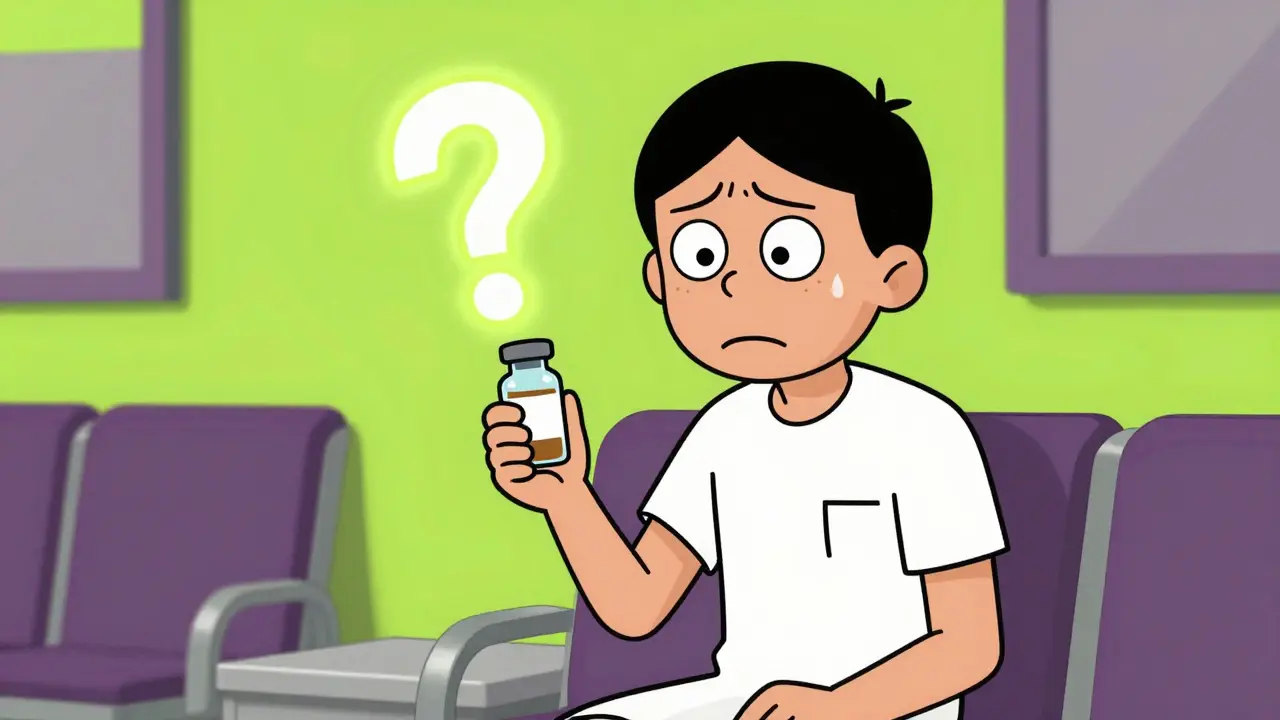
Imagine finding out your life-saving medication is being swapped for a cheaper version, but you've never heard of the brand and aren't sure if it actually works. For many people managing chronic conditions, this isn't a hypothetical-it's a stressful reality. While the medical community pushes for biosimilars is biologic medical products highly similar to an already approved reference biologic product, with no clinically meaningful differences in terms of safety, purity, and potency to lower costs, the actual adoption rate often lingers below 10%. Why the gap? Because when your health is on the line, "highly similar" doesn't always feel like "identical." To move forward, we need to stop treating this as a pricing issue and start treating it as a trust issue.
The Big Confusion: Biosimilars vs Generics
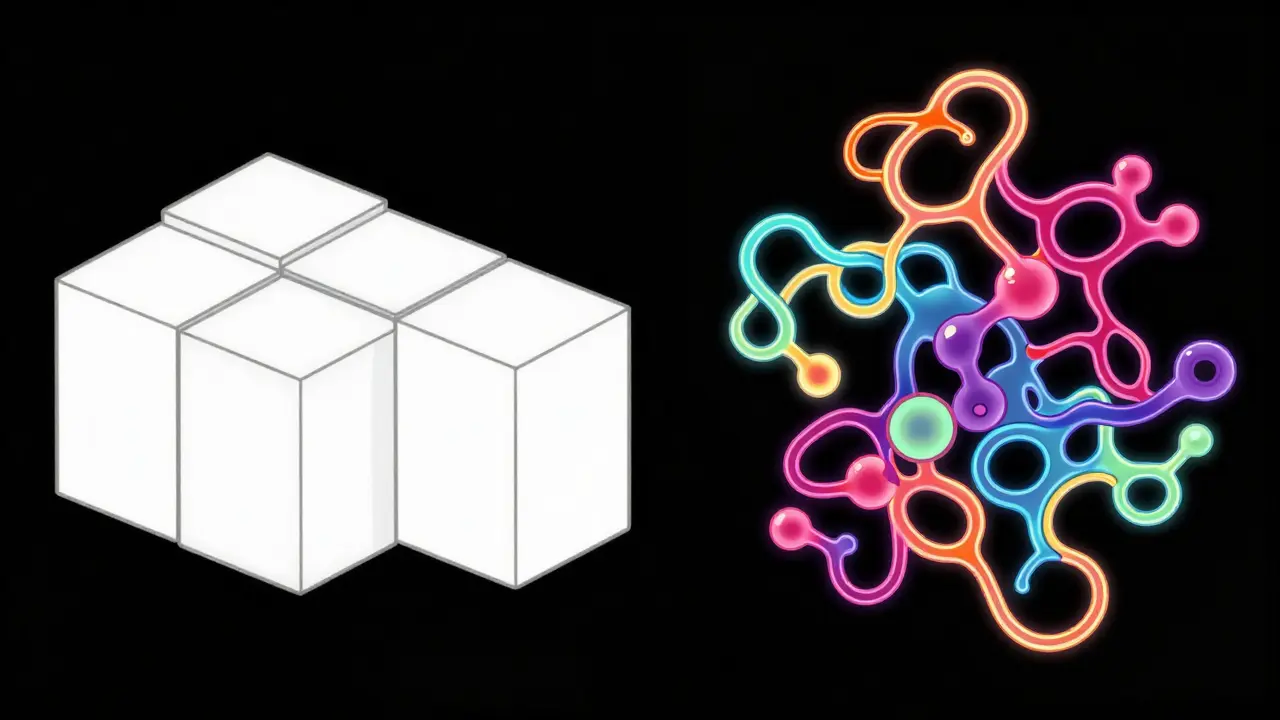
Most of us are used to generic drugs. If you switch from brand-name ibuprofen to a store-brand version, it's the exact same chemical molecule. But biologics are different animals entirely. They aren't made from a simple chemical recipe; they are grown from living cells. Because of this complexity, a Biosimilar cannot be an exact chemical copy. Instead, it is designed to be "highly similar."
This nuance is where the hesitation starts. Patients hear "similar" and think "inferior." In reality, the FDA (U.S. Food and Drug Administration) requires a rigorous, stepwise approval process. This includes analytical studies, animal testing, and clinical trials to prove there are no meaningful differences in how the drug works or its safety profile. While a generic might take 3 years and $2 million to develop, a biosimilar can take a decade and up to $250 million. It's not a shortcut; it's a different, complex path to the same clinical result.
| Feature | Generic Drugs | Biosimilars |
|---|---|---|
| Composition | Simple chemical molecules | Complex proteins from living cells |
| Similarity | Chemically identical | Highly similar (no meaningful difference) |
| Development Cost | $2-3 million (average) | $100-250 million (average) |
| Approval Time | 3-4 years | 8-10 years |
| Market Adoption | Fast (often 90% in one year) | Slow (often under 10% initially) |
Why Patients are Hesitant (and why they're often right to be nervous)
It's easy to dismiss patient fear as a lack of education, but the anxiety often stems from real-world experiences. Take the "nocebo effect," where a patient experiences negative side effects simply because they expect the new drug to be worse. Or consider the trauma of a poorly managed switch. When a patient is moved to a biosimilar without a clear conversation, and then experiences a flare-up, they don't blame the disease-they blame the new drug.
Data shows that 79% of patients have expressed concerns about whether a biosimilar will be as effective as the original. Another 63% worry about new, unexpected side effects. These aren't just random fears; they are responses to a healthcare system that sometimes prioritizes cost-cutting over communication. For example, when large pharmacy benefit managers (PBMs) suddenly exclude a popular drug like Humira from their formularies, patient satisfaction often plummets, even if the system saves money. If the transition feels forced, the patient feels like a line item on a spreadsheet rather than a human being.
The Financial Paradox: Who Actually Saves Money?
Here is the most frustrating part for patients: the system saves billions, but the patient often pays the same. While biosimilars can offer roughly 35% savings over originator products, those savings frequently stay with the insurance companies or PBMs.
A study on seven clinician-administered biologics found that annual out-of-pocket spending didn't actually drop for patients after biosimilars hit the market. When a patient is told to switch to a "cheaper" alternative but their monthly co-pay remains $50, the motivation to take a perceived risk vanishes. To reduce hesitation, there needs to be a visible, financial win for the person actually taking the medication, not just the entity paying for it.
Strategies for Healthcare Providers to Build Trust
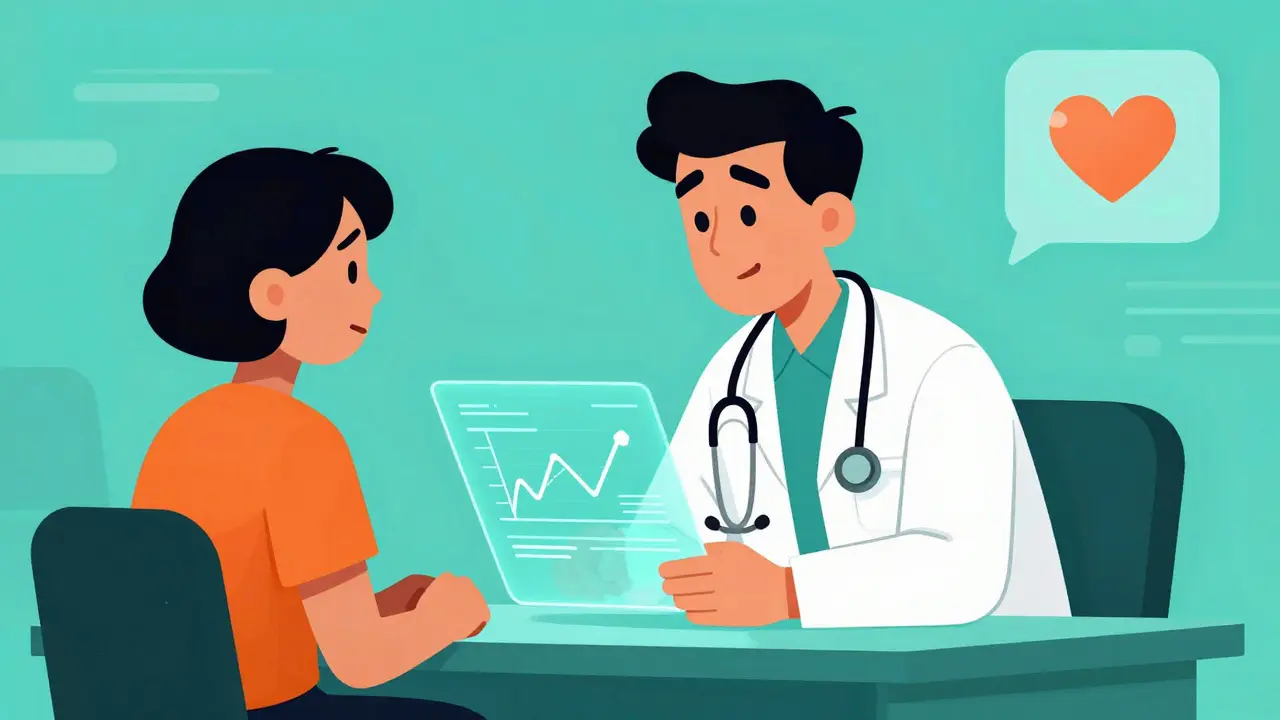
If you're a provider, the goal isn't to "convince" the patient, but to partner with them. The gap in knowledge is massive; while about 64% of pros understand biosimilars, only 31% of chronic-disease patients do. Closing this gap requires a specific approach:
- Avoid the "Generic" Label: Stop calling them generics. Explain that they are highly complex proteins and that the FDA's "interchangeable" designation means they can be switched without losing efficacy.
- Shared Decision Making: Don't switch the medication behind the scenes. Explain *why* the switch is happening and give the patient a sense of control over the timing.
- Use Real-World Evidence: Instead of just quoting clinical trials, share data on how other patients in the clinic have fared. Tracking specific biomarkers, such as anti-drug antibody levels, can provide concrete evidence that the drug is working.
- Acknowledge the Risk: Validating a patient's fear of a flare-up makes them more likely to trust your guidance on how to manage it if it happens.
The Path to 2030: What Changes Now?
The landscape is shifting. The FDA is currently streamlining approval processes to reduce the need for redundant efficacy studies, which could lower costs and bring more options to market. By 2034, over 100 biologic molecules will lose exclusivity, opening the door for a massive wave of biosimilars.
Experts predict that as real-world evidence piles up, adoption rates could exceed 50% by 2030. But this won't happen through policy alone. It happens when the pharmacist explains the science clearly, when the doctor listens to the patient's fear, and when the insurance company actually passes the savings down to the person at the pharmacy counter. Trust is the only currency that can truly accelerate the adoption of these critical therapies.
Are biosimilars exactly the same as the original biologic drug?
No, they are not identical copies like generics are. Because biologics are made from living cells, they are too complex to be perfectly replicated. However, they are "highly similar," meaning there are no clinically meaningful differences in safety, purity, or potency. They provide the same clinical result as the original drug.
Will switching to a biosimilar cause a flare-up in my condition?
While most patients transition smoothly, some report flare-ups. This can be due to the "nocebo effect" (expecting a negative result) or actual clinical variability. It is vital to discuss the switch with your doctor so they can monitor your biomarkers and provide a plan to manage any potential reactions.
Why are biosimilars more expensive to develop than generics?
Generics are simple chemical copies. Biosimilars require complex cell-based manufacturing and a rigorous "stepwise" approval process. This includes extensive analytical and clinical studies to ensure similarity, often costing between $100 million and $250 million and taking up to a decade to complete.
Do biosimilars actually lower the cost for the patient?
Not always. While biosimilars reduce the overall cost for the healthcare system (roughly 35% savings), those savings often remain with insurance companies or PBMs. Some patients see lower out-of-pocket costs, but others may find their co-pays remain unchanged despite the switch.
What does "interchangeable" mean in the context of biosimilars?
An interchangeable biosimilar is one that the FDA has determined can be expected to produce the same clinical result as the reference product in any given patient. This designation is intended to increase confidence for both providers and patients when switching medications.
Absolute joke! They want us to believe "highly similar" is enough when it's actually just a way for big pharma to shuffle their money around while we become lab rats for these "grown cells" experiments. It's a total scam to keep us hooked on cheaper junk that probably doesn't even work right!
The point about the PBMs is where the real issue lies. It's quite frustrating that the financial benefit is captured by the middleman rather than the patient who is actually taking the risk of switching medications.
The naive assumption here is that trust can be "built" through simple communication. We are discussing the ontological difference between an identical copy and a simulation of efficacy. To suggest that a few pamphlets or a friendly chat with a pharmacist can bridge the gap between a molecular duplicate and a biological approximation is simply quaint. The inherent instability of biological production means that "similarity" is a statistical convenience, not a clinical certainty. One must wonder if the drive toward biosimilars is less about patient health and more about the inevitable decay of patent monopolies and the subsequent scramble for synthetic alternatives that mimic the original's prestige without its precision. It's a classic case of substituting quality with a plausible imitation and expecting the masses to applaud the cost-saving measure.
We need to be much more aggressive in demanding that insurance companies pass those savings directly to the patients. If the drug is 35% cheaper, that should reflect in the co-pay immediately.
American innovation creates these drugs. We should prioritize our own patents.
This is such an important topic!!! We really need to support our medical providers in this transition... and make sure the patients feel heard!!!
Oh man, the nocebo effect is absolutely wild. It's truly heartbreaking to think someone could actually get sick just because they're scared of a new label!
Totally agree with the points about trust. It's the same everywhere, not just in the US.
It is truly a traggedy that the patiants are neglected in this system. My heart goez out to those who suffer flare-ups because of poor comunication from the clinics.
Need more RWE to boost the PK/PD confidence here.
I guess it's just how things work with insurance, unfortunately.