
Understanding the Safety Gap
Imagine a perfectly controlled experiment where every variable is measured and recorded with precision. That is the clinical trial experience. Now, imagine the chaos of daily life-patients taking pills alongside dinner, skipping doses when travel gets busy, or interacting with other medications without supervision. That is the Real-World Evidence (RWE) landscape. These two worlds rarely overlap perfectly, yet they are both critical for understanding medication safety.
When a new medicine arrives at your pharmacy, you might wonder why the warning label mentions one set of symptoms, but your neighbor experiences something entirely different. This discrepancy often stems from the fundamental differences between Clinical Trial DataSafety data generated within controlled research environments and the messy, complex reality of real-world usage. Understanding this gap isn't just academic; it changes how we assess risk and make treatment decisions.
The Controlled Environment of Clinical Trials
Clinical trials operate like high-stakes laboratory tests. Every patient fits specific criteria-age, weight, health history-ensuring the group looks similar enough that doctors can isolate the drug's effect. The Randomized Controlled Trial (RCT) methodology, established back in 1948, remains the gold standard for establishing cause and effect. Because conditions are monitored tightly, if a patient reports nausea, doctors know immediately whether it correlates with the medication timeline.
However, this tight control creates blind spots. The median Phase 3 oncology trial enrolls around 381 patients. While significant for initial testing, that number is far too small to catch rare side effects occurring in less than 1 out of 1,000 people. Furthermore, trials rely on the Common Terminology Criteria for Adverse Events (CTCAE)Standard system developed by NCI to grade severity of adverse events, currently version 5.0. This system has 790 specific terms, but it requires trained staff to document them during scheduled visits. If a side effect happens between visits, or looks slightly different than the textbook description, it often goes unrecorded.
The strength of Clinical Trial Data lies in its ability to prove causality. By comparing a treated group against a placebo group, regulators can confirm the drug caused the harm. But this environment cannot mimic the long-term wear and tear a drug places on a diverse population over years of use.
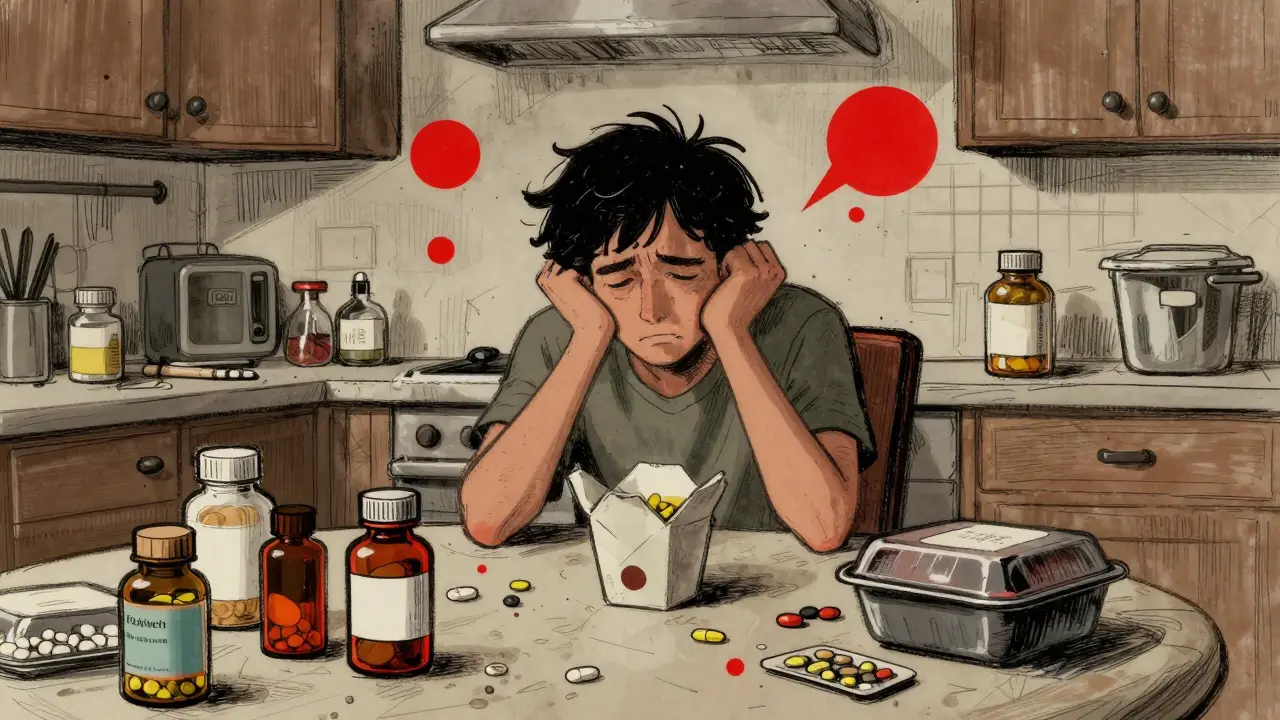
The Messy Reality of Real-World Side Effects
In contrast, real-world evidence emerges from routine care. Patients are not screened for exclusion; they are sick people dealing with comorbidities, different diets, and multiple prescriptions. This complexity brings massive scale. Systems like Electronic Health Records (EHR)Digital systems used to store patient medical information across 9,500 US hospitals or insurance databases covering hundreds of millions of lives provide a sample size no clinical trial could ever match.
This volume allows us to see patterns that slip through trial cracks. For instance, a heart failure risk that takes five years to manifest might never show up in a one-year study. However, the data quality varies wildly. Unlike the structured CTCAE grading in trials, real-world documentation depends on busy doctors typing notes into software. A study found that only 34% of adverse events recorded in EHRs contain enough detail for regulatory assessment. This lack of standardization means while RWE captures the "what" happening broadly, it sometimes struggles to explain exactly "why" or distinguish between the drug's fault and the underlying disease process.
Comparing Detection Capabilities
To visualize how these two methodologies differ, let's look at what each is best equipped to detect:
| Feature | Clinical Trial Data | Real-World Side Effects |
|---|---|---|
| Sample Size | Small (Median ~381 for Oncology) | Massive (Up to 300 million records) |
| Rare Event Detection | Limited (<1% incidence) | High Capability |
| Causality Proof | Strong (Controlled variables) | Weaker (Confounding factors exist) |
| Timeframe | Short-term (Months to Years) | Long-term (Decades possible) |
| Data Quality | Structured & Standardized | Variable & Unstructured |

Lessons from History: When Signals Were Missed
History provides stark examples of why relying on just one source is dangerous. The anti-diabetic drug Rosiglitazone was approved in 1999 after clinical trials met safety standards. However, later real-world analysis showed a 43% increased risk of heart attacks compared to another diabetes drug, pioglitazone. It took independent analysis of over 42,000 users to find this signal, highlighting how trial data can miss systemic cardiovascular risks.
Conversely, real-world data isn't perfect. There have been instances where observational studies falsely linked dementia risk to certain anticholinergic medications, only for rigorous analysis to reveal the association was actually due to the conditions being treated, not the drugs themselves. On the flip side, the drug Vioxx showed that even massive usage data couldn't always override early warnings quickly enough; cardiovascular risks were identified late in the lifecycle, exposing over 80 million patients to potential harm before withdrawal.
Regulatory Evolution and Future Trends
The landscape has shifted significantly since the 21st Century Cures Act of 2016 mandated the Food and Drug Administration (FDA) to formalize the use of real-world data. Today, the FDA's Sentinel Initiative monitors 300 million patient records in near real-time. This active surveillance system detects safety signals up to 12 months faster than traditional passive methods.
We are moving toward a hybrid model. By 2023, nearly 73% of top pharmaceutical companies incorporated real-world data collection directly into late-stage trials. This "hybrid evidence generation" aims to bridge the gap, ensuring that the rigor of trial protocols meets the breadth of real-world populations. As we move through 2026, 87% of novel drug approvals require real-world evidence plans for post-marketing monitoring, signaling that the divide between these two data types is slowly becoming more porous.
It is absolutely crucial that we understand how pharmacokinetics differ in open-label settings compared to blind studies.
When we look at the inclusion criteria for Phase III oncology trials, we see distinct demographic stratification.
Real world evidence often lacks the rigorous confounder adjustment found in randomized controlled designs.
You have to consider off-target binding effects that simply do not manifest under protocol adherence.
Pharmacogenomics plays a massive role here because genetic variance isn't accounted for in small cohorts.
The signal-to-noise ratio in electronic health records is notoriously poor regarding adverse event classification.
Regulatory bodies rely heavily on CTCAE grading which fails to capture subtle quality of life metrics.
Post-marketing surveillance is often reactive rather than proactive regarding these safety signals.
We need better integration of wearable technology to bridge the gap between clinical endpoints and daily function.
Polypharmacy interactions are frequently missed during the initial approval window by design.
The statistical power required to detect rare hepatic events exceeds typical trial enrollment capabilities significantly.
Observational cohort studies provide the necessary longitudinal data to assess chronic toxicity profiles accurately.
Bias towards indication remains a significant hurdle when comparing efficacy versus safety outcomes across datasets.
Ultimately the regulatory framework must evolve to accommodate big data analytics in safety monitoring systems.
This synthesis of methodologies represents the future of personalized medicine safety protocols moving forward.
Understanding the variance in dataset collection methods remains essential for accurate interpretation!!
The distinction between these environments is vital for patient safety monitoring protocols!!!
We must never forget the potential for hidden biases in self-reported symptoms!!!
This information helps clarify why labeling discrepancies occur so frequently!!!!
Your enthusiasm borders on naive optimism regarding the utility of such data streams.
The nuance of confounding variables is often overlooked by those eager to implement quick fixes.
One must appreciate the elegance of rigorous exclusion criteria in isolating pathophysiological mechanisms.
Real-world noise often drowns the clear signal provided by controlled environments.
True experts understand that correlation does not equal causation in observational registries.
The dichotomy presented here exposes a fundamental flaw in contemporary medical epistemology.
Society demands certainty while simultaneously rejecting the constraints required to achieve it.
We must acknowledge that freedom often incurs the cost of unverified risk exposure.
The ethical imperative to protect patients clashes violently with the economic drive for rapid market entry.
This tension defines the modern pharmaceutical landscape and will continue to haunt regulatory decisions.
Such stark realities often go unnoticed until tragedy strikes
i cant believe they hide all the risks from us peopel just taking pills
my uncle had side effects no doctor ever saw coming either
its scarry how much trust we put in these big labs
we shouln't let them get away with half trues
think about who gets hurt when the data is incomplete like this
Keep spreading awareness so everyone stays safe out there
We truly need more transparency from the companies developing these treatments!
It is so important to validate findings through diverse community feedback channels!!!!!
Every person deserves access to the full scope of potential medication impacts!
Data sharing initiatives could revolutionize how we track long term safety outcomes!!
We must support open science practices to ensure public health security everywhere!!